If you’ve been feeling tired all the time, the first question isn’t “How do I boost my energy?” It’s “Why is my energy low in the first place?”
In our clinic, we find that almost all persistent fatigue falls into one of three broad categories:
Physical fatigue – the body genuinely lacks resources or is fighting illness
Mental fatigue – energy is there, but not flowing efficiently (usually caused by chronic stress)
A combination of both
Understanding which one applies to you is the key to choosing the right treatment — because chasing more energy without knowing why it’s low rarely works for long.
At Almond Wellness Centre, we assess fatigue, low energy, and exhaustion from both a modern medical and Traditional Chinese Medicine (TCM) perspective. Before recommending acupuncture or Chinese herbal medicine, we first try to understand what’s actually driving your tiredness — because treatment aimed at the wrong cause tends to help very little.
At a Glance: The 3 Types of Fatigue
Type
What’s happening?
Typical clues
Treatment direction
Physical depletion
The body can’t produce enough energy
Fatigue is often worse with exertion; may include other physical symptoms
Identify deficiencies or illness first, then support recovery
Stress-related blockage
Energy is available but not flowing or being used efficiently
Often eases — even briefly — after exercise, a walk, or relaxation
A mixed picture that doesn’t fit neatly into either box
Treat both threads together
1. Physical Fatigue: When the Body Doesn’t Have Enough
This is low energy where the body itself lacks the raw material, or the underlying function, to produce and sustain energy. It generally splits into two groups.
Nutritional Causes
A shortage of any of the following can leave a person feeling flat, heavy, or slow to recover from ordinary daily activity:
Iron – one of the most common, and most under-recognised, causes of chronic tiredness, particularly in women
Vitamin D – very common in Melbourne, especially over winter or in people who work indoors
Vitamin B12 – important for energy metabolism and nerve function; can be low even in people who eat well, particularly if digestion or absorption isn’t efficient
Magnesium – involved in hundreds of processes in the body, and often depleted by ongoing stress, caffeine, or alcohol
A Melbourne clinic I read regularly, MINT Clinic, has written a useful GP-perspective piece covering this exact territory — magnesium, vitamin D, B12, protein intake, and blood sugar regulation as drivers of low energy in men. It’s worth a read for the conventional-medicine side of this picture. A proper blood test is the only reliable way to confirm a nutritional deficiency, so if persistent fatigue or lack of energy has been building for more than a few weeks, it’s worth asking your GP to check iron studies, vitamin D, B12, and thyroid function before assuming the cause is “just stress.”
Illness-Related Causes
Fatigue is also one of the body’s most basic signals that it’s fighting off, or recovering from, something. This can be:
Acute illness, such as:
Cold or flu
Other viral infections
Bacterial infections
Fatigue here reflects the body diverting resources toward immune defence, and it should ease as the illness resolves.
Chronic illness, such as:
Anaemia
Thyroid disorders
Liver or kidney disease
Heart or circulatory disease
Diabetes and other metabolic conditions
Sleep apnoea
Autoimmune disease
Cancer
Long COVID
This includes conditions that have already been medically diagnosed, and – just as importantly – ones that haven’t been picked up yet. Persistent, unexplained daytime fatigue that doesn’t respond to rest deserves a proper medical work-up. TCM can support recovery and quality of life alongside a diagnosis, but it isn’t a substitute for identifying an underlying medical condition.
2. Mental Fatigue: When Energy Is There but Blocked
Why am I tired even though my blood tests are normal?
We hear this constantly:
“My Doctor says everything looks normal, but I’m still exhausted.”
Normal results are genuinely reassuring – they rule out many important conditions – but they don’t explain everything. Normal blood tests don’t mean your symptoms are “all in your head.” Often, they mean the cause is sitting on the stress-related, functional side of fatigue covered below, which standard blood panels aren’t designed to pick up.
This is a different kind of tired, and it often confuses people because it doesn’t respond to “more rest” the way physical fatigue does.
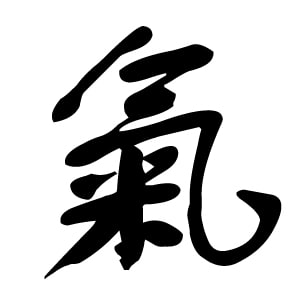
In Traditional Chinese Medicine, long-term stress is often viewed as disrupting the smooth flow of qi (气, qì) — the body’s vital energy. Rather than lacking energy outright, the body struggles to distribute and use the energy it already has efficiently.
Patients with this pattern often describe:
Feeling exhausted but unable to switch off or relax
A heavy, foggy tiredness that lifts – even briefly – after a walk, a workout, or time outdoors
Waking up already feeling flat, despite having “slept enough”
Improvement after doing something that shifts mental state: exercise, talking to a friend, a hobby, or a change of scenery
This is also, in our experience, the group of patients who tend to feel noticeably better after non-medication approaches – regular physical exercise, structured stress management, psychological counselling, or simply more social connection. If that sounds like you, it’s a reasonable clue that the blockage is more stress-related than physical in origin. We’ve written a separate article going into more depth on how your response to exercise can help tell this pattern apart from physical depletion, if you’d like to explore that further.
3. A Combination of Both
In practice, a good number of patients don’t fit neatly into one box. Someone under prolonged work stress may also be skipping meals, sleeping badly, and running low on iron or vitamin D by the time they come to see us. The mental strain and the physical depletion feed each other – stress disrupts sleep and appetite, which worsens nutritional status, which then makes it harder to cope with stress.
This combined picture is common, and it’s exactly why a one-size-fits-all approach – “just take a supplement” or “just relax more” – often falls short. Both threads usually need addressing before a person feels genuinely better.
How Treatment Is Actually Approached
Treatment for fatigue is always individualised. Someone recovering from influenza may receive a completely different treatment plan from someone whose exhaustion developed after years of workplace stress. Likewise, two people who are both low in iron may still receive different acupuncture treatments, because their sleep, digestion, stress levels, and overall health differ.
Broadly:
For physically-rooted fatigue (nutritional or illness-related)
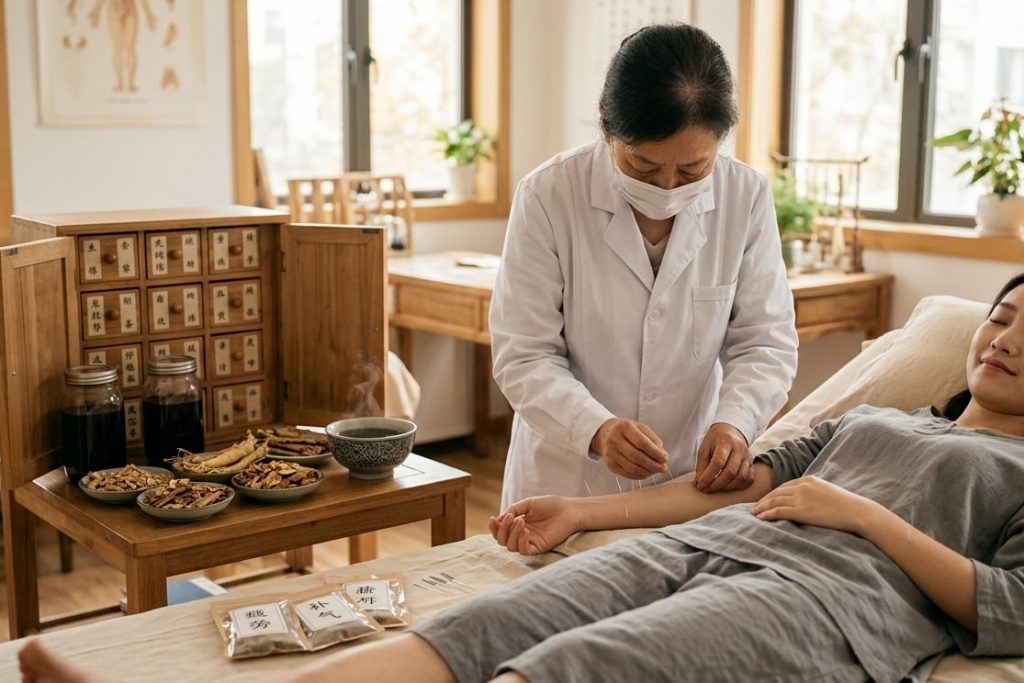
we may use Chinese herbal formulas selected to support recovery and overall vitality, alongside acupuncture to support digestion, absorption, and general function. Where appropriate, we’ll also recommend relevant blood tests through your GP, since herbal support works best alongside – not instead of – addressing a confirmed deficiency or medical condition.
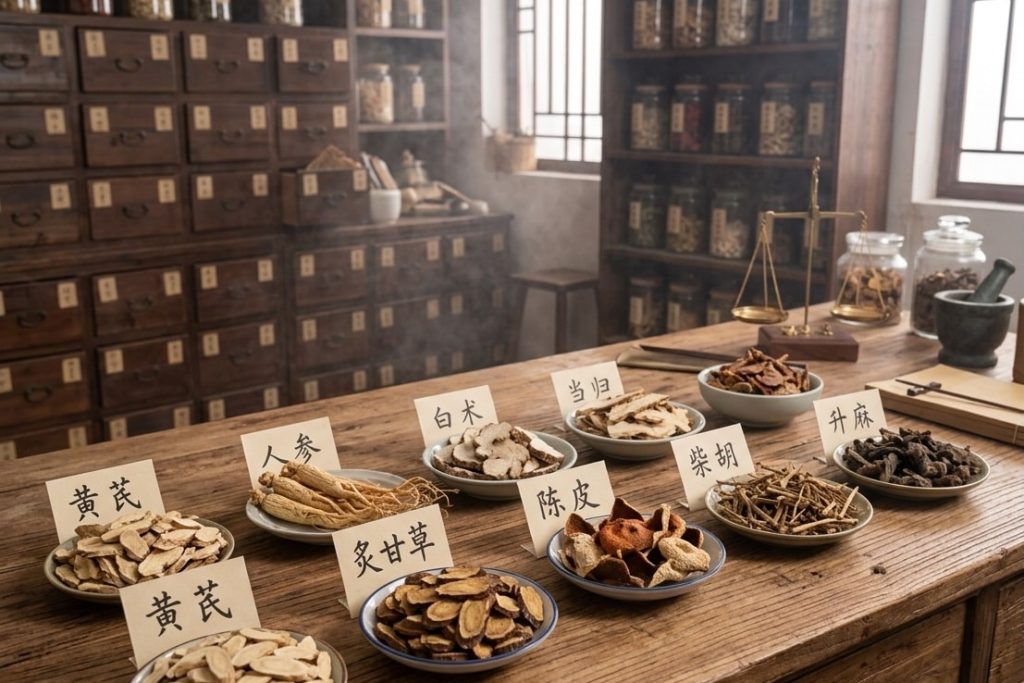
Chinese herbal tonic – Bu Zhong Yi Qi Tang
For stress-related fatigue
treatment tends to focus on easing tension and calming the nervous system through acupuncture, sometimes combined with herbal formulas suited to the individual. Lifestyle guidance matters just as much here as needles or herbs – regular movement, better boundaries around work and rest, and, where relevant, a referral toward psychological counselling or other stress-management support.
For combined presentations
treatment addresses both threads together and is reviewed and adjusted as your picture shifts over the course of care.
Persistent or worsening fatigue should always be assessed by a medical doctor to rule out or manage underlying conditions. Chinese medicine can be a valuable part of a fatigue care plan, but it works best alongside, not instead of, appropriate medical investigation.
Can Acupuncture Help Fatigue?
This is a fair question, and the honest answer is: it depends on the type of fatigue, and the evidence varies in strength.
Cancer-related fatigue is the area with the most research behind it. Several systematic reviews and meta-analyses have found that acupuncture can produce a modest improvement in fatigue levels for people with cancer-related fatigue, including during and after treatment – though authors are consistent in noting that study quality varies and further well-designed trials are still needed.
Chronic fatigue syndrome (ME/CFS) and post-viral fatigue have a smaller and more mixed evidence base. Several reviews suggest acupuncture-based approaches may offer some benefit for overall, physical, and mental fatigue in this group, but describe the evidence as exploratory rather than conclusive, due to a limited number of studies and variable methodological quality.
Stress-related and general fatigue has less formal trial evidence specifically isolating fatigue as an outcome, though acupuncture is well studied for related areas such as sleep and stress, which often improve alongside energy levels in clinical practice.
In short: acupuncture is not a guaranteed fix for fatigue, and we won’t tell you otherwise. But for many patients — particularly where fatigue is tied to cancer treatment, post-viral recovery, or chronic stress — it can be a reasonable, low-risk part of a broader care plan, used alongside appropriate medical care rather than in place of it.
A Quick Way to Start Thinking About Your Own Fatigue
Has it come on gradually with poor diet, heavy periods, illness, or a diagnosed condition? → Likely leaning physical.
Do you feel a bit better after a walk, a chat with a friend, or a change of pace — even if you’re exhausted? → Likely leaning stress-related.
Some of both? → You’re not alone. This is one of the most common presentations we see.
The Bottom Line
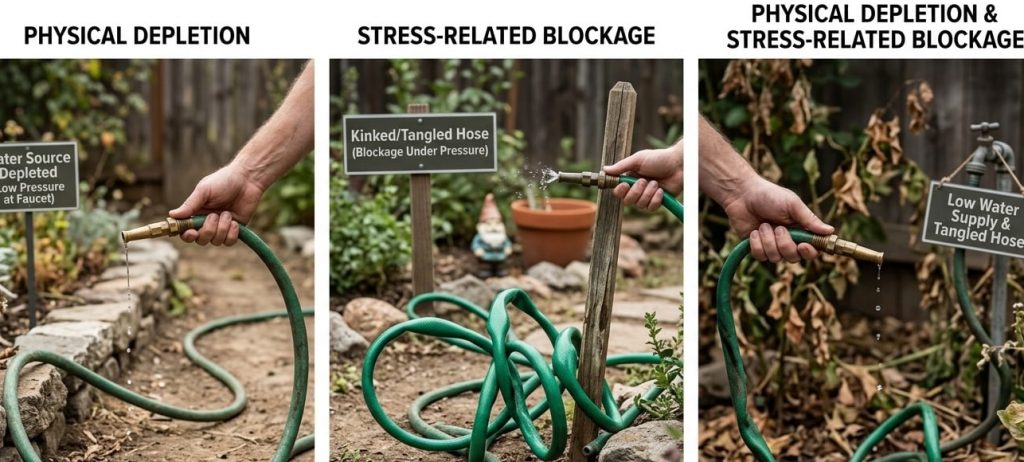
Think back to a garden hose. Sometimes there simply isn’t enough water coming through – that’s physical depletion. Sometimes the water pressure is fine, but the hose is kinked and tangled somewhere along its length – that’s stress-related blockage. And sometimes, both are happening at once.
Until you know which situation applies, it’s difficult to choose the right treatment. At Almond Wellness Centre, our goal is to identify what’s really driving your fatigue, so treatment is directed at the cause — rather than simply trying to boost your energy temporarily.
We’d Love to Help
Book online at our Coburg or Ringwood clinic, and we’ll help you work out which type of fatigue you’re dealing with.
Q: Why am I tired all the time even though I sleep enough?
A: This is common with stress-related fatigue, where energy is available but not being distributed or used efficiently, and with some nutritional deficiencies or underlying conditions that aren’t affected by sleep quantity alone. A proper assessment can help identify which applies to you.
Q: What’s the difference between physical and mental fatigue?
A: Physical fatigue generally reflects a genuine shortage of resources – from nutritional deficiency or illness – while mental fatigue often reflects energy that is present but blocked, commonly linked to chronic stress. The two call for different treatment approaches, though many people have elements of both.
Q: Can low iron, vitamin D, or B12 really cause fatigue?
A: Yes — these are among the most common nutritional contributors to persistent tiredness, and can usually be confirmed with a simple blood test through your GP. Correcting a genuine deficiency is often an important first step in recovery.
Q: I’ve had blood tests and everything came back normal, but I’m still exhausted. What now?
A: This is a common and valid situation. It’s worth considering whether chronic stress, sleep quality, burnout, digestion, or an as-yet-undiagnosed condition could be contributing. A TCM consultation, alongside ongoing medical follow-up if fatigue persists, can help build a fuller picture.
Q: Can acupuncture help fatigue?
A: The evidence varies by type. It’s strongest for cancer-related fatigue, where reviews report modest improvements; more limited and exploratory for chronic fatigue syndrome and post-viral fatigue; and less formally studied for general stress-related tiredness, though related benefits to sleep and stress are well documented. It’s best considered a supportive part of a broader care plan rather than a stand-alone cure.
Q: Where is Almond Wellness Centre located?
A: We have two Melbourne clinics – 21 Bell Street, Coburg, and 31 Wantirna Road, Ringwood. Both see new and returning patients for fatigue assessment and treatment.
Heart palpitations, a fluttering heart, skipped beats, or a racing heartbeat are common reasons people visit my clinic. Many have already seen their GP or cardiologist, had an ECG or other heart tests, and been reassured that everything appears normal. Yet the symptoms continue.
Patients often tell me:
“My heart starts fluttering when I lie down.”
“It feels like my heart skips a beat.”
“The tests are normal, but I still feel anxious every night.”
When serious heart disease has been ruled out, these symptoms are often related to a combination of stress, autonomic nervous system imbalance, poor sleep, and emotional tension. While conventional medicine may describe these as functional palpitations or anxiety-related symptoms, Traditional Chinese Medicine (TCM) looks for an underlying pattern of imbalance.
One of the herbal formulas I prescribe most frequently for this presentation is Chai Hu Gui Zhi Long Gu Mu Li Tang (柴胡桂枝龙骨牡蛎汤), also known as Bupleurum, Cinnamon Twig, Dragon Bone and Oyster Shell Decoction.
Originally recorded nearly 2,000 years ago in the Shang Han Lun (Treatise on Cold Damage), it remains one of the classic formulas I regularly use in clinical practice for patients experiencing anxiety, heart palpitations, sleep disturbance, and a persistent feeling of being unable to settle.
How Does Traditional Chinese Medicine View Heart Palpitations?
From a TCM perspective, heart palpitations are rarely caused by a single imbalance. More commonly, they arise from several interconnected patterns affecting both the body and mind.
A typical presentation may include:
Shao Yang disharmony, where the body struggles to regulate itself, leading to emotional instability, a wiry pulse, and feeling neither fully well nor obviously ill.
Liver Qi stagnation, often associated with chronic stress, frustration, chest tightness, and difficulty relaxing.
Heart and Gallbladder Qi deficiency, resulting in heightened sensitivity, poor sleep, anxiety, and a sensation that the heart is fluttering or easily startled.
Rather than treating the heartbeat alone, TCM aims to restore balance to the whole system contributing to these symptoms.
Why I Often Choose Chai Hu Gui Zhi Long Gu Mu Li Tang
I’ve prescribed this formula for many years, and it has become one of my preferred prescriptions when patients present with anxiety alongside functional heart palpitations.
Its ingredients work together to address different aspects of the pattern:
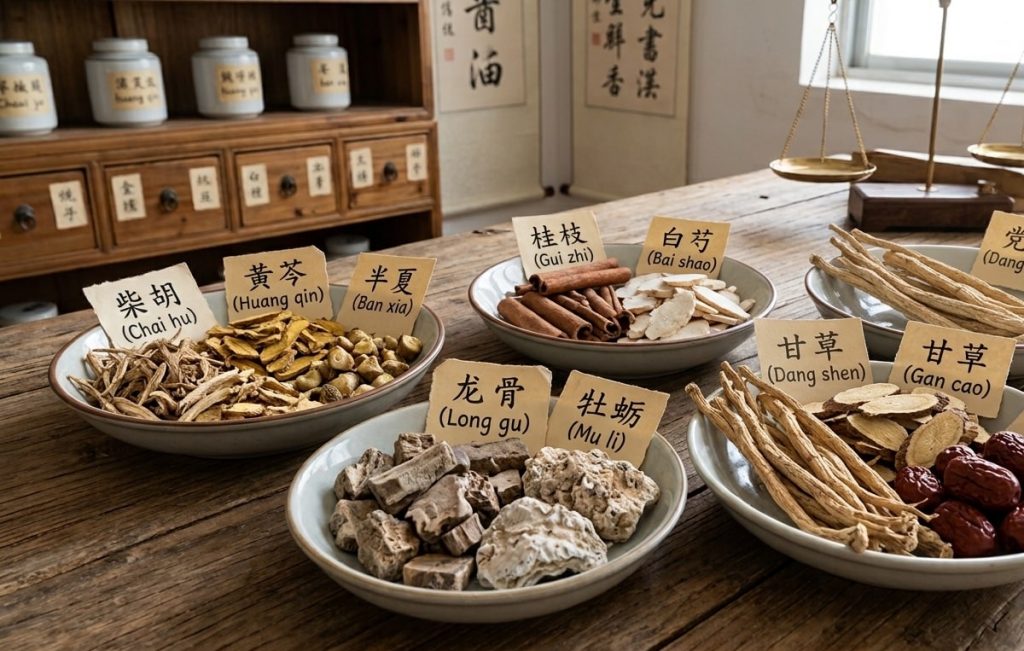
Chai Hu (Bupleurum), Huang Qin (Scutellaria) and Ban Xia (Pinellia) harmonise the Shao Yang stage.
Gui Zhi (Cinnamon Twig) and Bai Shao (White Peony) regulate the Ying and Wei levels while easing muscular and emotional tension.
Long Gu (Dragon Bone) and Mu Li (Oyster Shell) are traditionally used to calm the Shen (mind) and help reduce palpitations and restlessness.
Dang Shen (Codonopsis), Gan Cao (Liquorice) and Da Zao (Jujube) strengthen Qi and support the digestive system, helping create a more balanced internal environment.
No two patients receive exactly the same prescription. Depending on the individual’s presentation, I frequently modify the formula by adding herbs such as He Huan Pi (Mimosa Bark) or Yuan Zhi (Polygala Root) for anxiety and sleep, or Dan Shen (Salvia Root) where cardiovascular support is appropriate.
Who May Benefit?
This approach may be considered for people who experience:
Heart palpitations or skipped beats
A fluttering sensation in the chest
Symptoms that are worse at night or while lying down
Anxiety associated with palpitations
Difficulty falling asleep because the heart feels unsettled
Normal ECG or cardiology investigations, but ongoing symptoms
Stress-related palpitations
Poor sleep together with a racing heart
Every patient is assessed individually using a detailed consultation, pulse diagnosis, and tongue examination before any herbal prescription is recommended.
Clinical Cases From My Practice
Case 1 – Heart Flutter Following Surgery
A gentleman in his seventies attended after being admitted to hospital with atrial flutter several weeks following knee surgery. Poor sleep during recovery appeared to have contributed to the episode. Interestingly, he had experienced a similar event decades earlier that responded well to Chinese herbal medicine.
After medical assessment, we combined acupuncture with a modified Chai Hu-based herbal formula. His sleep improved first, followed by complete resolution of the fluttering sensation over subsequent treatments, with no recurrence reported during follow-up.
Case 2 – Night-time Heart Palpitations
A man in his late forties experienced skipped heartbeats almost exclusively when lying down at night. ECG findings were normal, and blood tests showed only minor variations. He also described waking with a racing heart, reduced energy, and increasing stress while raising young children.
Based on his TCM presentation, I prescribed a modified Chai Hu Gui Zhi Long Gu Mu Li Tang together with acupuncture and cupping therapy. Over the following weeks, both his palpitations and sleep improved steadily.
Case 3 – High Blood Pressure With Anxiety
A patient in his fifties sought treatment shortly after being diagnosed with hypertension. Alongside elevated blood pressure, he reported significant anxiety, irritability, and emotional tension.
Working alongside his prescribed medication, we used a modified herbal formula and regular acupuncture. Over several weeks, his blood pressure improved and he reported feeling noticeably calmer and sleeping better.
These cases are shared for educational purposes only. Individual results vary.
What Does the Research Say?
Modern research has explored Chai Hu Gui Zhi Long Gu Mu Li Tang for conditions including anxiety, insomnia, autonomic nervous system regulation, and certain cardiovascular symptoms. While early findings are encouraging, larger, high-quality clinical studies are still needed.
Traditional Chinese Medicine should be viewed as a complementary approach rather than a replacement for appropriate medical assessment and treatment.
Frequently Asked Questions
Can anxiety cause heart palpitations?
Yes. Anxiety can activate the body’s stress response, increasing adrenaline and making you more aware of your heartbeat. Many people notice fluttering or skipped beats during periods of stress, particularly at night.
Can Chinese herbs help heart palpitations?
Some patients find that carefully prescribed Chinese herbal medicine helps reduce anxiety, improve sleep, and decrease the frequency of functional palpitations. Treatment should always be individualised and provided by a qualified practitioner.
Is Chai Hu Gui Zhi Long Gu Mu Li Tang safe?
Like all herbal medicines, this formula should only be prescribed after a professional assessment. It may not be suitable for everyone, particularly those taking certain medications or with complex medical conditions.
When should I see a doctor?
Any new, persistent, or worsening heart palpitations should first be assessed by your GP or cardiologist. Immediate medical attention is required if palpitations occur with chest pain, fainting, severe shortness of breath, or other concerning symptoms.
Looking for Natural Support for Heart Palpitations?
If you’ve been told your heart is structurally healthy but you’re still experiencing anxiety, a fluttering heart, or recurring palpitations, Traditional Chinese Medicine may provide a complementary approach after appropriate medical assessment.
At Almond Wellness Centre, I combine detailed TCM diagnosis with acupuncture and individually prescribed Chinese herbal medicine to address the underlying pattern rather than simply the symptom.
Li C, Li B, Liu H, Qu L, Wang H. Mechanism of Chaihu Longgu oyster adjusted decoction for the treatment of depression based on network pharmacology and molecular docking technology. Ann Transl Med. 2023 Feb 22;11(4):172. doi:10.21037/atm-23-236. PMID: 36923088; PMCID: PMC10009556.
Zhao Y, Xu D, Wang J, Zhou D, Liu A, Sun Y, Yuan Y, Li J, Guo W. The pharmacological mechanism of Chaihu-jia-Longgu-Muli-tang for treating depression: integrated meta-analysis and network pharmacology analysis. Front Pharmacol. 2023 Sep 21;14:1257617. doi:10.3389/fphar.2023.1257617. PMID: 37808199; PMCID: PMC10551636.
Teng X, Sun L, Zhang B, Han Q, Jing T. Chaihu-Jia-Longgu-Muli Decoction improves dizziness with anxiety in rats by modulating tryptophan metabolism. J Ethnopharmacol. 2026 Feb 28;357:120881. doi:10.1016/j.jep.2025.120881.
Liu A, Zhao Y, Sun Y, Halim JF, Zhou D, Yuan Y, Xu D, Li J, Guo W. Chaihu-Longgu-Muli decoction exerts antidepressant effects in rats by regulating the NLRP3 pathway. Pharmacol Res Mod Chin Med. 2025 Jun;15:100617. doi:10.1016/j.prmcm.2025.100617.
Many women are told that painful periods are simply part of being female.
If you’ve ever had to curl up with a heat pack, cancel plans, miss work, or rely on painkillers every month just to get through your period, you know that period pain can have a major impact on your life.
Over the years, I have treated many women with:
Endometriosis
Painful periods (dysmenorrhoea)
Adenomyosis
Fibroids
Chronic pelvic pain
Pelvic inflammatory conditions
One of the Chinese herbal formulas I commonly use for these conditions is what I call 痛经汤 (Tòng Jīng Tāng) – the Period Pain Formula.
While every prescription is individualised, this formula forms the basis of treatment for many women whose pain is associated with what Traditional Chinese Medicine (TCM) calls Blood Stasis (血瘀).
Why Does Period Pain Occur?
In Chinese medicine, there is a simple principle:
不通则痛 – “Where there is blockage, there is pain.”
When the circulation of Qi and Blood becomes restricted within the uterus and pelvis, pain develops.
Common signs of Blood Stasis include:
Severe cramping
Stabbing or fixed pain
Pain before or during menstruation
Dark menstrual blood
Blood clots
Lower abdominal tenderness
Endometriosis
Fibroids
Chronic pelvic inflammation
Many women with endometriosis fit this pattern remarkably well.
However, Blood Stasis is often only part of the picture. In clinical practice, I frequently see other contributing factors such as:
Cold in the uterus
Stress and Liver Qi stagnation
Kidney deficiency
Chronic inflammation
Hormonal imbalance
This is why Chinese herbal medicine focuses on treating both the symptoms and the underlying pattern.
The Period Pain Formula (痛经汤)
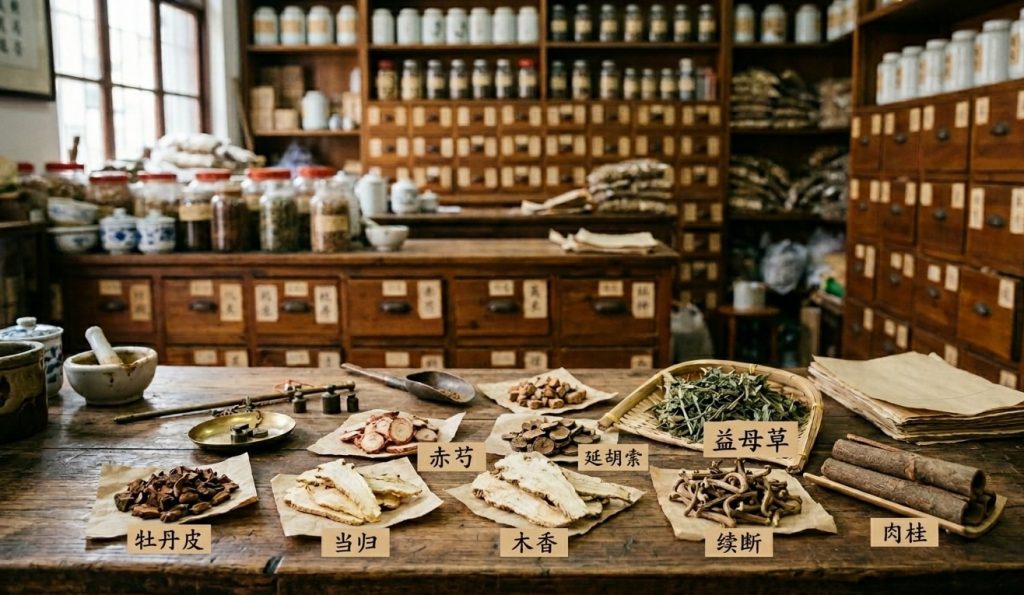
A typical prescription may include:
Mu Dan Pi (牡丹皮) 10g
Dang Gui (当归) 10g
Chi Shao (赤芍) 10g
Mu Xiang (木香) 10g
Yan Hu Suo (延胡索) 12g
Xu Duan (续断) 10g
Du Zhong (杜仲) 10g
E Zhu (莪术) 10g
Yi Mu Cao (益母草) 15–30g
Rou Gui (肉桂) 6g
Gou Teng (钩藤) 12g (added during the final 10 minutes of cooking)
The treatment goals are to:
✔ Improve pelvic circulation
✔ Move Blood and resolve stasis
✔ Reduce pain and cramping
✔ Warm the uterus
✔ Support the Liver and Kidneys
✔ Improve long-term menstrual health
Four Important Herbs in This Formula
Yan Hu Suo (延胡索) – One of Chinese Medicine’s Best Herbs for Pain
Yan Hu Suo is one of my favourite herbs for menstrual pain.
It moves both Qi and Blood and is traditionally used for many types of pain, including:
Period pain
Pelvic pain
Abdominal pain
Musculoskeletal pain
Many patients notice improvements in pain intensity after this herb is introduced into their prescription.
E Zhu (莪术) – Breaking Up Long-Standing Stagnation
E Zhu is particularly useful when there is significant Blood Stasis.
I often consider it in patients with:
Endometriosis
Fibroids
Chronic pelvic inflammation
Long-standing pelvic pain
Its role is to help break through stubborn stagnation that has accumulated over time.
Yi Mu Cao (益母草) – The Traditional Women’s Herb
The name Yi Mu Cao literally means “benefit the mother herb.”
For centuries it has been used in Chinese medicine to:
Regulate menstruation
Improve circulation
Reduce stagnation
Support reproductive health
It remains one of the most frequently prescribed herbs in women’s health.
Rou Gui (肉桂) – Warming the Uterus
Many women notice their pain improves with a hot water bottle or heat pack.
This often suggests the presence of Cold in the uterus.
Rou Gui helps warm the channels, improve circulation, and reduce cold-related pain.
When I Modify the Formula
Chinese herbal medicine is never a one-size-fits-all treatment.
For example, some women with period pain also experience:
Loose stools
Digestive sensitivity
IBS-type symptoms
Bloating
In these cases I often modify the formula by:
Removing: Dang Gui
Adding:
Dan Shen (丹参)
Shen Qu (神曲)
Fu Ling (茯苓)
This allows us to continue treating Blood Stasis while supporting digestion.
Case Study: Endometriosis and Severe Period Pain
A woman in her early 30s came to the clinic after being diagnosed with endometriosis.
Her symptoms included:
Severe cramping every cycle
Lower back pain
Pain radiating into the thighs
Dark menstrual blood with clots
Dependence on pain medication
She received acupuncture and a modified version of the Period Pain Formula.
After several cycles:
Pain intensity reduced significantly
Clotting became less pronounced
Lower back pain improved
She required fewer painkillers
She was able to continue her normal activities during menstruation
Most importantly, she felt she had regained control over her life during her period.
Case Study: Fibroids and Perimenopausal Pelvic Pain
A 47-year-old teacher presented with:
Pelvic pressure
Heavy periods
Fibroids
Lower abdominal pain
Loose stools
A modified version of the formula was prescribed alongside acupuncture.
Over the following months she reported:
Reduced pelvic discomfort
Less clotting
Improved bowel function
More manageable periods
Her symptoms stabilised and her quality of life improved considerably.
What Does Research Say?
Research suggests that Chinese herbal medicine may help reduce period pain and improve quality of life in women with dysmenorrhoea. Several systematic reviews have reported encouraging results, although further high-quality studies are still needed.
This reflects what many practitioners observe clinically: when treatment is properly individualised, herbal medicine can be a valuable part of an integrated approach to women’s health.
Conditions This Formula May Be Considered For
Depending on the individual diagnosis, this formula may be modified and used for:
Endometriosis
Period pain
Chronic pelvic inflammatory conditions
Fibroids associated with Blood Stasis
Pelvic congestion
Perimenopausal abdominal pain
However, it is not suitable for every type of menstrual pain.
Different patterns require different treatments.
The Importance of Individual Assessment
One of the most common misconceptions about Chinese herbal medicine is that there is a single formula for every condition.
In reality, two women with endometriosis may receive completely different prescriptions based on their:
Menstrual history
Digestive health
Sleep
Energy levels
Tongue and pulse findings
Overall constitutional pattern
This is why professional assessment is essential before taking herbal medicine.
Looking for Natural Support for Endometriosis or Period Pain?
If you suffer from painful periods, endometriosis, fibroids, chronic pelvic pain, or menstrual irregularities, acupuncture and Chinese herbal medicine may be worth exploring as part of your treatment plan.
At Almond Wellness Centre, we regularly support women with reproductive and gynaecological conditions using an individualised combination of acupuncture, Chinese herbal medicine, dietary advice, and lifestyle recommendations.
Every treatment plan is tailored to the person sitting in front of us – not simply the diagnosis.
This article is provided for educational purposes only and does not constitute medical advice. Chinese herbal medicine should always be prescribed by a qualified and registered practitioner following an individual assessment. Dr. Richard Zeng is registered with the Chinese Medicine Board of Australia (CMBA) under AHPRA.
Fatigue is one of the most common reasons people come to see us at Almond Wellness Centre. And yet it’s also one of the most misunderstood.
Many patients tell us they’ve been pushing through exhaustion for months – sometimes years – before seeking help. Some have been told “it’s just stress” or “everyone feels tired.” Others have tried sleeping more, cutting back on commitments, even changing jobs, and still wake up running on empty.
If that sounds familiar, you’re not alone. And you’re not imagining it.
“I’m tired all the time” can mean very different things – and those differences often point to very different causes. Some people wake up exhausted despite a full night’s sleep. Others feel mentally flat, emotionally drained, or like their brain simply won’t switch off. Some feel physically heavy and weak. Others describe a slow, creeping burnout from years of overwork and constant pressure.
In Traditional Chinese Medicine (TCM), these aren’t all the same condition. The real question is: where is the fatigue coming from?
One Question That Often Changes Everything
When a patient comes in describing fatigue, one of the first things I ask is:
“After gentle exercise – even just a short walk – do you feel better, or do you feel worse?”
It sounds like a simple question. But the answer often tells me more than a long list of symptoms.
Some patients say: “Actually, yes – I feel exhausted all day, but after a walk I suddenly feel clearer. My head feels lighter.” Others say: “No, even gentle exercise wipes me out for the rest of the day. I’ve had to stop doing things I used to enjoy.”
Both answers are valid. Both describe real fatigue. But they point in quite different directions.
If Exercise Tends to Help: Mental and Emotional Fatigue
If movement tends to lift your energy – even a little – your fatigue may be more mental or emotional in origin rather than a sign of physical depletion.
This is very common in people who are carrying a lot: demanding jobs, caring responsibilities, ongoing stress, anxiety, or that particular kind of tiredness that comes from never quite switching off. You might recognise yourself in some of these:
“I’m tired, but I can’t relax.”
“My body is exhausted but my mind keeps going.”
“I dread getting up, but once I’m moving, I feel more like myself.”
One patient – a teacher in her late thirties – described feeling completely drained by mid-afternoon every day, yet unable to fall asleep at night. Once she started taking a short walk after dinner, her sleep improved and her afternoon energy gradually returned. Her fatigue wasn’t about her body being broken. It was about her system being stuck.
In TCM, this pattern is often associated with liver qi stagnation – where the smooth, free-flowing movement of qi becomes restricted under prolonged emotional or stress-related pressure. Gentle exercise encourages that flow again, which is why even a small amount of movement can improve both mood and energy.
If Exercise Tends to Make You Feel Worse: Physical Fatigue
If even light activity leaves you more wiped out, heavier, or in need of days to recover, the picture is different.
Think about how you feel with a bad flu – even walking to the kitchen can feel like too much. That’s the kind of fatigue we’re talking about here. It’s not in your head. It’s a body that genuinely doesn’t have the reserves to keep up.
People with this pattern often describe:
Feeling physically heavy, like their limbs are weighed down
Crashing after any kind of exertion
Needing to rest far more than they used to
Feeling worse, not better, after trying to “push through”
One patient came to us several months after a viral illness. Before getting sick, she had been active and energetic. Afterwards, even a short grocery run left her needing to lie down for the afternoon. She’d been told her blood tests were normal and that she should just rest. But the exhaustion wasn’t lifting.
In TCM, this may relate to patterns such as qi deficiency, spleen or kidney deficiency, or post-viral weakness. These patterns often call for a gentler approach – more rest, nourishing herbal support, and a careful, gradual rebuilding of energy – rather than pushing harder.
Fatigue Isn’t “Just Normal” – And It’s Not “Just Stress”
One of the saddest things we hear from patients is: “I thought I was just being dramatic.”
Persistent fatigue is not dramatic. It’s real, it affects quality of life, and in TCM it’s understood as a signal that the body is struggling to restore its balance – not a character flaw or a sign you need to try harder.
Fatigue can be connected to many different underlying patterns: disrupted sleep, digestive weakness, hormonal changes, post-viral recovery, chronic pain, or the long-term accumulation of stress. Two people can describe their tiredness in almost identical words yet be experiencing something quite different underneath.
This is why, in our experience, a one-size-fits-all approach rarely works for fatigue – and why understanding the pattern matters.
⚠️ Persistent fatigue should also be assessed by a medical doctor where appropriate to help rule out underlying conditions.
How We Approach Fatigue Assessment
Rather than treating fatigue as a single condition with a standard protocol, TCM looks at the whole picture.
In a consultation, we explore things like: When during the day is your energy lowest? How is your sleep – do you fall asleep easily, or wake through the night? How is your digestion? How has your mood been? We also use tongue and pulse diagnosis, which in TCM provides additional information about the body’s internal state.
It takes a little time. But it’s what makes genuinely individualised treatment possible.
What Treatment May Involve
At Almond Wellness Centre, a care plan for fatigue may include:
Acupuncture
Acupuncture may help support energy levels, ease the physical effects of stress, improve sleep, promote circulation, and support nervous system regulation. Many patients find the sessions themselves deeply relaxing – a welcome pause in a busy life.
Chinese Herbal Medicine
Where appropriate, herbal formulas may be recommended to tonify qi, support physical recovery, nourish the body, or ease stress-related depletion. Formulas are tailored to the individual’s pattern and adjusted as treatment progresses.
Lifestyle and Dietary Guidance
Small, sustainable changes to sleep habits, work-rest balance, nutrition, and exercise intensity can sometimes make a meaningful difference over time. We try to offer practical guidance that actually fits your life – not a list of things to feel guilty about.
When Is It Worth Coming In?
It may be worth seeking support if:
Fatigue has been ongoing and isn’t improving with rest
You never feel truly refreshed, even after a good night’s sleep
Your energy is affecting work, relationships, or the things you enjoy
You’ve started relying heavily on caffeine just to get through the day
You’re crashing after activity that used to feel easy
You feel like you’re not quite yourself – and haven’t been for a while
You don’t have to be completely incapacitated before asking for help. If fatigue is affecting your life, that’s reason enough.
We’d Love to Help
At Almond Wellness Centre, we work with people experiencing fatigue, burnout, stress, and low energy at all stages – whether you’ve been struggling for years or just feel like something has shifted recently.
We take the time to understand what’s actually going on for you, and build a care plan from there.
Q: Can Chinese medicine help with chronic fatigue?
A: Chinese medicine takes an individualised approach to fatigue, looking at factors such as energy patterns, sleep, digestion, and stress levels. Acupuncture and herbal medicine may be used to support recovery and address the underlying patterns contributing to persistent tiredness. We recommend a consultation to assess your specific presentation.
Q: How is mental fatigue different from physical fatigue in TCM?
A: In TCM, mental and emotional fatigue — often associated with stress, overwork, or anxiety — is treated differently from physical fatigue caused by deficiency or illness. One useful indicator is how the body responds to gentle exercise: mental fatigue often improves with movement, while physical deficiency fatigue tends to worsen after activity.
Q: How many acupuncture sessions might I need for fatigue?
A: This depends on how long you have experienced fatigue, its underlying pattern, and how your body responds to treatment. Your practitioner will discuss an appropriate treatment plan after your initial consultation.
Q: Do you offer Chinese herbal medicine for fatigue at Almond Wellness Centre?
A: Yes. Where clinically appropriate, herbal formulas may be recommended alongside acupuncture. These are tailored to the individual and reviewed as treatment progresses.
Q: Where is Almond Wellness Centre located?
A: We have two Melbourne clinics — in Coburg and Ringwood. Both accept new patients for fatigue assessment and treatment.
Feeling run down? This is what I often see in clinic
At my acupuncture clinic in Melbourne, many patients come to see me feeling tired, stressed, and getting sick more often than they used to. They usually ask me:
👉 “How can I boost my immune system naturally?”
It’s a great question—and one I answer almost every day. The good news is that your body has a strong natural ability to heal. With the right support, we can strengthen your immune system and improve your overall health.
My approach: Chinese medicine and immune health
In Chinese medicine (TCM), immunity is known as “Zheng Qi” (正气)—your body’s internal defence system. We don’t just focus on eliminating illness. We focus on strengthening the body so illness is less likely to occur.
This is especially important for patients searching for:
acupuncture for immunity Melbourne
Chinese medicine Melbourne immune support
how to improve immunity naturally (提高免疫力)
A classical principle guides this approach:
“正气存内,邪不可干” When your vital energy is strong, illness cannot easily invade.
1. How I recommend boosting immunity naturally
These are the core strategies I share with patients at our Chinese medicine Melbourne clinic.
Prioritise your sleep
Sleep is essential for immune repair.
I usually recommend:
7–8 hours of sleep
Ideally before 11pm
In my clinical experience, improving sleep is one of the fastest ways to support immune function.
Manage stress effectively
Stress has a direct impact on your immune system.
Simple daily practices can help:
Deep breathing
Meditation
Gentle exercise like Tai Chi
Even 10 minutes per day can support your nervous system and improve resilience.
Get regular sunlight
For patients in Melbourne, sunlight plays an important role in:
Supporting vitamin D
Regulating immune response
Improving mood
Even 15–20 minutes daily can make a difference.
Eat to support your immune system
In Chinese herbal medicine and TCM, digestion is the foundation of health.
I usually recommend:
Warm, cooked foods
Vegetables and whole grains
Lean protein
And reduce:
Cold/raw foods
Alcohol
Processed foods
This supports your body’s ability to generate energy and maintain strong immunity.
Include moderate exercise (very helpful for immunity)
Regular exercise is one of the most effective ways to support your immune system and overall wellbeing.
I usually recommend moderate-intensity exercises, such as:
Power walking
Jogging
Light weight training
Yoga
Tai Chi
These help improve circulation, reduce stress, and regulate immune function.
Important: what you do after exercise matters
This is something I emphasise a lot in clinic.
👉 If you sweat during exercise, make sure you:
Take a shower as soon as possible, or
At least change into dry clothes straight away
Why is this so important?
Although exercise strengthens your immune system, your body is temporarily more vulnerable immediately after exercise, especially when sweating.
From both clinical observation and a TCM perspective, immediately after exercises,
Your core temperature is still high, but your body surface cools down due to sweat
Wet clothing increases exposure to cold
You are physically tired after exercise, therefore
Your immunity is temporarily weaker
In TCM, this is when your “Wei Qi” (defensive energy) is weaker at that moment.
A simple habit that makes a big difference
By showering promptly, and changing into dry clothes, you reduce the risk of external pathogens affecting your body. It’s a simple step, but one that can significantly reduce how often you get sick.
Protect your body after sweating (TCM “Wei Qi” principle)
This principle also applies beyond exercise.
Any time you sweat:
Avoid cold wind
Avoid air conditioning directly on your body
Keep warm and dry
This is one of the most practical ways to protect your immune system.
2. Reduce your exposure to illness
Even with strong immunity, prevention is still essential.
Wash your hands properly
A simple and effective habit.
Avoid touching your face
Viruses often enter through the eyes, nose, and mouth.
Improve indoor air quality
Ventilation is important.
👉 Open windows regularly to improve airflow
Be mindful in public spaces
Small habits can significantly reduce exposure.
3. Acupuncture & Chinese herbal medicine for immune support
At our acupuncture Melbourne clinic, I use a combination of:
Acupuncture (针灸调理免疫力)
Chinese herbal medicine (中药调理免疫力)
These treatments aim to:
Strengthen your immune system
Regulate inflammation
Support recovery after illness
With decades of practice in Acupuncture Chinese medicine in Melbourne, I integrate both traditional knowledge and modern clinical understanding.
This approach may help if you:
Frequently catch colds
Feel constantly fatigued
Are recovering from illness
Are preparing for pregnancy or IVF
When should you seek support?
I often recommend patients consider treatment if they: