Supporting Energy, Prostate Health, and Fertility Naturally
nutrients for fertility
Diet plays an important role in men’s health. The foods you eat can influence energy levels, hormone balance, prostate health, cardiovascular health, and fertility.
Many common men’s health concerns- such as fatigue, reduced libido, prostate issues, or fertility challenges- can be influenced by lifestyle and nutrition. A balanced diet rich in whole foods can support overall wellbeing and help maintain healthy hormone levels.
Below are some practical dietary tips that may help support men’s health.
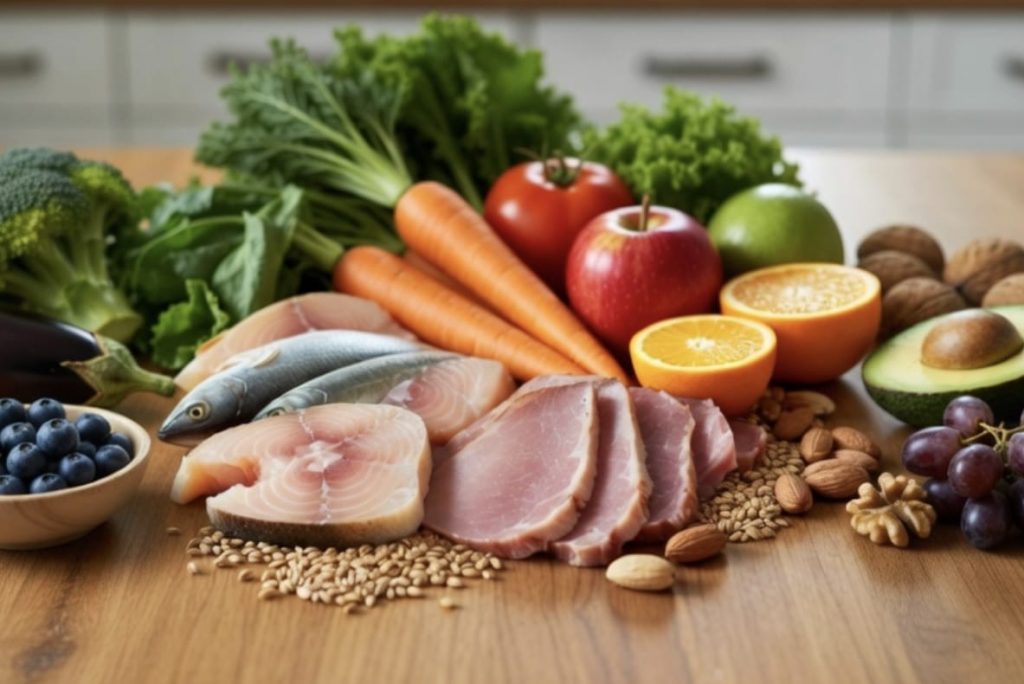
Focus on Whole, Nutrient-Dense Foods
A healthy diet should focus on whole, minimally processed foods. These provide essential nutrients that support the immune system, hormone balance, and metabolic health.
Aim to include:
fresh vegetables and fruits
whole grains such as brown rice, oats, and quinoa
lean protein sources like fish, eggs, poultry, and legumes
healthy fats such as olive oil, nuts, and seeds
Reducing highly processed foods, excessive sugar, and refined carbohydrates may help improve metabolic health and reduce inflammation.
Eat More Foods Rich in Zinc
Zinc plays an important role in male reproductive health, including sperm production and testosterone metabolism.
Good dietary sources of zinc include:
oysters and seafood
pumpkin seeds
nuts and seeds
lean red meat
eggs
A diet lacking in zinc may affect fertility and immune function.
Include Healthy Fats
Healthy fats are essential for hormone production and cardiovascular health.
Foods rich in beneficial fats include:
fatty fish such as salmon and sardines
avocados
olive oil
walnuts and almonds
flaxseeds and chia seeds
Omega-3 fatty acids found in fish and seeds may also help support heart health and reduce inflammation.
Support Prostate Health with Plant Foods
A diet rich in vegetables and fruits provides antioxidants that may support prostate health.
Helpful foods include:
tomatoes (rich in lycopene)
broccoli and other cruciferous vegetables
berries
green tea
These foods contain compounds that may help protect cells from oxidative stress.
Maintain Stable Blood Sugar Levels
Large fluctuations in blood sugar can affect energy levels and hormone balance.
To help maintain stable blood sugar:
eat regular balanced meals
combine protein, fibre, and healthy fats
avoid excessive sugary drinks or snacks
Stable blood sugar levels may also support healthy weight management.
Stay Well Hydrated
Adequate hydration supports circulation, kidney function, and overall health.
Aim to drink sufficient water throughout the day, particularly if you exercise regularly or work in a physically demanding environment.
Limit Alcohol and Processed Foods
Excessive alcohol and highly processed foods may negatively affect hormone balance, metabolic health, and fertility.
Consider limiting:
alcohol
processed meats
sugary beverages
fast foods
Moderation can make a meaningful difference in long-term health.
Supporting Men’s Health Holistically
In Traditional Chinese Medicine (TCM), diet is considered an important part of maintaining balance in the body. Nutrition, stress management, sleep, and regular physical activity all contribute to long-term health and vitality.
At Almond Wellness Centre, we provide acupuncture and Traditional Chinese Medicine treatments tailored to each individual’s health concerns.
Our clinics are located in:
📍 Coburg
📍 Ringwood
If you would like personalised support for men’s health, fertility, or general wellbeing, feel free to contact our clinics to learn more about our treatment approach.
We present a case of a 55 year old male patient with benign prostatic hyperplasia (BPH), elevated PSA, and mild renal–hepatic function impairment who received a combined treatment of acupuncture and Chinese herbal medicine over a two-month period. Significant improvements were observed in PSA levels, renal and liver function markers, and urinary symptoms.
Introduction
Benign prostatic hyperplasia (BPH) is a common condition in ageing men, often associated with lower urinary tract symptoms and elevated prostate-specific antigen (PSA). In Traditional Chinese Medicine (TCM), BPH is frequently attributed to kidney deficiency, damp-heat accumulation, and blood stasis in the lower burner. Integrative approaches combining acupuncture and Chinese herbal medicine have been used clinically to improve urinary symptoms and modulate systemic function, but documented case reports remain valuable for illustrating individualized care and measurable outcomes.
Case Presentation
Patient: 55 year old Male Presenting concerns: Night-time frequency, painful urination (especially after holding urine), history of BPH with elevated PSA, left wrist pain (De Quervain’s tenosynovitis).
Past Medical History:
Diagnosed with Benign Prostatic Hyperplasia(BPH), previously prescribed Boubluts. Patient stopped due to mood changes and other side-effect. His PSA has been raising sharply from 5.67 in January 2025 to 8.66 in July 2025. His urologist raise the concern and wanted him to have further medical check including MRI and biopsy.
Ultrasound confirmed prostate enlargement.
Lab results (10 July 2025):
PSA: 8.66 µg/L (↑; normal <4.51) eGFR: 48 (↓; normal >59)
Creatinine: 134 µmol/L (↑)
GGT: 58 U/L (↑; normal <50)
Tongue: Pale red with thin white coat
Pulse: Wiry
Intervention
The patient received weekly acupuncture treatments focusing on Kidney and Bladder meridians, regulating lower burner qi and improving local circulation. Cupping and moxibustion were added in selected sessions.
In addition, he was prescribed customised Chinese herbal formulas (7–8 packs per round) based on Liu Wei Di Huang Wan with modifications for heat-clearing, detoxification, and blood circulation:
Functions: Nourish liver and kidney, clear heat, resolve dampness, activate blood, support prostate health.
Outcomes
After 4 weeks:
Nocturia reduced to once per night.
Hand pain markedly improved.
Pain during urination only after prolonged holding; otherwise resolved.
Sleep improved (8:30–9 pm to 4:30 am).
After 8 weeks (mid-September 2025):
PSA decreased from 8.66 → 4.07 µg/L
Creatinine decreased from 134 → 119 µmol/L
GGT decreased from 58 → 42 U/L
EGFR increased from 48 → 55 mL/min/1.73m2
Urinary symptoms remained stable with overall well-being improved.
Patient planned to undergo prostate MRI and follow up with urologist in October.
Discussion
This case highlights the potential of acupuncture combined with individualised Chinese herbal prescriptions in managing BPH and systemic metabolic parameters.
PSA reduction suggests improvement in prostate inflammation and volume. Kidney and liver function markers improved concurrently, supporting the TCM principle of “treating the root and branch”. Clinically, this aligns with research showing acupuncture and herbs can regulate endocrine function, modulate inflammation, and enhance circulation in the pelvic region.
Conclusion
Integrative TCM interventions may offer clinically meaningful benefits for patients with BPH and mild renal–hepatic impairment. Individualized diagnosis and regular monitoring of biomarkers are essential to optimise safety and outcomes. Further controlled studies are warranted.
Keywords
Benign prostatic hyperplasia; acupuncture; Chinese herbal medicine; PSA; liver function; kidney function; case report; integrative medicine; Melbourne; Men’s health
Note:
This case report presents the treatment and outcomes of an individual patient. As each person’s condition is unique, results may vary. This report is for clinical and educational purposes only. Patients should consult qualified healthcare professionals for personalised advice.
Alcohol consumption is common in social settings, but excessive drinking can cause unpleasant hangover symptoms such as headache, nausea, fatigue, and, in the long term, may damage the liver.
In Traditional Chinese Medicine (TCM), certain herbs are used to help the body metabolize alcohol, protect the liver, and reduce hangover discomfort. Modern studies also support their benefits in reducing alcohol-induced liver injury.
How Chinese Herbs Work for Alcohol Detox
Promote Alcohol Metabolism
Herbs like kudzu root and kudzu flower accelerate ethanol and acetaldehyde breakdown, reducing intoxication time.
Protect the Liver
Herbs such as Hovenia seed and hawthorn help detoxify and support liver function, reducing the risk of alcohol-related liver disease.
Relieve Hangover Symptoms
Herbs like ginger and licorice soothe nausea, vomiting, and throat irritation commonly associated with hangovers.
7 Common Chinese Herbs for Hangover Relief
Pueraria Root (葛根, Ge Gen) – Supports alcohol metabolism, relieves thirst and headache.
Kudzu Flower (葛花, Ge Hua) – Speeds up alcohol breakdown, protects liver cells.
Hovenia Seed (枳椇子, Zhi Ju Zi) – Promotes detoxification, aids alcohol elimination, calms the mind.
Ginger (生姜, Sheng Jiang) – Relieves nausea and vomiting.
Licorice Root (甘草, Gan Cao) – Protects the liver, eases throat discomfort after drinking.
Other Natural Hangover Remedies
Drink honey water or saline water to rehydrate and restore electrolytes.
Drink green tea or coffee (if your stomach allows) to stimulate metabolism.
Eat fruits like watermelon, bananas, and grapes to replenish vitamins and fluids.
Take vitamin B complex to support liver detoxification.
Ensure adequate rest for natural recovery.
Safety Tips
Herbal remedies are not a substitute for moderation. Some herbs may interact with prescription drugs – always consult qualified TCM practitioners or healthcare professional before use.
The best way to protect your liver is to drink responsibly.
Conclusion:
Chinese herbal medicine such as kudzu root, kudzu flower, Hovenia seed, hawthorn, tangerine peel, ginger, and licorice offer natural ways to support alcohol metabolism, protect the liver, and relieve hangover symptoms.
If you are looking for a personalised TCM liver protection or alcohol detox plan, contact our clinic for professional advice.
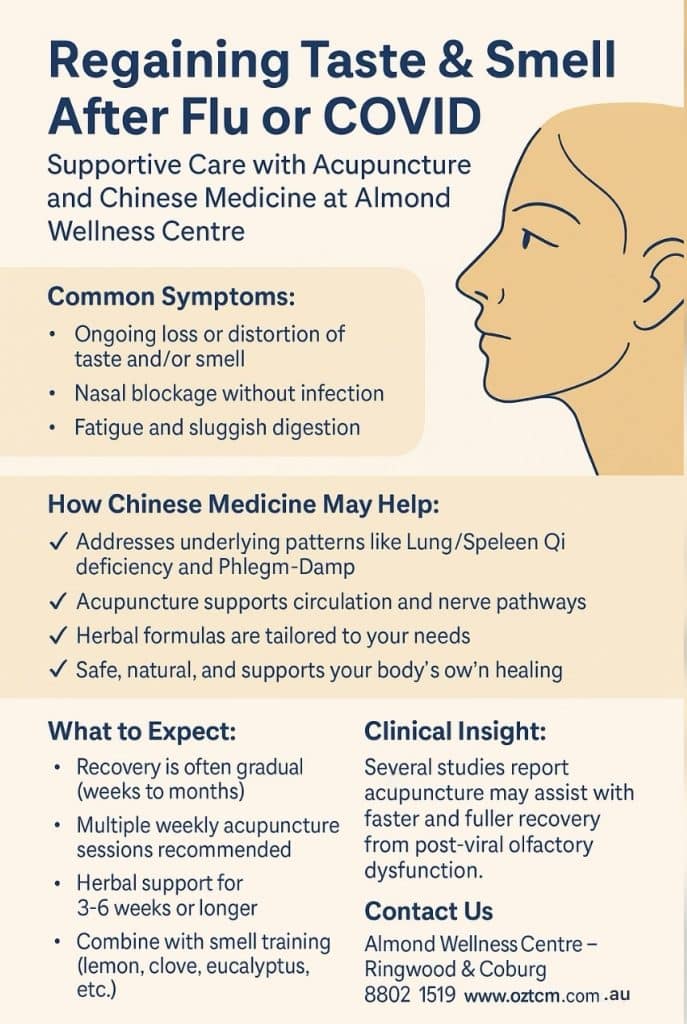
Have you lost your sense of taste or smell after the flu or a COVID-19 infection? You’re not alone. For many people, these senses don’t bounce back right away — and it can be incredibly frustrating. At Almond Wellness Centre in Melbourne, we often see patients navigating this lingering symptom. Acupuncture and Chinese herbal support may offer a helpful and holistic way to encourage your recovery.
Why It Happens: A Chinese Medicine Perspective
In Chinese Medicine (CM), taste and smell loss after a viral infection is viewed as more than just a lingering effect — it points to an internal imbalance.
Here’s how CM explains it:
Lung and Spleen system disruption: Viral infections like flu or COVID are seen as external pathogens attacking the Lungs. The Lungs control the nose and breathing. The Spleen, meanwhile, affects digestion and taste.
Lingering pathogen + Phlegm-Damp: Even after recovery, your body may still hold onto some residual “pathogen,” which combines with weakened digestion to create internal “blockage.” This is known as Phlegm-Damp in CM, and it can clog up the sensory pathways.
Qi and Blood stagnation: The inflammation or stress from illness may slow down circulation and energy flow, reducing function in the nose and mouth.
Qi deficiency: After fighting off a virus, your body’s energy — especially Lung and Spleen Qi — may be depleted, making it harder to bounce back fully.
How Chinese Medicine Supports Recovery
At Almond Wellness Centre, we take a whole-body approach to post-viral recovery. Here’s what support may involve:
Acupuncture
We use acupuncture to support your body’s energy flow and help clear blockages affecting the nose and mouth. This includes:
Local points on the face and nose (e.g. Yingxiang LI20, Bitong, Yintang)
Points to support Lung and Spleen function
Points that help clear Phlegm and improve circulation
Acupuncture may help by improving blood flow, calming inflammation, and stimulating the nervous system.
Research spotlight:
A study in Otolaryngology–Head and Neck Surgery found acupuncture may help patients with persistent post-viral smell loss recover more effectively.
A 2022 case report documented improvements in two COVID-related smell loss cases after acupuncture at facial points like LI20 and Yintang.
An article in Journal of Alternative Complementary & Integrative Medicine highlighted acupuncture as a promising option for long-COVID symptoms, including smell and taste dysfunction.
Chinese Herbal Medicine
Herbal support is tailored to your individual pattern. Your practitioner may focus on:
Clearing lingering heat or toxins
Transforming Phlegm and Damp with herbs like Ban Xia, Chen Pi, Cang Er Zi
Opening the sensory orifices using aromatic herbs like Xin Yi Hua, Bai Zhi, Bo He
Supporting Qi and Blood flow with herbs like Huang Qi, Dang Shen, Chuan Xiong
Strengthening the Lungs and Spleen to aid long-term recovery
Other Helpful Techniques
Moxibustion: This gentle warming technique supports energy and circulation, especially when fatigue is present.
Herbal steam or nasal rinses: May assist in clearing nasal passages.
Olfactory training: Smell training using strong scents like clove, lemon, and eucalyptus is often recommended and supported by research in both Western and Chinese medicine circles.
What You Can Expect
Recovery takes time — usually weeks to a few months.
Gradual progress is common. Many people notice small but steady improvements.
Individualised support matters. The right approach depends on your specific pattern.
Medical checkups still important. Make sure your doctor has ruled out other causes like sinusitis or neurological issues.
Final Thoughts
Loss of taste and smell after flu or COVID-19 can be slow to resolve. While it may come back on its own, many people look for extra support to speed things up or feel more in control of the process. At Almond Wellness Centre in Melbourne, we use a blend of acupuncture, herbal support, and whole-body care to help restore your senses and strengthen your recovery.
If you’ve been waiting weeks or months with little change, it may be worth exploring what Chinese Medicine has to offer. Book a consultation to find out more — we’re here to help you through it.
References
Deng X, Zhang Y, Guo X, et al. Acupuncture for the treatment of post-viral olfactory dysfunction: A pilot study.Otolaryngol Head Neck Surg. 2010;142(3):488-493.
https://doi.org/10.1016/j.otohns.2009.12.006
Bai W, Li J, Yang S. Case Report: Acupuncture is an effective treatment for olfactory dysfunction in the post-COVID-19 condition. ResearchGate. 2022.
Qiang W, Kang Y, et al. Acupuncture effects on COVID-19 long-hauler syndrome. Journal of Alternative Complementary & Integrative Medicine. 2022. Herald Open Access
HealthCMi Staff. Acupuncture for COVID-19 loss of smell and taste. HealthCMi.com.
https://www.healthcmi.com/Acupuncture-Continuing-Education-News/2066-acupuncture-for-covid-19-loss-of-smell-and-taste
HealthCMi Staff. Acupuncture targets long COVID neurological and sensory symptoms. HealthCMi.com.
https://www.healthcmi.com/Acupuncture-Continuing-Education-News/2350-acupuncture-targets-long-covid-neurological-and-sensory-symptoms
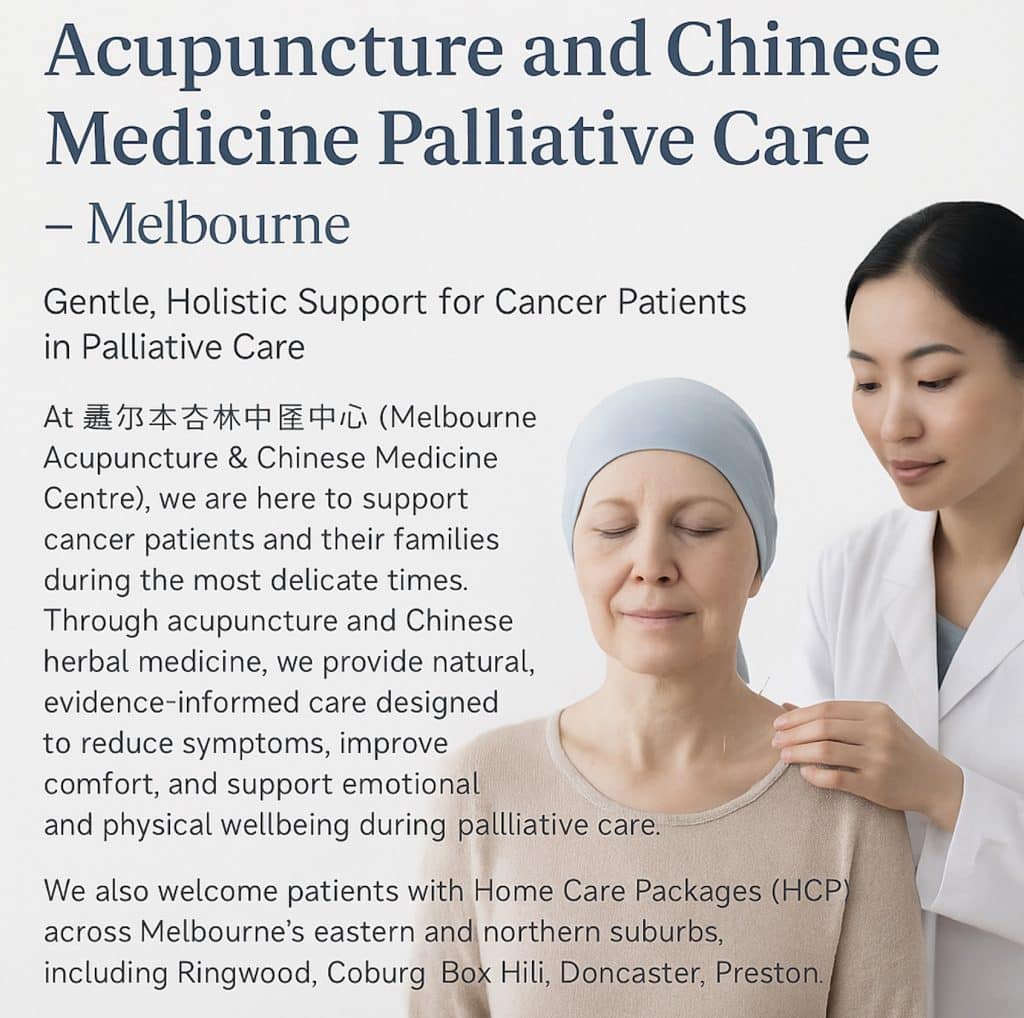
Gentle Support for Comfort and Dignity on Your Journey
When facing a serious illness, the focus rightly shifts to quality of life, comfort, and preserving your sense of self. It’s a path that requires immense strength, and we believe you deserve every possible source of comfort and support along the way.
At Almond Wellness Centre, we provide a gentle, compassionate form of care through acupuncture and Chinese medicine. Our role is not to cure, but to comfort—to help ease the physical and emotional challenges that can arise, allowing you to conserve your energy for what matters most.
We are here to walk alongside you and your family.
Book Online Today or Call us at 03 8802 1519 to have a confidential, compassionate conversation about how we can help.
Palliative care in Chinese medicine is fundamentally about support. We work to:
Alleviate discomfort from symptoms and treatment side effects
Support your energy and spirit to help you feel more present and engaged
Provide a sense of agency by offering gentle, natural choices in your care plan
We see ourselves as part of your broader care team, working in harmony with your doctors and nurses to provide a layer of holistic support.
How We Can Help Ease Your Journey
Our therapies are subtle, gentle, and tailored to your unique needs and energy levels. They are designed to work with your body’s own wisdom to promote a greater sense of ease.
Acupuncture: A Gentle Touch for Symptom Relief
Acupuncture can be remarkably effective for providing comfort without the side effects of additional medications. We use very few, very fine needles with a light touch to help:
Manage Pain: Gently encourage the body’s release of its own pain-relieving endorphins.
Calm Nausea & Support Digestion: Soothe an upset stomach and improve appetite.
Ease Anxiety & Lift Spirits: Promote a deep sense of relaxation and emotional calm.
Reduce Fatigue: Help improve energy flow and combat profound exhaustion.
Address Neuropathy: Lessen the tingling, numbness, or pain from nerve issues.
Improve Sleep: Encourage more restful and restorative sleep.
Chinese Herbal Medicine: Nourishing from Within
Herbs can provide sustained, gentle support between acupuncture sessions. We create simple, easy-to-take formulas (as granules or capsules) to:
Strengthen Digestion to help maintain nutrition and weight.
Build Vital Energy (Qi) to help combat fatigue and weakness.
Calm the Spirit (Shen) to support emotional equilibrium and reduce distress.
Manage Specific Symptoms like night sweats, dry mouth, or constipation.
All our herbs are sourced from TGA-approved, high-quality suppliers in Australia to ensure purity and safety.
Partnering with You, Your Family, and Your Care Team
We understand that palliative care involves a circle of support. We are experienced in collaborating with:
You, to ensure your comfort and preferences always come first.
Your Family and Carers, to provide them with reassurance and support.
Your Medical Team, including GPs, oncologists, and palliative care nurses, to ensure our care is safely integrated with your overall treatment plan.
Using Your Home Care Package (HCP)
We believe financial concerns should not be a barrier to comfort. We are experienced in working with Home Care Package providers and can assist you and your family with:
Understanding how to use your HCP funds for our services.
Providing the necessary treatment plans and documentation.
Handling communication with your package manager.
We proudly support patients across Melbourne’s eastern and northern suburbs, including Ringwood, Croydon, Box Hill, Doncaster, Coburg, and Preston.
Your Palliative Care Questions, Answered
Q: I am very frail and sensitive. Is acupuncture still safe and appropriate for me?
A: Absolutely. Our approach for palliative care is exceptionally gentle. We use very few needles, often with no or minimal manipulation, and the treatments are tailored to your energy levels. Your comfort and safety are our utmost priorities. Many patients find the sessions deeply relaxing and often fall asleep.
Q: How can something as simple as acupuncture help with complex pain?
A: While the pain may be complex, the goal is simple: to help your body access its own innate ability to find comfort. Acupuncture works by stimulating the nervous system to release natural pain-modulating chemicals and can help “interrupt” pain signals. It’s not a substitute for strong medication, but it can often reduce the amount needed or provide relief for specific types of discomfort.
Q: My loved one is very tired. Will this treatment be too draining?
A: Quite the opposite. Acupuncture is used to help combat fatigue and support energy. By improving the flow of Qi (vital energy) in the body, the treatment aims to help them feel less drained and more resilient. We always keep sessions short and comfortable to conserve their energy.
Q: Are Chinese herbs safe to take with all my other medications?
A: Safety is our primary concern. We conduct a thorough review of all medications and supplements you are taking and will only prescribe herbs that are known to be safe and non-interfering. We are happy to communicate with your pharmacist or doctor to ensure complete coordination of your care.
Q: Can you help with the emotional and spiritual distress that comes with a serious illness?
A: Yes. In Chinese medicine, we do not separate the physical from the emotional and spiritual. Treatments are designed to calm the heart and mind (what we call the “Shen”) as well as the body. The quiet, focused space of a treatment session can itself be a profound source of comfort and peace.
Q: How do we get started?
A: Simply give us a call. We’ll have a gentle conversation to understand your situation, answer your questions, and explain the process. We can also coordinate with your family or case manager to make everything as easy as possible for you.
Why Choose Almond Wellness Centre for Palliative Support?
Compassionate Expertise: Our practitioners are not only clinically trained but also possess the deep empathy this work requires.
A Truly Gentle Approach: We modify every treatment to meet you where you are, both physically and emotionally.
Multilingual Care: We can provide care in English, Mandarin, Cantonese, and Taiwanese to ensure clear and comfortable communication.
Trusted for Over 20 Years: We have been a trusted part of the Melbourne healthcare community for more than a decade and a half.
HCP-Friendly: We simplify the process of using your Home Care Package so you can focus on your well-being.
You Are Not Alone on This Path
In the midst of great challenge, small comforts can make a significant difference. Our goal is to provide a sanctuary of care—a place where you are heard, supported, and treated with the utmost dignity and respect.
Let us help you find more moments of comfort and peace.
Call us at 03 8802 1519 to schedule a conversation or appointment.