
Luteal Phase Defect Acupuncture Melbourne
Progesterone Support for Implantation & Early Pregnancy Stability
A short luteal phase can significantly affect implantation timing and early pregnancy stability.
At Almond Wellness Centre, we provide structured fertility acupuncture and Chinese medicine support for women experiencing Luteal Phase Defect (LPD), low progesterone patterns, recurrent early loss, or implantation difficulty.
Our Melbourne clinics integrate Traditional Chinese Medicine (TCM) with modern reproductive monitoring — including Basal Body Temperature charting and cycle-phase–specific protocols.
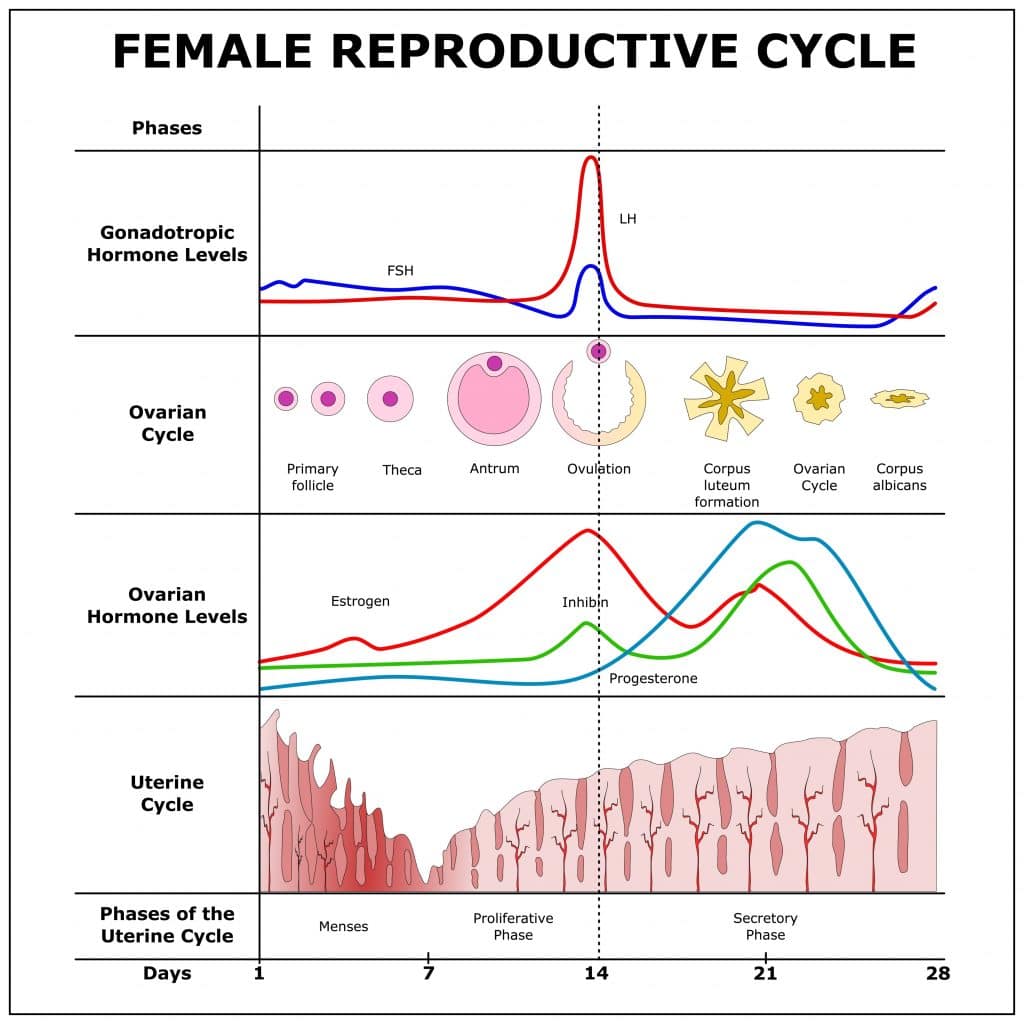
What Is the Luteal Phase?
The luteal phase is the second half of the menstrual cycle — the period between ovulation and menstruation.
This phase typically lasts 10–14 days.
After ovulation:
- The corpus luteum forms in the ovary
- Progesterone production increases
- The uterine lining (endometrium) thickens
- The body prepares for possible implantation
If progesterone levels are insufficient — or if the luteal phase lasts fewer than ~10 days — the uterine lining may not fully mature. This situation is referred to as Luteal Phase Defect (LPD).¹ ²
How LPD May Impact Fertility
LPD is associated with:
- Implantation difficulty
- Early biochemical pregnancy loss
- Recurrent early miscarriage patterns
- Shortened menstrual cycles
- Premenstrual spotting
Successful implantation requires:
✔ Adequate progesterone
✔ Stable uterine blood flow
✔ Proper endometrial development
✔ Precise hormonal timing
When luteal support is suboptimal, implantation may be less likely to occur or sustain.
How Luteal Phase Function Is Assessed
Assessment may include:
- Basal Body Temperature (BBT) charting
- Mid-luteal progesterone blood testing
- Ultrasound monitoring of ovulation
- Cycle tracking and symptom review
At Almond Wellness Centre, BBT tracking is frequently incorporated into fertility programs to monitor luteal length and temperature stability.
The Traditional Chinese Medicine (TCM) Perspective
In Traditional Chinese Medicine, luteal phase concerns are often viewed through patterns such as:
Kidney Yang Deficiency
- Associated with:
- Short luteal phase
- Low basal body temperature
- Cold sensitivity (cold uterus)
- Fatigue
Blood Stasis
Associated with:
- Spotting before menstruation
- Painful periods
- Implantation challenges
TCM treatment focuses on restoring cyclical rhythm, supporting uterine circulation, and strengthening constitutional energy over consecutive cycles.
Acupuncture for Luteal Phase Support
Research suggests acupuncture may influence:
- Reproductive hormone regulation
- Uterine and ovarian blood flow
- Stress hormone balance
- Nervous system regulation³⁻⁵
Within a luteal phase support plan, acupuncture may aim to:
- Support corpus luteum function
- Encourage endometrial development
- Improve pelvic circulation
- Stabilise post-ovulation temperatures
- Reduce stress-related hormonal disruption
Care is individualised and coordinated alongside your GP or fertility specialist.
Integrated Fertility Support at Almond Wellness Centre
Luteal Phase Defect rarely exists in isolation.
It is often addressed as part of a broader fertility strategy, including:
→ Natural Fertility Support
→ IVF & ART Acupuncture Support
→ Women’s Health Acupuncture Melbourne
Our senior practitioner Dr. Richard Zeng has over 30 years of clinical experience in fertility and reproductive medicine.
We frequently incorporate:
- Basal Body Temperature charting
- Cycle phase–specific acupuncture
- Pre-conception planning
- IVF transfer phase support
- Lifestyle and stress regulation strategies
Our goal is structured, measurable, cycle-based care — not symptom-only treatment.
Lifestyle Considerations for Luteal Health
Supporting overall hormonal balance may include:
- Balanced nutrition with adequate protein and healthy fats
- Moderate exercise
- Stress management techniques
- Adequate sleep
- Avoiding excessive physical depletion
These foundational measures may complement professional fertility care.
Why Melbourne Patients Choose Us for Luteal Phase Support
Unlike general acupuncture clinics, our fertility programs:
✔ Follow 3-cycle structured treatment timelines
✔ Track luteal length and temperature stability
✔ Integrate with IVF and specialist care
✔ Focus on measurable reproductive outcomes
✔ Are led by senior practitioner Dr Richard Zeng (30+ years clinical experience)
Frequently Asked Questions
Can Luteal Phase Defect Be Managed Naturally?
Some individuals incorporate acupuncture, Chinese medicine, nutrition and stress regulation to support hormonal balance. Medical assessment remains important for accurate diagnosis and monitoring.
Is Acupuncture Safe When Trying to Conceive?
When performed by a registered practitioner, acupuncture is generally considered safe and may be used alongside medical fertility care.
How Long Does Luteal Phase Support Take?
Because follicle development begins approximately 90 days prior to ovulation, structured fertility care is often planned across 3 consecutive cycles.
Your practitioner will review progress and adjust treatment accordingly.
Seeking Professional Support?
If you suspect luteal phase irregularity or are experiencing fertility challenges, early assessment can help clarify your next steps.
At Almond Wellness Centre, we provide structured, evidence-informed acupuncture and Chinese medicine care in Melbourne.
📍 Clinics in Coburg & Ringwood
or
👉 Book Online Today
References
- Jordan, J. et al. Luteal phase defect: the sensitivity and specificity of diagnostic methods in common clinical use. Fertility and Sterility, Volume 62, Issue 1, July 1994, Pages 54-62 (Link to ScienceDirect)
- Hullender Rubin, L.E. et al. Impact of whole systems traditional Chinese medicine on in-vitro fertilization outcomes. Reproductive Biomedicine Online, 2015; 30(6): 602–612. (Link to PubMed)
- Qin-Wei Fu, E.et al. Acupuncture for women undergoing in vitro fertilization: An updated systematic review and meta-analysis with trial sequential analysis. International Journal of Nursing Studies, Volume 168, August 2025, 105097 (Link to ScienceDirect)
- Emily So, E.et al. Acupuncture in reproductive medicine. Womens Health (Lond). 2010 Jul;6(4):551-63. (Link to PubMed)