Australian Journal of Acupuncture and Chinese Medicine
Lim CED et al, Aust J Acupunct Chin Med 2009;4(2):12-17. Australian Journal Acupuncture and Chinese Medicine
Those of us who have experience in treating endometriosis with Chinese medicine are familiar with the benefits it brings patients in terms of reduced pain and possibly increased rates of conception. This pilot study, a collaboration between Guangzhou Medical University in China and RMIT university in Melbourne, is particularly interesting to us since it measured objective parameters such as immune factors (antigens and antibodies) shown to be abnormally raised in patients with endometriosis. A course of treatment with Chinese herbs not only improved pain but significantly reduced the levels of these immune factors. This is one way that Chinese medicine may improve fertility in endometriosis.
Abstract
Background
Secondary dysmenorrhoea associated with endometriosis affects many women and is the leading cause of work and school absenteeism, with considerable impact on quality of life. This study evaluates the possible role of Chinese medicinal herbs in relieving the menstrual pain associated with endometriosis.
Methods
A prospective clinical observational pilot study involving twenty-five patients with endometriosis with Chinese medical diagnosis of stagnation of qi and blood who were recruited at the Guangdong Women’s and Children’s Hospital during the period of January 2004 to December 2006 to participate in a three-month Chinese medicinal herbs study.
Results
Sixteen patients reported nil dysmenorrhoea during the treatment period. The mean CA125 at the study entry was 59.67 ±28.32 u/ml, compared to 34.83 ±16.34 u/ml post-treatment. The positive EMAb before the commencement of treatment was noted in 22 of 25 cases (88%), while 5 of 25 cases (20%) remained positive after treatment.
Conclusion
Short-term administration of Chinese medicinal herbs may be effective in alleviating secondary dysmenorrhoea associated with endometriosis in qi and blood stagnation pattern. It may provide an alternative treatment option for the management of pelvic pain associated with endometriosis and further research in the area is required.
Kong S et al, Volume (2014), Article ID 146383, 16 pages Evidence-Based Comp and Altern Med Evidence-Based Complementary and Alternative Medicine
This very thorough review compares results of treatment of endometriosis with acupuncture or herbal therapies and pharmaceutical or surgical approaches. A number of therapies, including using Chinese herbs per rectum, obtained great relief for patients, but without the side effects caused by drugs or surgery.
Abstract
Endometriosis (EM) is one of the common gynecological conditions causing menstrual and pelvic pain and affects 10%–15% of women of reproductive age. In recent years, the complementary and alternative medical (CAM) treatment for EM has become popular due to the few adverse reactions reported. The CAM therapy for EM includes several different treatments such as herbs (herbal prescription, extract, and patent), acupuncture, microwave physiotherapy, and Chinese herb medicine enema (CHM enema). These CAM therapies are effective at relieving dysmenorrhoea, shrinking adnexal masses, and promoting pregnancy, with less unpleasant side effects when compared to hormonal and surgical treatments. In this review, we focus on the status quo of CAM on EM and try to identify therapeutic efficacy and mechanisms based on some clinical and experimental studies. We hope to provide some instructive suggestions for clinical treatment and experimental research in the future.
Acupuncture & Herbal Medicine Boost IVF Success in Endometriosis Patients
In a study conducted in northeastern China, 180 women diagnosed with endometriosis undergoing IVF treatments were divided into three groups. The study aimed to determine the impact of acupuncture and Chinese herbal medicine on IVF outcomes.
The Findings:
The acupuncture combined with herbal medicine group had notably higher pregnancy rates compared to those who did not receive acupuncture.
Among the three groups undergoing IVF, the one with acupuncture and herbal medicine showed significantly better outcomes in terms of oocyte retrieval, fertilization rates, implantation success, and overall pregnancy rates.
The patients receiving acupuncture combined with herbal medicine reported better satisfaction scores than those only receiving medicine.
Conclusion: The study concludes that the use of acupuncture alongside herbal medicine had a substantial positive impact on IVF outcomes for women with endometriosis. This combined approach proved more effective than solely using medicine during IVF treatments.
As an expectant father, understanding and supplementing necessary nutrients is crucial. These elements not only concern your health but also directly affect the health of your future baby. They act as the fuel of life, providing energy for sperm and ensuring their quantity, vitality, and quality are optimal.
Zinc
Zinc serves as a crucial guardian of male reproductive ability. As a key component of testosterone, a lack of zinc may lead to fertility issues. To ensure the quantity, vitality, and quality of sperm, a daily intake of 50 milligrams of zinc is indispensable.
Potassium
Potassium is the secret weapon for maintaining sperm vitality. When the body lacks potassium, sperm vitality takes a significant hit. To boost potassium levels, reducing salt intake while consuming more potassium-rich fresh fruits and vegetables is advisable.
Magnesium
Magnesium is essential for maintaining healthy sperm and nervous systems. From dark leafy green vegetables, seeds, legumes to tofu, almonds, and walnuts, they all provide quality sources of magnesium.
Manganese
Severe manganese deficiency may lead to a sharp decrease in sperm quantity. To maintain an adequate supply of sperm, nuts, whole grains, seeds, legumes, and green leafy vegetables are indispensable foods.
Beta-Carotene
This nutrient not only assists in sperm generation but also maintains the health of the testes, promoting the conversion of cholesterol into testosterone.
Vitamin C
Vitamin C effectively prevents sperm from losing vitality due to aggregation, especially for expectant fathers who smoke, making it a powerful ally in fertility.
Vitamin E
Vitamin E is the guardian of sperm formation, protecting sperm from damage caused by free radicals. A daily intake of 400-800 international units of vitamin E is crucial for maintaining sperm quantity and quality.
Selenium
Selenium not only participates in the production of testosterone but also prevents free radical damage to sperm. During in vitro fertilization, selenium is crucial in helping sperm successfully combine with eggs. However, please note that daily selenium intake should not exceed 200 micrograms.
CoQ10
As a potent antioxidant, coenzyme Q10 effectively prevents sperm cells from mutating. A daily supplement of 100 milligrams is sufficient to maintain and enhance sperm health. Whether for older or non-smoking expectant fathers, coenzyme Q10 is a good choice.
Omega-3 Fish Oil
Omega-3 fish oil, hailed as the guardian of male reproductive health, not only helps improve sperm quality and vitality but also actively supports the production of prostate and testosterone. For men facing erectile dysfunction, Omega-3 fish oil may also bring hope. Additionally, it is a powerful antioxidant that helps maintain healthy blood pressure and cholesterol levels.
Vitamin B12
Vitamin B12 is an important driver of sperm production. When the body lacks this vitamin, both the quantity and vitality of sperm may be affected. Therefore, ensuring an adequate intake of vitamin B12 is crucial for maintaining male fertility.
Other Important Factors
For the health of the baby, expectant fathers may consider incorporating these nutrients into their daily diets, laying a solid foundation for the future baby’s health. Of course, nutrient supplements are only part of maintaining fertility. Good lifestyle habits are equally important. Maintaining a healthy diet, avoiding bad habits such as smoking and excessive drinking, and regularly undergoing physical examinations are key to maintaining male fertility.
Finally, it is worth noting that supplements cannot completely replace a healthy diet. Only when we obtain sufficient nutrients from our daily diets can supplements exert their maximum effects. Therefore, in the pursuit of fertility, let us start from the little things in life and create a healthy and harmonious environment for ourselves and our future families.
Seeing a high FSH (Follicle-Stimulating Hormone) level on your fertility test results can feel discouraging and deeply concerning. In Western medicine, it’s often interpreted as a sign of diminished ovarian reserve, suggesting that your ovaries need more stimulation to produce a follicle.
If you’ve received this diagnosis, you might be wondering if there’s still hope. We want you to know this: a high FSH level is not the end of your fertility journey. From the perspective of Traditional Chinese Medicine (TCM), it’s a clear message from your body asking for deeper nourishment and balance. And this is exactly where acupuncture and Chinese medicine can offer a powerful, holistic path forward.
How Chinese Medicine Views Elevated FSH: The Fertility Tank Analogy
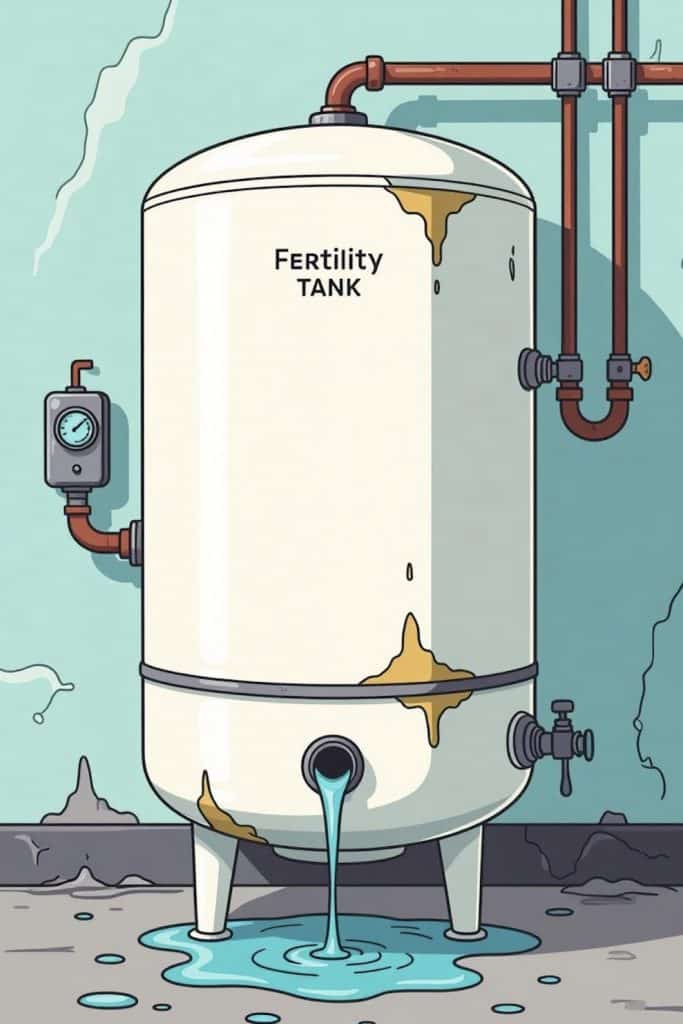
In TCM, reproductive health is rooted in the Kidney system, which governs growth, development, and fertility. The core of this system is Kidney Jing (Essence) – which you can think of as your body’s innate “Fertility Tank“.
Understanding Your Fertility Tank (Kidney Jing)
Jing is Your Pre-Battery: You are born with a certain amount of this essential energy, and it naturally, gradually depletes with age. It Fuels Reproduction: Jing is the deep reserve that powers your menstrual cycles, ovulation, and healthy egg development. It Can Be Depleted Faster: Chronic stress, overwork, poor sleep, and illness can all cause your body to draw down this tank more quickly.
A high FSH result, in TCM terms, is often a sign that this “Fertility Tank” is running low. Your body is having to shout louder (with high FSH) to get a response from the ovaries.
The Role of Kidney Yin: The Cooling, Nourishing Fluid
In TCM, high FSH is frequently linked to Kidney Yin Deficiency. If Jing is the fuel in the tank, Yin as the cooling, nourishing, moistening aspect of the Jing. It ensures everything runs smoothly without overheating.
When Kidney Yin is deficient, the body can’t cool itself properly, leading to a type of internal “empty heat.” This heat can further disrupt hormonal balance and contribute to that high FSH reading.
Do you recognise these signs of a low “Tank” or Yin deficiency?
Night sweats or/and hot flushes
Dry skin, hair, or eyes
Scant or absent periods
Insomnia, feeling “wired but tired”
Lower back ache
Anxiety
A Whole-Body Perspective: It’s Not Just the Kidneys
While the Kidney system is the foundation, true balance involves the whole body. High FSH often involves other key systems:
The Liver: The Liver ensures smooth flow of energy and blood. **Liver Qi Stagnation**—often from stress and frustration—can lead to irregular cycles, PMS, and feeling tense or irritable. The Spleen: The Spleen is our energy and blood producer from food. A weak Spleen means not enough nourishment is being made to support the Uterus and a potential pregnancy. The Heart: The Heart houses our spirit (Shen). When we feel anxious or have poor sleep, it can disrupt the vital connection between the Heart and the Uterus, affecting emotional well-being and implantation.
Our Treatment Approach: Refilling Your Fertility Tank
The goal of treatment is simple but profound: to nourish the Kidneys, replenish Jing and Yin, and bring your entire body back into harmony. We aim to create a more receptive and nourishing environment for your fertility.
Acupuncture: Regulating and Restoring Balance
Acupuncture is a powerful tool for regulating the hormonal axis (HPO axis), increasing blood flow to the ovaries and uterus, and profoundly reducing stress. Treatments are relaxing and tailored to your unique needs.
Commonly used points include:
SP6 (Sanyinjiao): A powerhouse point that nourishes the Liver, Spleen, and Kidney Yin all at once. KD3 (Taixi): A major point to strengthen and tonify the Kidney system. RN4 (Guanyuan): Located on the lower abdomen, this point directly warms and nourishes the Uterus and essence. HT7 (Shenmen): Calms the mind and spirit, eases anxiety, and promotes restful sleep.
Chinese Herbal Medicine: Deep, Internal Nourishment
Herbs provide the foundational building blocks that acupuncture directs. Your practitioner will create a custom formula for you, but for a depleted “Fertility Tank” (Kidney Yin/Jing deficiency), a classic base formula is **Zuo Gui Wan** (Left-Restoring Pill).
Key herbs and their roles:
Shu Di Huang (Rehmannia): The “emperor” herb that deeply nourishes Blood and Kidney Essence—it’s like putting high-quality fuel in your tank. Shan Yao (Chinese Yam): Supports the Spleen and Kidneys, helping your body better absorb the nourishment. Gou Qi Zi (Goji Berry): Nourishes Liver and Kidney Yin, supporting overall vitality.
Tu Si Zi (Cuscuta Seed): Helps to stabilise and consolidate your Jing.
If there are signs of “empty heat” like night sweats, we add cooling herbs like Zhi Mu or Di Gu Pi to restore a calm, cool balance.
Case Examples
Case 1:
“Sarah,” 34, came to us with an FSH level of 18.5 mIU/mL and an AMH of 0.4 ng/mL. She had been told her chances to conceive with her own eggs were very low. She also experienced night sweats, poor sleep, and felt constantly anxious.
Her TCM diagnosis was a severely depleted Kidney Jing with Kidney Yin Deficiency and Liver Qi Stagnation.
We designed a plan with weekly acupuncture and a personalised herbal formula based on Gui Shao Di Huang Wan (归芍地黄丸). After two months, her night sweats had resolved, her sleep and mood improved significantly, and her period became more regular and the flow were more substantial. Most importantly, a repeat test showed her FSH had dropped to 9 mIU/mL. This shift created a more favourable environment, and she was able to produce a viable embryo for her next IVF cycle.
Case 2:
“Emma”, 41. Emma experienced perimenopausal symptoms including hot flashes, anxiety, and insomnia. Her FSH level was 25 IU/L, indicating diminished ovarian reserve. From a Traditional Chinese Medicine (TCM) perspective, her pattern was diagnosed as Kidney Yin Deficiency with Heart Fire — a common presentation in women with high FSH levels.
Her treatment plan included acupuncture and a modified Liu Wei Di Huang Wan herbal formula to nourish Yin, calm the mind, and restore hormonal balance. After two months, her symptoms eased significantly — her FSH dropped to 11 IU/L, her menstrual cycle resumed, and she reported better sleep and energy.
“Acupuncture and Chinese medicine gave me hope when my hormones felt out of control,” Emma shared.
(Please note: These are an individual cases and results may vary.)
What Does the Research Say?
While individual results may vary, a growing body of research has explored how Chinese medicine may support hormone regulation and fertility.
You’re right to ask for proof—TCM isn’t just tradition; it’s backed by growing research. A 2023 meta-analysis found acupuncture significantly lowers FSH, improves AMH (anti-Müllerian hormone), and boosts ovarian function in women with diminished reserve. Another 2024 study showed acupuncture reduces FSH while increasing estrogen, alleviating perimenopause symptoms. pmc.ncbi.nlm.nih.gov, frontiersin.org
For herbs, a review on Chinese formulas like those tonifying Kidney Yin demonstrated improved fertility outcomes and hormone balance in POI (premature ovarian insufficiency). A 2025 review in the Journal of Ovarian Research found that Chinese herbal medicine may help improve ovarian function and regulate hormones in women with diminished ovarian reserve (DOR). The review of clinical and basic studies showed CHM supports the hypothalamic–pituitary–ovarian axis, reduces oxidative stress, and protects ovarian cells — suggesting potential benefits for women with high FSH and reduced fertility (Zhang et al., J Ovarian Res, 2025; 18:90) . sciencedirect.com
While more large-scale studies are needed, these findings are promising and align with my clinical experience.
Fill Your Fertility Tank at Almond Wellness Centre
A high FSH level can feel like a setback, but it’s not a final verdict. It’s your body’s way of asking for deeper, more foundational care.
At Almond Wellness Centre we specialise in listening to these messages. We combine the wisdom of Chinese medicine with a compassionate, personal approach to help you refill your “Fertility Tank”, balance your energy, and nurture your vitality and hope.
Disclaimer: Individual responses to Chinese medicine treatment may vary. Consultation with a qualified TCM practitioner is recommended to determine the most suitable herbs, formulations and acupuncture treatment based on individual health conditions. This information is for educational purposes and does not replace professional medical advice.
References
Click to View References
Zhao, L. Q. (2009). TCM Treatment of Female Infertility Caused by High FSH. Journal of the Association of Traditional Chinese Medicine (UK), 16(1), 13–17.
Xu, J. Y., et al. (2022). Acupuncture for Female Infertility: Discussion on Action Mechanism and Application. Evidence-Based Complementary and Alternative Medicine, 2022, 3854117.
Chen, C.-H., et al. (2011). Liu Wei Di Huang Wan, a well-known traditional Chinese medicine induces CYP1A2 while suppressing CYP2A6 and N-acetyltransferase 2 activities in man. Journal of Ethnopharmacology, 133(2), 613–619.
Lin, G., et al. (2023). Clinical efficacy of acupuncture for diminished ovarian reserve: a systematic review and meta-analysis of randomized controlled trials. Frontiers in Endocrinology, 14, 1136121.
Cao, H., et al. (2024). The clinical value of acupuncture for women with premature ovarian insufficiency: a systematic review and meta-analysis of randomized controlled trials. Frontiers in Endocrinology, 15, 1361573.
Shao, Y., et al. (2020). Chinese herbal medicine for premature ovarian insufficiency: A protocol for systematic review. Medicine, 99(11), e19371.
Li, H.-f., et al. (2023). Dissecting the efficacy of the use of acupuncture and Chinese herbal medicine for the treatment of premature ovarian insufficiency (POI): A systematic review and meta-analysis. Heliyon, 9(10), e20498.
Ushiroyama, T., et al. (2004). A pilot study of a Kampo formula, EH0202, with intriguing results for menopausal symptoms. Journal of Alternative and Complementary Medicine, 10(2), 397–399.
Daghighi, S. (2011). Effectiveness of Acupuncture and Chinese Medicine Herbs in Lowering FSH Level of a Thirty-Nine Year Old Female: A Case Study. Yo San University Capstone Project.
Elliott, D. (2009). The Treatment of Elevated FSH Levels with Chinese Medicine. Journal of Chinese Medicine, 91, 5–11.
 Understanding Your Fertility Tank (Kidney Jing)
 What Does the Research Say?