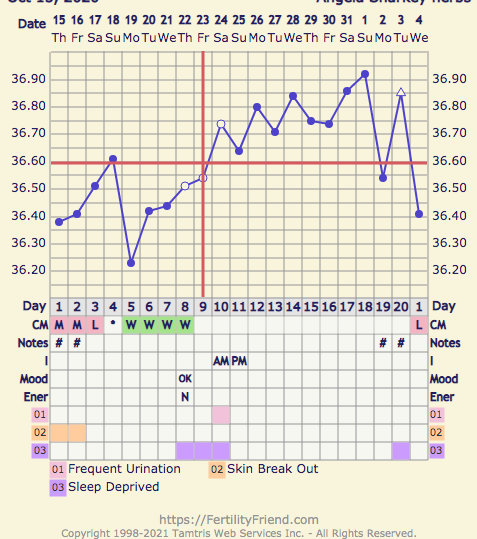
Struggling to conceive? Understanding your body’s natural rhythm is a powerful first step. Tracking your Basal Body Temperature (BBT) is a simple, non-invasive, and highly effective method to gain deep insights into your ovulation and overall menstrual cycle health. It is one of the best natural ways to check your ovulation and help you know the best time for conception.
In this comprehensive guide, we’ll walk you through exactly what BBT is, why it’s a valuable tool for conception, and how to measure and chart it accurately.
What is Basal Body Temperature (BBT)?
Your Basal Body Temperature (BBT) is your body’s lowest resting temperature, reached during complete rest – typically after a full night’s sleep. It’s a subtle but crucial metric that reflects your body’s core metabolic state.
Why Track Basal Body Temperature for Fertility?
Tracking your BBT is one of the most empowering natural methods to:
Confirm that ovulation has occurred in your current cycle.
Identify your specific ovulation window by observing the temperature shift, helping you predict future cycles.
Assess the health and length of your Luteal Phase (the post-ovulation phase crucial for implantation).
Provide invaluable data for a healthcare practitioner to assess your hormonal health.
By combining BBT charting with other observations like cervical mucus changes, you can build a complete picture of your fertile window.
How BBT Reflects Ovulation and Progesterone
The entire principle behind BBT tracking is its direct link to the hormone progesterone.
Before Ovulation: Oestrogen is dominant, and both progesterone and your BBT remain at a lower, “follicular phase” level.
After Ovulation: The ruptured follicle (corpus luteum) releases progesterone. This hormone raises your body’s core temperature to create a hospitable environment for a potential pregnancy.
The BBT Shift: This progesterone surge causes a noticeable, sustained increase in your BBT (typically 0.3–0.5°C), creating a “biphasic” pattern on your chart that confirms ovulation has happened.
At Almond Wellness Centre, we deeply analyse BBT charts alongside your symptoms. The subtle patterns in your chart can reveal insights into your underlying health from a Traditional Chinese Medicine perspective, allowing us to tailor your acupuncture and herbal medicine treatments for maximum effectiveness in supporting fertility.
How to Measure and Record Your BBT: A Step-by-Step Guide
For consistent and accurate results, follow these steps meticulously:
Get the Right Tool: Use a digital basal thermometer (more sensitive than a regular fever thermometer) or a smart thermometer that syncs to an app. We recommend starting with a dedicated BBT thermometer for the most precise readings.
Establish Consistency: Measure your temperature at the same time every single morning, before you do anything else. This means before sitting up, talking, drinking water, or going to the bathroom. Even a small disruption can affect the reading.
Prioritise Rest: Ensure you have had at least 3 consecutive hours of sleep before measuring.
Choose Your Method:
Orally: Place the thermometer tip at the base of your tongue, towards the back. Keep your lips closed tightly.
Vaginally: This method is often more stable and less susceptible to disturbances from mouth breathing. The temperature may be slightly higher. Choose one method and stick with it
Record Immediately: Note your temperature right away in a dedicated app like Fertility Friend or on a paper chart. These tools make it easy to spot the pattern.
Note Relevant Factors: Mark down any potential disruptions on your chart, such as illness, fever, poor sleep, stress, or alcohol consumption the night before. This context is crucial for accurate interpretation.
Frequently Asked Questions About BBT
Q: Can I use a regular thermometer?
A: While possible, a dedicated basal thermometer is highly recommended as it is more sensitive and displays temperature to two decimal places, making it easier to see the subtle shift.
Q: What if I wake up at a different time on the weekend?
A: Try to measure within the same 30-60 minute window. If you wake up much later or earlier, make a note on your chart, as the reading may be slightly skewed.
Q: My chart is all over the place. What does that mean?
A: Some variation is normal. However, a consistently erratic chart or the absence of a clear biphasic pattern could indicate anovulation (no ovulation) or other hormonal issues. This is valuable information to discuss with your practitioner.
Q: How long does it take to see a pattern?
A: It typically takes 1-3 full cycles to become confident in reading your chart and predicting your ovulation pattern.
Ready to Deepen Your Fertility Journey?
Tracking your BBT provides powerful data, but you don’t need to navigate it by yourself. Our team integrates fertility awareness, acupuncture and Chinese Medicine as part of comprehensive care, including IVF support acupuncture when needed.
Have questions about your BBT chart or fertility health?
Book Online Today to schedule a consultation, or Message us using the Contact Form below.
For couples trying to conceive, understanding your body’s natural rhythms is the ultimate empowerment. While apps and test kits are helpful, one of the most effective and cost-free methods is learning to read the changes in your cervical mucus.
From a Chinese Medicine perspective, these changes are more than just physical signs – they are a direct reflection of the intricate energetic dance of Yin, Yang, Qi, and Blood happening within your cycle. This article will guide you through how to observe your cervical mucus and explain its profound meaning through both a Western and a Traditional Chinese Medicine (TCM) lens.
Why Cervical Mucus is a Key Fertility Sign
Tracking your cervical mucus offers an intimate look into your fertility, helping you identify your most fertile days and guiding your TCM treatment plan.
The Western Medicine Perspective
Cervical mucus plays a vital role in both fertility and reproductive health.
Before and after ovulation, it acts as a protective barrier, preventing bacteria and viruses from entering the uterus.
During the fertile window, the mucus becomes clear, slippery, and stretchy, helping sperm survive, travel, and fertilise the egg – Fertile mucus helps sperm to survive and remain in the cervix for several days, waiting for ovulation and the signal to swim toward the egg.
Therefore, abundant, clear, egg-white mucus often indicates a highly fertile phase, and tracking these changes is a simple and effective way to identify your most fertile days.
Because its production is mainly regulated by estrogen, changes in mucus consistency can reflect hormonal balance. If the mucus remains thick or scant throughout your cycle – without becoming clear, stretchy, or egg-white in quality – it may suggest hormonal imbalance, dehydration, or medication effects that can interfere with conception.
The Chinese Medicine Perspective
In Traditional Chinese Medicine, cervical mucus is seen as a mirror of Kidney Yin or Kidney Jing (fertility essence)
Healthy, abundant, and slippery mucus indicates strong Kidney Yin/Essence and optimal fertility. The transformation from dry to moist, then to clear, stretchy mucus represents the flourishing of Yin, which must peak before ovulation – a Yang event – can successfully occur.
From a TCM viewpoint:
The more fertile mucus appears around mid-cycle, the more balanced and nourished the body is – and the more likely conception will occur naturally.
A TCM practitioner pays close attention to mucus changes as one of the most important signs of fertility improvement.
If the mucus is consistently scant, sticky, or dry, it may suggest Yin or Essence deficiency, or internal Heat consuming Yin. Your practitioner will work to nourish Yin/Essence, restore fluids, and strengthen your reproductive vitality through acupuncture, herbal medicine, and diet.
Why is this so crucial for your TCM treatment?
The presence of clear, stretchy “egg-white” mucus around ovulation is a strong sign that your body is in an optimal fertile state. By reporting your mucus observations to your practitioner, we can fine-tune your acupuncture and herbal medicine plan to directly support and enhance the production of healthy, fertile mucus.
Simply state:
The more mucousy, the more fertile.
What Can Affect Your Cervical Mucus?
It’s important to know that your cervical mucus is sensitive. Several factors can influence its quality, including:
Stress
Medications (like clomid, some IVF drugs)
Hormonal shifts (e.g., perimenopause)
Illness
Dieting or significant weight change
Travel or disrupted sleep
Reporting your mucus observations to your practitioner is so crucial – it allows us to fine-tune your acupuncture and herbal medicine plan to directly support and enhance the production of healthy, fertile mucus.
How to Check Your Cervical Mucus
Choose whichever method you’re most comfortable with:
Toilet Paper Check: Observe mucus after wiping.
External Observation: Feel for mucus at the vaginal opening.
Internal Observation (most accurate): With clean hands, insert two fingers to gently collect mucus from around the cervix.
To analyse:
Stretch it between your thumb and forefinger.
Note consistency (sticky, creamy, or stretchy), sensation (dry, wet, slippery), and colour (cloudy, white, or clear).
Understanding the Stages of Cervical Mucus
1. Infertile Mucus (Post-Period)
Timing: Right after your period for 3-5 days.
Sensation: Often feels “dry“, or you may have no mucus at all.
Appearance: If present, it’s typically “thick, sticky, tacky, and cloudy” (white or yellow). It does not stretch and may break apart.
TCM Insight: This aligns with the early follicular phase, where Yin and Blood are just beginning to build after menstruation.
2. Fertile Mucus (Approaching Ovulation)
Timing: In the days leading up to ovulation.
Sensation: Becomes increasingly “wet, slippery, and watery”.
Appearance:Transforms to a clear, stretchy consistency with the texture of raw egg white. This “egg-white cervical mucus” (EWCM) can stretch several centimetres between your fingers without breaking. This is your most fertile sign.
TCM Insight: This signifies the peak of Yin and fluids in your cycle, creating a “slippery” and nourishing environment that is perfectly aligned with the release of the egg (the transition from Yin to Yang).
3. Post-Ovulation Mucus
Timing: Immediately after ovulation until your next period. Sensation & Appearance: Becomes sticky and cloudy again, or dries up completely. TCM Insight: After ovulation, Yang energy rises to warm the body and support a potential implantation. The fertile, Yin-rich mucus is no longer needed, so it changes or disappears.
The Best Time for Conception: Pinpointing Your Fertile Window
While it’s best for couples to have sex every 2-3 days throughout the cycle, the absolute peak fertility window is the 2-3 days leading up to and including the day of ovulation.
The chart below, based on a study of 3,175 cycles, shows the probability of conception. The highest probability coincides perfectly with the presence of fertile, egg-white cervical mucus.
Cycle Day (Relative to Ovulation)
-8
-7
-6
-5
-4
-3
-2
-1
Rise in temperature
+1
+2
Probability of Conception
0.3
1.4
2.7
6.8
17.6
23.7
25.5
21.2
10.3
0.8
0.38
Source: Adapted from a study of 3,175 cycles with 434 pregnancies. Ovulation typically occurs the day before a sustained rise in basal body temperature.
Your action plan: Start having intercourse as soon as your mucus becomes wet and creamy, and aim for every day or every second day once you see the clear, stretchy “egg-white” mucus. For a complete picture, consider combining this with charting your basal body temperature.
A Holistic TCM Path to Enhancing Fertility
Tracking your cervical mucus is a powerful tool that connects you deeply with your body’s natural wisdom. From a TCM viewpoint, it’s not just about timing intercourse; it’s a diagnostic tool to understand the quality of your Yin essence.
If your mucus is consistently scant, sticky, or never reaches a fertile “egg-white” quality, it can indicate an underlying imbalance that Chinese herbal medicine and acupuncture can help address. We work to nourish your Yin, support healthy fluid production, and create a harmonious internal environment for conception.
Are you tracking your cycle but want a deeper understanding?
At Almond WellnessCentre, we combine this valuable self-observation with the holistic diagnosis of Chinese Medicine to create a personalised treatment plan that supports your fertility.
Q: What does fertile cervical mucus look and feel like?
A: Fertile cervical mucus, often called ‘egg-white cervical mucus’ (EWCM), is clear, stretchy, slippery, and has the consistency of raw egg whites. It should be able to stretch several centimetres between your fingers without breaking.
Q: How does Chinese Medicine view cervical mucus?
A: In TCM, cervical mucus is a direct manifestation of the body’s Yin fluids. Its quality reflects the state of Kidney Yin, which is essential for nourishing the follicle (egg) and building a healthy uterine lining. Scant or poor-quality mucus often indicates a Yin deficiency.
Q: When is the best time to conceive based on cervical mucus?
A: The most fertile time is during the 2-3 days leading up to and including ovulation, when you have the most abundant, clear, and stretchy ‘egg-white’ mucus. This is the peak of your fertility window.
Q: What can cause changes in my cervical mucus?
A: Several factors can affect cervical mucus, including stress, medications (like Clomid), illness, dieting, travel, and hormonal shifts such as perimenopause.
>References
1. BellyBelly. (n.d.). Cervical Mucus Can Indicate Ovulation & Fertility.
3. BabyHopes. (n.d.). Cervical Mucus and Getting Pregnant.
4. Noll, A. A., & Wilms, S. (2010). Chinese Medicine in Fertility Disorders. Thieme.