By Dr. Richard Zeng – Almond Wellness Centre, Melbourne
I get this question all the time.
And honestly?
It usually comes a bit late.
Most people don’t think about acupuncture – or Chinese medicine – until something feels off. Maybe it’s been months of trying. Maybe IVF is now on the table. Maybe you’re just tired of overthinking every cycle.
Totally understandable.
But here’s the quiet truth: fertility support tends to work better when we start before things feel urgent.
So… when should you actually start?
If we were sitting down with a coffee, I’d say:
give yourself about three months before trying.
Not because it sounds nice – but because biology says so.
An egg takes about three months to go through its final development phase.
Same idea for sperm too, by the way.
So what you do during that window? It matters more than most people realise.
Your body is already doing the work – balancing hormones, building blood flow, adjusting timing. Acupuncture and Traditional Chinese Medicine (TCM) don’t “take over” that process.
They just help things run a bit more smoothly.
Early starters vs last-minute starters
There’s a big difference – and I see it every week.
When someone comes in early, everything feels calmer.
We’ve got time to nudge things in the right direction. Support the cycle. Improve patterns. Let the body catch up.
When someone comes in right before IVF?
We can still help. Absolutely.
But now we’re working on a deadline.
It’s like deciding to get fit the week before a marathon. You’ll still get some benefit… but it’s not quite the same.
Already trying? You’re not “behind”
If you’ve been trying for a while, don’t overthink it – just start.
At that stage, acupuncture may help support cycle rhythm, blood flow, and luteal phase function.
Just as importantly, it can take the edge off the whole process.
Because let’s be real – this journey can get stressful fast.
And stress doesn’t help anything.
What about IVF?
This is where acupuncture really earns its place.
A lot of people come in at this point feeling overwhelmed. And that makes sense – IVF isn’t just physical, it’s emotional and financial too.
Starting acupuncture about 6–8 weeks before your cycle gives us a chance to prepare properly.
We’re usually looking to support how your body responds to stimulation, improve the uterine environment, and help you feel a bit more steady through the whole process.
Then we stay with you through transfer and early pregnancy support.
We can’t control every outcome – but we can support the conditions going in.
And yes – herbs matter too
Acupuncture gets all the attention, but herbal medicine is doing a lot of the quiet heavy lifting.
Think of it as daily support in the background.
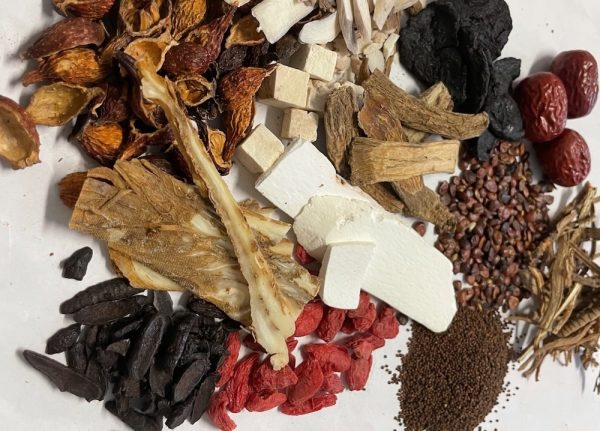
A properly prescribed formula may help regulate your cycle, support the luteal phase, or address patterns we commonly see – like low energy, poor circulation, or what we call Kidney Yang deficiency.
But this part is important:
don’t self-prescribe.
Herbal medicine is not one-size-fits-all. What works beautifully for one person might be completely wrong for another.
Quick note for the guys
You’re part of this too.
Sperm takes about 2-3 months to develop, so timing matters on your side as well. Supporting sperm quality isn’t complicated, but it does require some intention.
When couples approach this together, everything tends to feel a bit lighter – and a lot more balanced.
Something I’ve noticed over the years
It’s not always the patients with the “best” results on paper who do well.
It’s the ones who give their body a bit of space.
Not forever.
Just enough.
Enough time to adjust.
Enough time to respond.
Enough time to settle.
That’s really what we’re doing here. Not forcing outcomes – just setting things up better.
If you just want the short version:
3 months before trying – ideal
Already trying – start now
IVF coming up – aim for 6-8 weeks before
Doing this as a couple – even better
And if you take one thing away from this?
Don’t wait until you feel completely stuck.
Final thoughts
Fertility isn’t just about ticking boxes or chasing the “perfect” cycle.
It’s bigger than that.
It’s your body, your timing, your environment – and yes, your partner too.
Chinese medicine looks at that whole picture. And sometimes, that shift alone changes everything.
If you’re not sure where to begin, that’s okay.
Start with a conversation.
We’re here at Almond Wellness Centre in Coburg and Ringwood if you feel like having that chat.
About the author
Dr. Richard Zeng is a fourth-generation Traditional Chinese Medicine practitioner. He is specially interested in fertility, women’s health, and complex chronic conditions, and has supported many patients through natural conception, IVF, and pregnancy.
She was 41. They’d been trying for over a year. A fertility specialist had already told her her AMH was low and her egg quality “not ideal.”
She paused for a moment, then asked the question I hear from so many women sitting in that same chair.
“I just want to know… is there anything else I can still do?”
For many of my patients, that question is the beginning of a very different journey, and if you’re reading this, you might be in a similar place.
By this point, many women already understand the numbers. AMH, follicle count, hormone levels. They’ve already spent months researching before they even walk into my clinic.
What you’re looking for is a shift away from looking at fertility as just numbers on a lab report, and toward understanding the whole body, the whole person.
That’s where Traditional Chinese Medicine (TCM) – especially Chinese herbal medicine – often comes in.
Let’s talk about it properly. No false promises. No empty hope. Just an honest conversation about what may still help.
First – How TCM Sees Fertility Over 40
In Western medicine, the focus is very clear:
ovarian reserve
egg quality
hormone levels
These are all important when it comes to fertility.
But in TCM, my goal is to zoom out and ask about your body overall.
How regular is your cycle?
How is your sleep?
Your digestion?
Your stress levels – really?
Because from a TCM perspective, fertility isn’t just about the ovaries. It’s about the environment your body creates every month.
It’s important to note that two women, both 40, same AMH – may receive completely different herbal formulas. Because in TCM, we don’t treat “being 40.”
We treat you.
So… What Do Chinese Herbs Actually Do?
This is where expectations matter.
Chinese herbs don’t “boost egg quality overnight.” They don’t override biology. What they can do is support:
hormonal balance
blood flow to the uterus
stress response
overall reproductive environment
In the clinic, I often explain it this way:
“We are not changing the egg itself – we are improving the soil it grows in.”
The 5 Most Common Herbal Patterns We See
These are the patterns we actually see in clinic.
1. Kidney Yin Deficiency
(Often linked to the “running low” feeling)
This is one of the most common patterns in women over 40.
You might notice:
shorter cycles
light periods
night warmth or mild night sweats
dryness
that “afternoon crash”
Common herbs:
Shu Di Huang
Bai Shao
Gou Qi Zi (goji)
Shan Zhu Yu
Nü Zhen Zi
These formulas aim to nourish and rebuild.
2. Kidney Yang Deficiency
(When things feel… cold, slow, low energy)
Different pattern, different feeling.
You may have:
feeling cold (especially lower back/abdomen)
long cycles
low libido
fatigue, especially mornings
Common herbs:
Yin Yang Huo
Xian Mao
Ba Ji Tian
Tu Si Zi
Du Zhong
Balanced support. Not extreme.
3. Blood Deficiency
(Not enough nourishment for the uterine lining)
You might see:
light periods
dizziness
poor sleep
anxiety or palpitations
Common herbs:
Dang Gui
Bai Shao
Shu Di Huang
Long Yan Rou
I have a patient who once told me:
“I didn’t realise how tired my body was… until I started feeling stronger again.”
That’s the result of blood tonics and medicinal herbs working quietly in the background.
4. Qi Deficiency
(Energy is the foundation of your body and it is often overlooked)
Very common. Especially in busy women juggling work, family, IVF appointments…
Signs:
constant fatigue
bloating
loose stools
feeling overwhelmed easily
Common herbs:
Huang Qi
Dang Shen
Shan Yao
Bai Zhu
These are not glamorous herbs. But they are essential. Without good digestion and energy, nothing else works properly.
5. Blood Stagnation
(When things are stuck rather than lacking)
This one is different.
Signs:
painful periods
clots
fixed pain
endometriosis (in TCM context)
Common herbs:
Chuan Xiong
Chi Shao
Yi Mu Cao
Tao Ren
Used carefully, especially if you’re actively trying to conceive.
A Real Case I Had (You Might Relate)
A patient, 42, came in after 2 failed IVF cycles.
Her words:
“They told me my egg quality is poor. I feel like I’m running out of time.”
We worked together for about 3 months in regular appointments:
herbs + acupuncture
focus on sleep, digestion, stress
After that:
her cycle became more regular
her energy improved
she felt “more stable” emotionally
She went on to do another IVF cycle.
Was it a guarantee? No.
But she said something that stayed with me:
“At least now I feel like my body is working with me, not against me.”
How Long Does It Take?
This is one of the most common questions I am asked.
Realistically:
4–6 weeks → you may start noticing changes
8–12 weeks → clearer pattern shifts
In our clinic:
about 50–60% of patients report noticeable improvement within 2–3 cycles
Improvement might mean:
better cycle regularity
improved energy
less PMS
better sleep
It is not a dramatic overnight change, but shows consistent signs of steady, meaningful progress.
Self-Prescribing Herbs Is Not a Good Idea, Why?
This part is important.
Chinese herbal medicine is not like buying supplements online. The same herb can help one person or worsen symptoms in another.
It depends on:
your pattern
dosage
combination
timing within your cycle
Also:
herbs may interact with IVF medications
quality varies significantly
So yes, while I understand the temptation to “just try something”, in practise it often leads to wasted time or worse – imbalance.
Working With a TCM Practitioner
At Almond Wellness Centre, we approach this step by step.
Your first consultation includes:
full fertility history
cycle assessment
sleep, digestion, stress
IVF plans (if relevant)
Then we decide:
herbs
acupuncture
or both
And we adjust as your body changes.
A Gentle, Honest Note
Chinese herbal medicine has been used for thousands of years. Modern research is still evolving.
What we can say is:
it can support your body
it can improve your internal environment
it can complement medical treatment
But:
it is not a guarantee
it is not a replacement for IVF or medical care
From our experience in treating patients, the best results usually come from combining both approaches.
If You’re Over 40 and Trying to Conceive…
You’re not alone.
And you’re not “too late”, although yes, time matters.
So the goal is: use the time you have as effectively as possible
If you’re exploring Chinese herbal medicine, the most helpful step is a personalised plan.
Ready to Talk?
We have clinics in Melbourne:
In our Melbourne clinics, many women come to us for fertility acupuncture and Chinese herbal medicine after being told their AMH is low or their egg quality may be declining with age.
Coburg – 21 Bell Street
Ringwood – 31 Wantirna Road
If I had to explain what most people get wrong about their health, it’s this:
they focus on symptoms, not balance.
In clinic, many patients come in with a clear concern – acupuncture TCM for fertility, irregular cycles, poor sleep, low energy. But when we look deeper, it’s often not just one issue. It’s a pattern.
They’re not unwell in a medical sense.
But they’re also not feeling their best.
There’s a quiet in-between state – what we call sub-health. And this is where I spend a lot of my time working with patients.
Health is about balance, not just diagnosis
In Traditional Chinese Medicine (TCM), health isn’t simply the absence of disease.
It’s about whether the body is in balance:
Yin and Yang
Qi and Blood
Activity and rest
Physical and emotional state
When this balance is steady, things tend to work well. Energy is stable. Sleep is deeper. Digestion feels comfortable. Cycles are more regular.
When it’s slightly off, the body starts to send signals.
Not always dramatic ones – but persistent:
“I’m more tired than I used to be.”
“My sleep isn’t as good.”
“My cycle has changed a bit.”
Most people ignore these at first.
But over time, they add up.
The body doesn’t break down overnight
One thing I’ve learned over the years is that health issues rarely appear suddenly.
They build gradually.
Late nights here and there
Skipped meals or irregular eating
Ongoing stress without release
Not enough movement
The body adapts for as long as it can.
But eventually, it starts to struggle.
The body always gives early warning signs. The question is whether we’re paying attention.
Why this matters for fertility
Fertility is often where these imbalances become more noticeable.
Because reproductive health depends on the whole system working together.
In TCM, we look at things like:
Kidney energy – the foundation of reproductive function
Liver qi – regulates flow, including hormones and emotions
Spleen function – supports digestion and nourishment, and blood production
Qi and Blood circulation – essential for the uterine environment
When one or more of these are out of balance, we may see:
Irregular painful cycles
Delayed ovulation
Poor endometrial development
Difficulty conceiving
That’s why focusing on one symptom alone often isn’t enough.
A different approach: regulation, not just treatment
Modern healthcare often focuses on fixing specific problems.
TCM takes a broader view.
👉 Instead of asking, “How do we treat this symptom?”
we ask, “How do we help the body return to balance?”
This shift makes a big difference.
Where I usually start with patients
1. Lifestyle: getting the basics right
This is always the foundation.
I often say – before anything else, look at how you live day to day.
Are you sleeping enough?
Is your routine consistent?
Are you moving your body regularly?
Nothing extreme is needed.
Simple things like:
Going to bed earlier
Aiming for 7–8 hours of sleep
Daily walking or gentle movement
can make a real difference.
I’ve seen patients with long-standing irregular cycles improve just from restoring a consistent sleep pattern and adding a daily walk.
It sounds simple – but it’s often where the biggest changes begin.
2. Food: more than just nutrition
In TCM, food is part of treatment.
There’s an old idea I often share:
eat with balance, variety, and awareness.
In practice, that usually means:
Regular meals
A mix of whole foods
Avoiding extremes (too heavy, too restrictive)
For patients trying to conceive, I often suggest foods that support energy and nourishment – things like:
Black sesame
Walnuts
Chinese yam
I remember one patient who came in with both digestive issues and fertility concerns. Her diet was quite heavy and irregular.
After some simple adjustments – more balanced meals, fewer fried foods, and some herbal support – her digestion improved within a couple of months.
She conceived not long after.
Food is never a small factor.
3. Emotional health: often underestimated
This is one area many people overlook.
But in TCM, emotional and physical health are closely linked.
Stress, overthinking, and emotional strain can affect:
Hormones
Sleep
Energy
Circulation
I often see patients who are doing everything “right” physically – but are under constant stress.
That matters.
Small, realistic changes can help:
10 minutes of quiet breathing
Time away from screens
Talking things through with someone you trust
I once worked with a patient experiencing poor sleep, palpitations, and difficulty conceiving – largely driven by work stress.
Alongside treatment, we focused on simple daily habits to calm her system.
Within weeks, she felt different. Over time, her health improved – and she eventually conceived.
That kind of change always reinforces how important emotional balance is.
4. Personalised treatment: no two people are the same
This is where TCM really stands out.
Two patients may have similar symptoms – but very different underlying patterns.
That’s why treatment is always tailored.
Depending on the person, we may use:
Acupuncture to support circulation and regulate the nervous system
Herbal medicine to strengthen specific systems
Lifestyle and dietary guidance to support long-term change
I once treated a couple struggling with fertility. Both needed support – but for different reasons.
We worked on individual treatment plans for each of them.
Over time, their overall health improved – and they welcomed a healthy baby.
That’s the kind of outcome that comes from treating the whole person, not just the condition.
A simple way to think about it
I often explain it like this:
Your body needs four key things:
Good rest
Steady nourishment
Smooth circulation
Emotional balance
When these are in place, the body functions much more smoothly.
When they’re not, symptoms begin to appear.
Final thoughts
TCM isn’t about chasing symptoms.
It’s about helping the body return to a state where it can function well on its own.
That takes:
Time
Consistency
The right kind of support
But in my experience, it’s one of the most reliable ways to create lasting change.
If you’ve been feeling “not quite right,” or you’re trying to improve your fertility naturally, it may be worth looking at your health from this broader perspective.
Because often, once balance is restored –
everything else starts to follow.
Ready to Support Your Body Back Into Balance?
If you’ve been feeling “not quite right,” or you’re trying to improve your fertility, you don’t have to figure it out on your own.
At Almond Wellness Centre, we take the time to understand your full picture – your cycle, your energy, your sleep, and your history – so treatment is tailored to you, not just your symptoms.
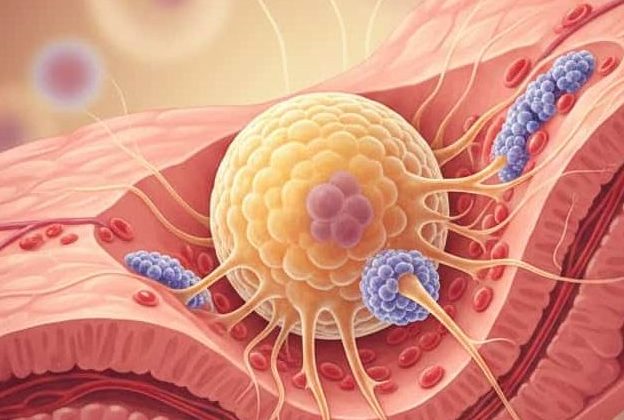
Whether you’re on an IVF journey or trying to conceive naturally, the wait for implantation can feel like a lifetime. It’s that tender, crucial moment when your potential baby snuggles in to make your womb their home.
While the embryo does its important work, your role is to create the warmest, most welcoming environment possible. Think of it as nesting for your body—a practice in kindness and intention.
Here are 6 nurturing ways to support your body, blending practical wisdom with a deeper understanding to help you feel empowered and cared for.
1. Build a Thick, Nourished Uterine Lining (Your Embryo’s First Home)
Before a tiny seed can plant itself, it needs rich, fertile soil. For you, that’s a healthy uterine lining—or endometrium—with plenty of blood flow. Clinically, a thicker, well-nourished lining significantly increases the chance of an embryo successfully attaching.
How to nurture your “soil”:
Focus on the First Half of Your Cycle: The follicular phase (after your period ends) is your prime time for building. Eat iron-rich foods like leafy greens, lean red meat (or lentils and beans), and healthy fats.
Prioritise Rest: Sleep and stress reduction aren’t luxuries; they’re essential. Chronic stress can impair the blood flow your lining needs to thrive.
Support Circulation: Gentle therapies like acupuncture or at-home acupressure (see point 6) can be wonderful for directing energy and blood flow to your uterus, making it a cozier place to settle.
2. Embrace the Comfort of Soups & Stews
When it’s time for implantation, think of turning your body into a warm, inviting nest. This is the perfect time for cozy, slow-cooked meals.
From a holistic perspective, soups, stews, and bone broths are deeply nourishing and easy to digest. They help strengthen your digestive system (what TCM calls the “Spleen”), which is fundamental for building the blood and energy needed to sustain a pregnancy.
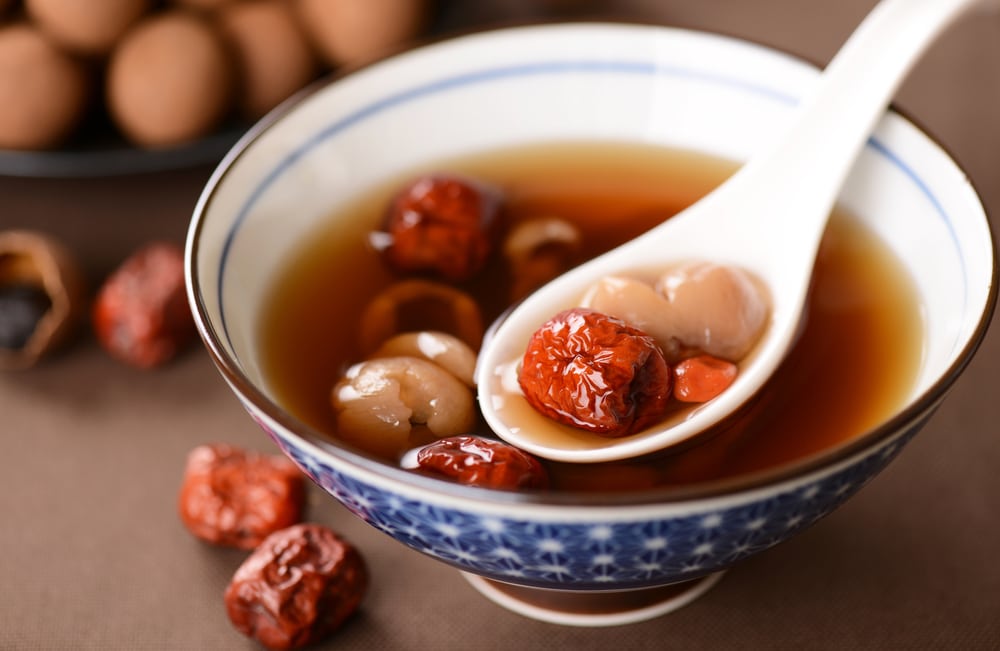
A Simple Idea: Try a broth with red dates and goji berries, or a hearty lamb stew with root vegetables. It’s about feeding your body with warmth and deep nourishment.
3. Sip on Soothing, Supportive Teas
A warm cup of tea does more than just comfort your soul—it’s a gentle way to warm your body from the inside out. This internal warmth supports healthy circulation, which is vital for creating a receptive environment.
Nourishing & Safe Choices:
Ginger Tea: Wonderful for warming and improving circulation.
Red Date & Goji Berry Tea: A classic, caffeine-free blend known in TCM to nourish the blood and calm the spirit—perfect for the two-week wait.
Decaf Chai: A deliciously spiced option for when you want a flavorful, comforting treat.
A Gentle Note: If you’re exploring specific Chinese herbs (like Dang Shen or Astragalus), it’s best to consult a practitioner for a formula that’s personalized and safe for you.
4. Keep Your Feet Warm & Cozy
This simple tip is rooted in ancient wisdom. In Traditional Chinese Medicine, important energy pathways that connect to your reproductive organs start right in your feet.
By keeping your feet warm with socks and slippers, you’re helping to maintain a steady, warm blood flow throughout your entire body, including your pelvis. It’s a small, simple act of self-care that sends a message of warmth and safety to your whole system.
5. Move Your Body with Gentle Intention
Right now, your goal is to create a calm, stable environment. High-impact exercises like running or heavy weightlifting can create a downward force and jostle the uterus.
Instead, opt for gentle movements that promote circulation without strain. A brisk 30-minute walk in the fresh air or a calming yoga practice are perfect choices. In TCM terms, this supports a “lifting” energy, helping to keep everything in alignment. It’s about showing your body kindness and preserving its energy for the incredible work it’s doing.
6. At-Home Acupressure
You might know that acupuncture and Chinese herbal medicine may improve fertility and pregnancy rates, but you can continue that supportive care in the comfort of your home.
Acupressure is the simple practice of applying gentle pressure to specific points on your body. Spending just 10-15 minutes a day can help improve circulation, reduce stress, and create a sense of balance.
A Simple Start: Try gently massaging SP6 (Sanyinjiao), located on the inner side of your leg, about four finger-widths above your ankle bone. This point is renowned for supporting reproductive health and calming the mind.
Remember, this journey is as much about nurturing your spirit as it is about preparing your body. These steps are not a strict protocol, but an invitation to infuse your days with more warmth, rest, and intention. You are creating the most welcoming environment possible as you await wonderful news.
If you feel you’d benefit from more personalised support – whether you’re preparing for IVF transfer, trying naturally, or already in early pregnancy – our team is here to help.
Learn more about how acupuncture can support you during this time: