Acupuncture for Ankylosing Spondylitis
Supporting spine health, reducing pain, and improving daily movementIf you’re living with Ankylosing Spondylitis, you already know – this isn’t just “back pain.”
It’s the kind of stiffness that greets you first thing in the morning.
The deep ache in your lower back, pelvis, or SI joints that doesn’t quite go away.
The way your chest can feel tight… your neck restricted… your energy drained.
Most patients we see are already doing the right things – seeing a specialist, taking medication, trying to stay active.
And still, there’s often that quiet question:
“Is there something else that can help?”
That’s where acupuncture may fit in.
At Almond Wellness Centre, we provide acupuncture for ankylosing spondylitis in Melbourne as a complementary, whole-body approach – designed to work alongside your existing care, not replace it.
or
What is Ankylosing Spondylitis (AS)?
Ankylosing Spondylitis is a type of chronic inflammatory arthritis that primarily affects the spine and sacroiliac joints. Over time, inflammation can cause vertebrae to fuse, leading to reduced spinal flexibility and, in some cases, a stooped posture.
Symptoms typically include persistent stiffness, lower back and hip pain, fatigue, and may affect other joints, sometimes even eyes or digestive system.
AS is a lifelong condition managed primarily with NSAIDs, physiotherapy, and in moderate-to-severe cases, biologic medications. Complementary therapies such as acupuncture may offer additional support for arthritis including AS.
How Acupuncture May Help With Ankylosing Spondylitis
Let’s keep this real and practical.
Acupuncture is not a cure for AS. But it may help reduce the day-to-day impact of the condition.
Based on research and clinical experience, acupuncture may support:
- Pain reduction – many studies show decreased pain scores (VAS)
- Reduced stiffness – especially morning stiffness
- Improved mobility – better spinal flexibility and chest expansion
- Lower inflammation markers – some patients show reduced CRP and ESR
- Better daily function – improvements in BASDAI and BASFI scores
In our Melbourne clinics, we see patterns like this:
- Around 60-70% of patients notice changes within 4–6 sessions
- By 10-12 sessions, many report easier movement and less reliance on pain relief*
Not perfect. But often enough to make daily life feel more manageable again.
* Acupuncture is not a substitute for prescribed medications or specialist medical care. Results vary between individuals.
A Conversation We Hear Often
“Morning is the worst. I feel like my back is locked.”
One patient in his early 40s told us that at his first visit.
He’d been managing AS for years. Medication helped – but stiffness remained.
After a few weeks of acupuncture, he said:
“It’s still there… but it’s not as intense. I can get moving faster.”
Later:
“I didn’t realise how tight everything was until it started easing.”
That’s usually how it goes.
Gradual. Layer by layer. Real change, not overnight miracles.
Our Approach: Personalised Acupuncture Care
No two AS patients are the same. So we don’t treat them the same.
Your treatment may include a combination of:
Manual Acupuncture
Fine needles placed along the spine, SI joints, and supporting points to reduce pain and improve circulation.
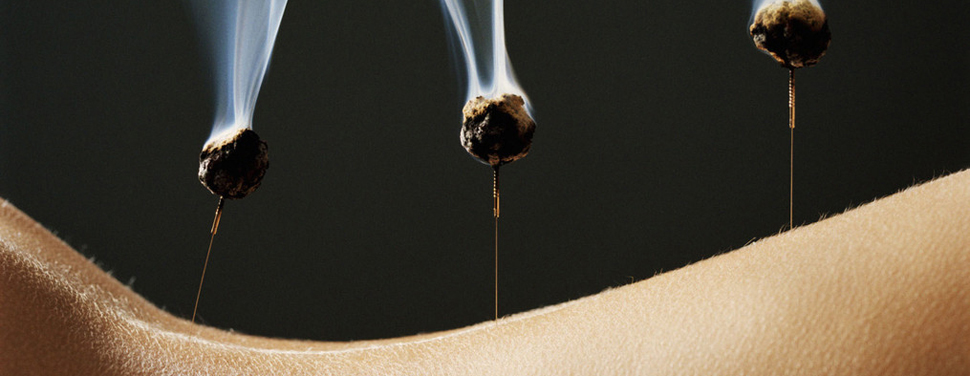
Warm Acupuncture (Moxibustion)
Gentle heat applied through the needles.
In TCM terms, this helps “warm the channels.”
In plain terms – it helps tight, cold, stiff areas relax and move better.
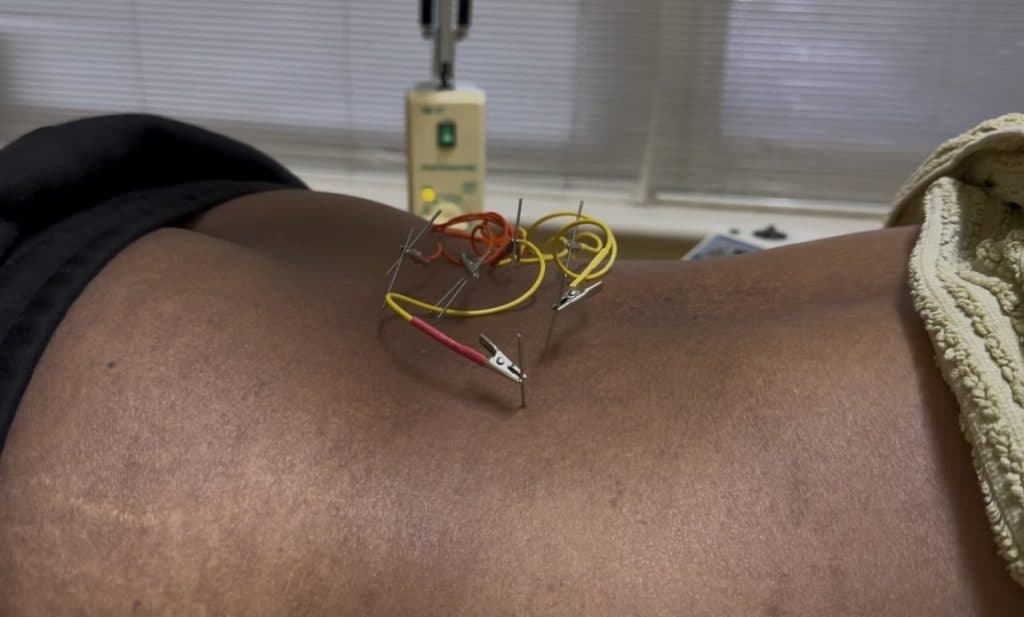
Electroacupuncture
A mild electrical stimulation for deeper, more persistent pain.
Often used when standard acupuncture isn’t quite enough on its own.
Ear (Auricular) Acupuncture
Supportive points for pain regulation and immune balance.
Sometimes used between sessions to extend the effect.
What to Expect
First Consultation
We take the time to understand your full picture:
- Your diagnosis and symptoms
- Current medications (including biologics or NSAIDs)
- Pain patterns and stiffness
- Sleep, digestion, energy
You’ll leave with a clear plan – not guesswork.
Treatment Plan
For ankylosing spondylitis, we commonly recommend:
1–2 sessions per week initially
A course of 10–12 sessions over ~3 months
Progress is reviewed and adjusted as you go.
During a Session
- 45–60 minutes total
- Needles retained for ~20–30 minutes
- Sensations: warmth, heaviness, tingling (normal)
Many patients walk out feeling:
…looser
…lighter
…a bit more mobile than when they walked in
Chinese Herbal Medicine for Ankylosing Spondylitis
Some patients ask us:
“Do I have to do acupuncture… or can herbs help as well?”
Short answer – sometimes, herbs are a very helpful addition.
In Traditional Chinese Medicine (TCM), Ankylosing Spondylitis is often viewed as a combination of:
- Bi syndrome (痹证) – blockage in the channels causing pain and stiffness
- Underlying deficiency – often Kidney, Liver, or Qi deficiency over time
- Cold, damp, or heat accumulation depending on the individual
That’s why herbal treatment is never “one formula fits all.”
What Chinese Herbal Medicine May Help With
In a fertility context, herbs are often talked about for hormones. In AS, the focus is different.
A personalised herbal formula may aim to:
- Reduce inflammation patterns (TCM perspective)
- Improve circulation to joints and spine
- Ease chronic stiffness and pain
- Support energy and recovery (especially in long-term cases)
Common Herbal Strategies (Simplified)
Depending on your presentation, your practitioner may use approaches such as:
- Dispelling wind-damp → for pain that moves or flares
- Warming the channels → for cold, stiff, fixed pain
- Clearing damp-heat → for inflamed, swollen joints
- Tonifying Kidney and Liver → for long-term structural support
Note
- Herbal medicine is individualised
- It must be prescribed by a registered TCM practitioner
- It can be used alongside acupuncture and medical care
- Always inform your GP or specialist
Is Acupuncture or Chinese Herbal Medicine Right for You?
Acupuncture for ankylosing spondylitis in Melbourne may be suitable if you:
- Have ongoing pain or stiffness despite medication
- Want additional, non-drug support
- Are looking for a more holistic approach
- Have approval from your GP or rheumatologist
Important:
Acupuncture TCM works alongside your medical treatment – not to replace it.
Experienced Melbourne Practitioners
At Almond Wellness Centre, you’ll be cared for by AHPRA-registered practitioners with experience in chronic pain and inflammatory conditions.
Our team includes:
Dr. Richard Zeng – Clinical Director, 30+ years experience
Dr. Mira An – specially interested in women’s health and chronic conditions
Dr. Tracey Byrne – hormonal and pain-related conditions
Dr. Ruby Hou – experienced across both clinic locations
Convenient Melbourne Locations
We offer acupuncture for ankylosing spondylitis at two clinics:
Coburg (North Melbourne)
21 Bell Street, Coburg VIC
Ringwood (East Melbourne)
31 Wantirna Road, Ringwood VIC
Opening Hours
Monday – Friday: 10am – 6pm
Saturday – Sunday: 9am – 3pm
FREQUENTLY ASKED QUESTIONS
Can acupuncture replace my current AS medications?
No. Medications such as NSAIDs and biologics are essential for managing inflammation and preventing progression. Acupuncture is a complementary therapy.
How many sessions will I need?
Many patients notice changes within 4–6 sessions, with a typical course of 10–12 sessions for more stable results.
Is it safe if I am on biologic therapy?
In most cases, yes – but always check with your specialist. We will also review your medications carefully.
What acupoints are commonly used for AS?
Treatment typically focuses on points along the Governor Vessel (Du Mai) and Bladder meridian — both of which run along the spine — as well as local points around the sacroiliac joints and lower back. Supporting points for fatigue or systemic inflammation may also be included.
Does acupuncture help with stiffness?
Yes – reducing stiffness is one of the most common improvements patients report, especially morning stiffness.
Call 03 8802 1519 or Book Online. Alternatively Message Us Here
Ready to Take the Next Step?
If you’ve been dealing with ankylosing spondylitis for a long time, you don’t have to just “put up with it.”
There may be ways to support your body – gently, consistently, and alongside your current care.
Book your acupuncture consultation in Melbourne today
or
We welcome referrals from rheumatologists, GPs, and physiotherapists. Patients are also welcome to self-refer.