
Author: Dr Richard Zeng, Registered Chinese Medicine Practitioner and Acupuncturist.
Quick Navigation
After a cold, damp winter, Melbourne’s spring brings longer days, blossoms and plenty of changeable weather. In Traditional Chinese Medicine (TCM), spring (春 chūn) is a season of growth and upward, outward movement. It is a time when many people feel more energetic, and also when some feel restless, irritable or tense.
Spring in the Chinese medicine calendar
The Huang Di Nei Jing (黄帝内经, Huángdì Nèijīng), one of the foundational classical texts of Chinese medicine, describes how people can adapt their daily habits to the changing seasons.
In traditional Chinese medicine, spring is associated with the Wood element (木 mù) and the Liver system (肝 gān). Wood represents growth, flexibility and the natural movement of life as plants begin to grow and flourish.
The Liver is traditionally said to govern the smooth flow of Qi (气 qì) throughout the body. Within this framework, frustration, irritability and a feeling of being emotionally or physically constrained may be discussed in relation to the smooth flow of Liver Qi.
These are concepts within traditional Chinese medicine, rather than biomedical explanations or diagnoses. They provide a traditional framework for considering seasonal lifestyle and individual wellbeing.
A note on hay fever and Melbourne’s pollen season
For many Melburnians, spring also means the beginning of grass pollen season. In Victoria, this generally runs from October to December, and high pollen levels can aggravate seasonal allergic rhinitis (hay fever) and asthma.
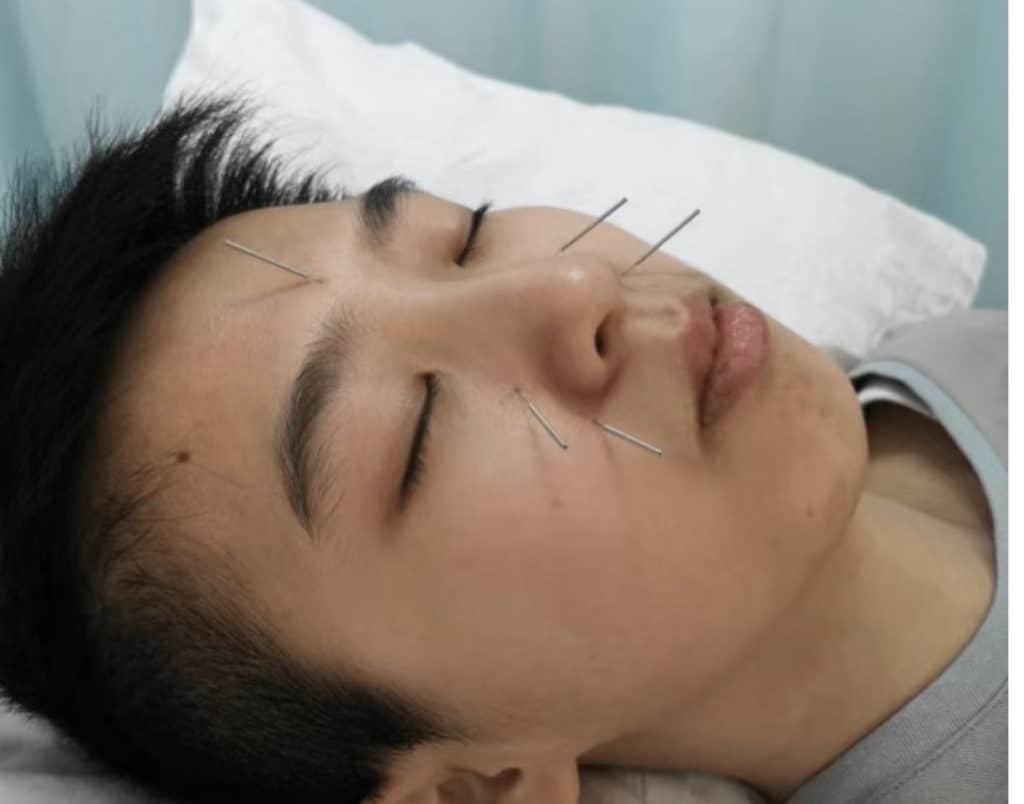
From a Chinese medicine perspective, practitioners may consider an individual’s overall presentation when discussing seasonal allergic symptoms. Acupuncture is sometimes used as a complementary approach for people experiencing hay fever, although the available research does not establish that it will work for everyone. It should not replace appropriate medical assessment or established allergy and asthma management.
People with hay fever or asthma should pay attention to pollen forecasts and follow advice from their GP. Victoria also has a risk of epidemic thunderstorm asthma during grass pollen season. If you experience wheezing, chest tightness or shortness of breath, follow your asthma action plan and seek appropriate medical care. Severe breathing difficulty requires emergency assistance.
You can check the Victorian Government’s thunderstorm asthma risk forecast during the pollen season.
How we can help
At Almond Wellness Centre, I work with patients at our Coburg and Ringwood clinics, where acupuncture and Chinese medicine may be considered as part of an individualised approach to wellbeing.
In a consultation, I consider the person’s symptoms, general health, lifestyle and individual presentation rather than applying the same seasonal recommendations to everyone. Where appropriate, acupuncture or Chinese herbal medicine may be discussed alongside conventional healthcare.
If you are considering acupuncture or Chinese medicine, you are welcome to contact our clinics to discuss whether an appointment may be suitable.
FAQ
Is spring a good time to try acupuncture?
There is no single “best” season. Some people like to start at a time of change, but timing depends on your needs and availability.
Can Chinese medicine cure hay fever?
No treatment can promise a cure. Some people use acupuncture or herbs as part of managing symptoms, and evidence is mixed. Ongoing symptoms deserve medical review.
Do I need to follow a spring diet?
No. These are traditional suggestions, not rules. Eating plenty of fresh seasonal produce is a sensible approach.
What does the Liver represent in Chinese medicine?
In traditional Chinese medicine, the Liver is associated with the Wood element and the season of spring. It is traditionally understood to help maintain the smooth flow of Qi throughout the body and is associated with emotional flexibility and the regulation of movement. This is a traditional functional concept, not the same as the anatomical liver or a biomedical diagnosis of liver disease.
Can acupuncture help with seasonal allergies?
Some research suggests acupuncture may help reduce certain symptoms of allergic rhinitis, but the quality and consistency of the evidence vary. It may be considered as a complementary approach for some people, alongside appropriate medical management. It is not a cure for hay fever and should not replace prescribed allergy or asthma treatment. If you have asthma, follow your asthma action plan and seek medical advice about symptom management.
References and further reading
- Huang Di Nei Jing (黄帝内经), Su Wen (素问), Chapter 2: 四气调神大论 — On Regulating the Spirit with the Four Seasons. This classical chapter describes traditional approaches to adapting lifestyle and daily habits to the changing seasons, including spring.
- Victorian Department of Health. Epidemic thunderstorm asthma risk forecast. Information about Victoria’s grass pollen season, risk forecasts and recommended precautions.
- Victorian Department of Health. Thunderstorm asthma – Better Health Channel. Information about symptoms, risk factors and ways to prepare during grass pollen season.
- He M, Qin W, Qin Z, Zhao C. Acupuncture for allergic rhinitis: a systematic review and meta-analysis. European Journal of Medical Research. 2022;27:58. doi:10.1186/s40001-022-00682-3.