
Acupuncture for Plantar Fasciitis
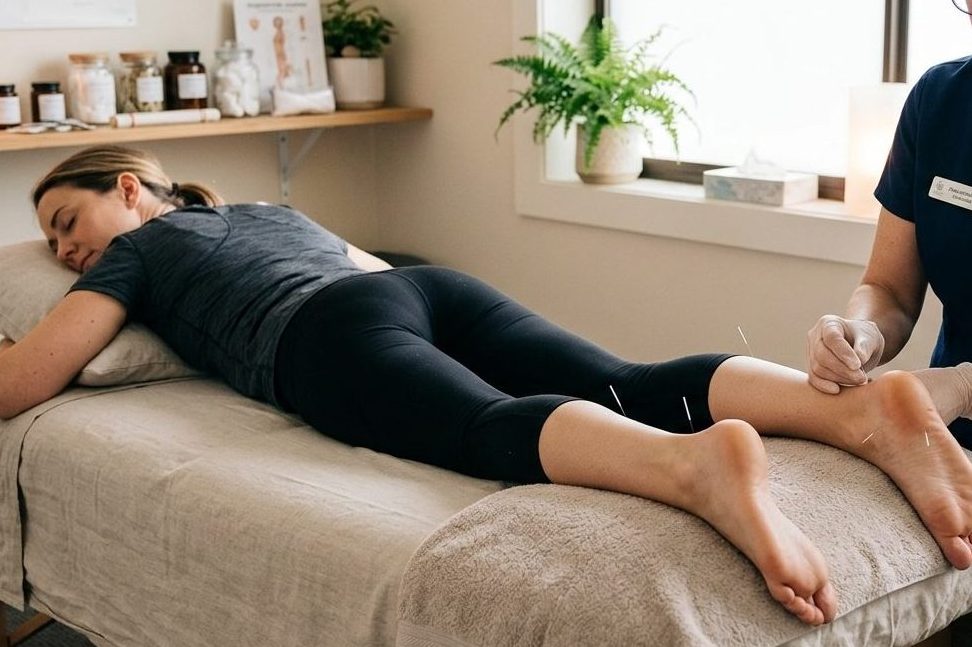
Plantar fasciitis is one of the most common causes of heel pain. A typical complaint is pain underneath the heel when taking the first few steps in the morning. It can also become painful after sitting for a while, standing for a long time, walking, running or exercising.
At Almond Wellness Centre Melbourne clinics, acupuncture is used as part of a broader treatment approach for plantar fasciitis. Depending on the individual presentation, treatment may also include electro-acupuncture, moxibustion, remedial massage and radial pressure wave therapy (shockwave).
Treatment is tailored to the individual, taking into consideration where the pain is located, how long the symptoms have been present, what activities aggravate them, and how the foot, ankle and calf are functioning.
📍 Clinics in Coburg (North) and Ringwood (East) – Open 7 Days
🚗 Free parking | HICAPS rebates available | Open 7 Days
What is plantar fasciitis?
The plantar fascia is a strong band of connective tissue that runs along the bottom of the foot, from the heel towards the toes. It helps support the arch of the foot and plays an important role in absorbing and transferring load when walking and running.
Plantar fasciitis usually causes pain underneath or towards the inside of the heel.
One of the most characteristic symptoms is pain with the first few steps after getting out of bed in the morning. The pain may ease as movement begins, but can return after prolonged standing, walking or exercise.
Despite the name, plantar fasciitis is not simply an inflammatory condition. When heel pain persists, changes can occur in the plantar fascia and surrounding tissues, often associated with repeated loading of the foot.
This is why treatment usually focuses not only on reducing pain, but also on gradually improving the strength and tolerance of the foot.
Common symptoms of plantar fasciitis
Symptoms may include:
- Pain underneath or on the inside of the heel
- Pain with the first steps in the morning
- Pain when getting up after sitting or resting
- Heel pain after prolonged standing or walking
- Pain or stiffness after running or exercise
- Tightness in the calf, foot or toes
- Difficulty walking or exercising normally because of heel pain
Plantar fasciitis can affect one foot or both feet.
Can acupuncture help plantar fasciitis?
Acupuncture can be useful for managing pain associated with plantar fasciitis and may help improve walking and physical function.
Research supports the use of acupuncture for plantar heel pain, although the quality of the evidence is mixed. Earlier studies and systematic reviews suggested that acupuncture may provide short-term pain relief, but some reviews have considered the overall evidence limited.
More recent research is encouraging. A 2026 randomised clinical trial found that electro-acupuncture combined with a home exercise program produced greater improvements in pain and foot function than exercise alone in people with plantar fasciopathy.
Another 2026 randomised trial involving people with chronic, difficult-to-treat plantar fasciitis found that acupuncture produced a better treatment response than a waitlist control, with benefits observed during follow-up.
Acupuncture is therefore best considered part of an overall treatment and rehabilitation program rather than a replacement for exercise, appropriate footwear or other conservative care.
The aim is not only to reduce pain, but also to help patients gradually restore foot strength and tolerance so they can return to normal activities.
How is plantar fasciitis treated at Almond Wellness Centre?
Depending on the individual’s symptoms and clinical presentation, treatment may include one or several of the following.
Acupuncture
Acupuncture points may be used around the foot and ankle as well as at other locations on the body.
Point selection depends on the patient’s symptoms and clinical assessment. Areas of tightness or tenderness in the calf and lower leg may also be addressed where appropriate.
The immediate aim is to help reduce pain and sensitivity. Improving comfort can make it easier to gradually increase activity and participate in rehabilitation.
Electro-acupuncture
Electro-acupuncture uses gentle electrical stimulation between selected acupuncture needles.
The intensity can be adjusted according to individual tolerance.
It may be considered when additional stimulation is appropriate, particularly when heel pain has been persistent or difficult to settle.
Electro-acupuncture has also been specifically investigated in combination with exercise for plantar fasciopathy.
Moxibustion
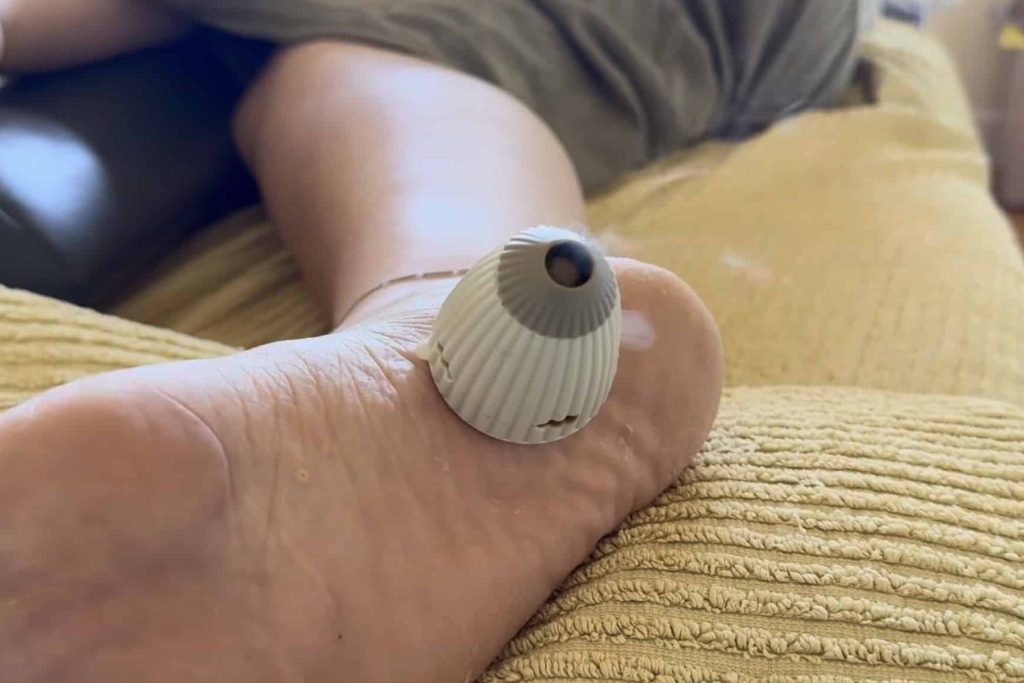 Moxibustion is a traditional Chinese medicine technique that uses gentle heat from burning moxa, usually made from dried mugwort, applied near selected acupuncture points.
Depending on the individual presentation, moxibustion may be incorporated when warmth and gentle thermal stimulation are considered appropriate. It may be used alongside acupuncture rather than as a replacement for other aspects of treatment and rehabilitation.
The method of moxibustion is selected carefully to provide comfortable warmth while avoiding excessive heat to the skin.
Massage and soft-tissue treatment
Tight or overloaded muscles in the calf and lower leg can contribute to discomfort around the foot.
Massage and other soft-tissue techniques may therefore be used around the calf, ankle and foot as part of a broader treatment plan.
Radial pressure wave therapy (shockwave)
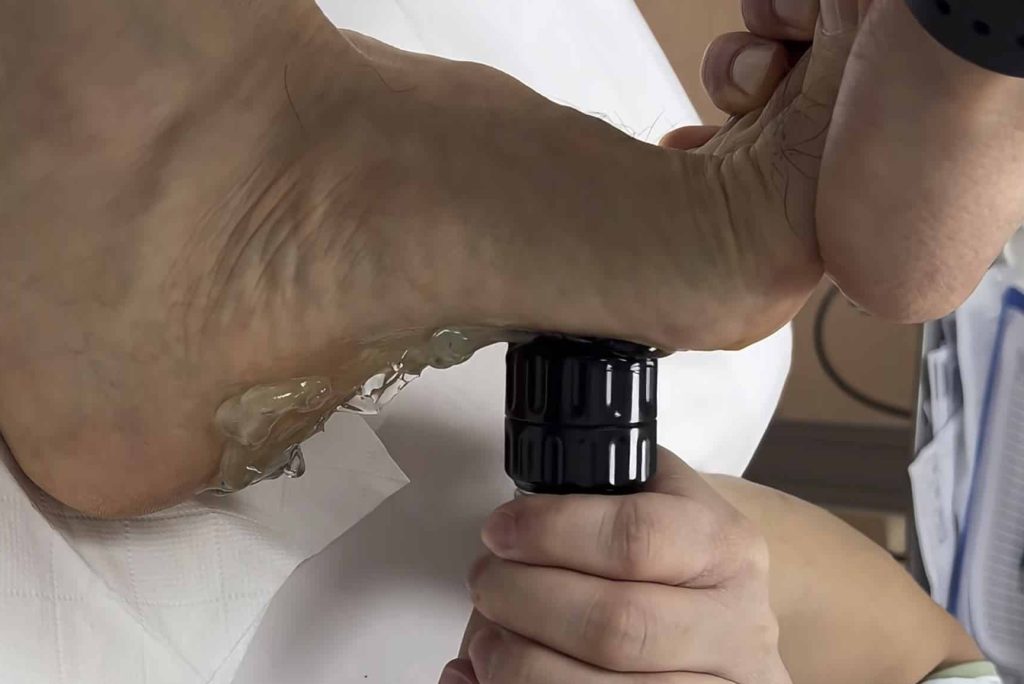 For some people with persistent plantar heel pain, radial pressure wave therapy may be a useful addition to treatment.
This non-invasive treatment delivers mechanical pressure waves to the affected area.
Research suggests that shockwave therapy can reduce pain in some people with plantar heel pain, although treatment outcomes vary between individuals and studies.
It is not necessary or appropriate for every case of heel pain. Suitability depends on factors such as the duration of symptoms, sensitivity of the area and the individual’s overall presentation.
What can you do at home?
Treatment in the clinic is only one part of recovery. What is done between appointments is also important.
Plantar fasciitis often develops gradually, and the foot needs time to regain its strength and tolerance. A combination of sensible activity, stretching and progressive strengthening can be helpful.
1. Use ice for pain relief
If the heel is sore after walking or exercise, an ice pack can be used for a short period to help relieve discomfort.
Another simple option is to roll the sole of the foot over a frozen or chilled water bottle.
This provides both cooling and gentle massage of the sole of the foot.
Ice does not need to be used repeatedly throughout the day. It can be particularly useful when it helps settle discomfort after activity.
2. Stretch your foot and toes before standing
If heel pain is worse first thing in the morning, avoid immediately putting full body weight through the foot.
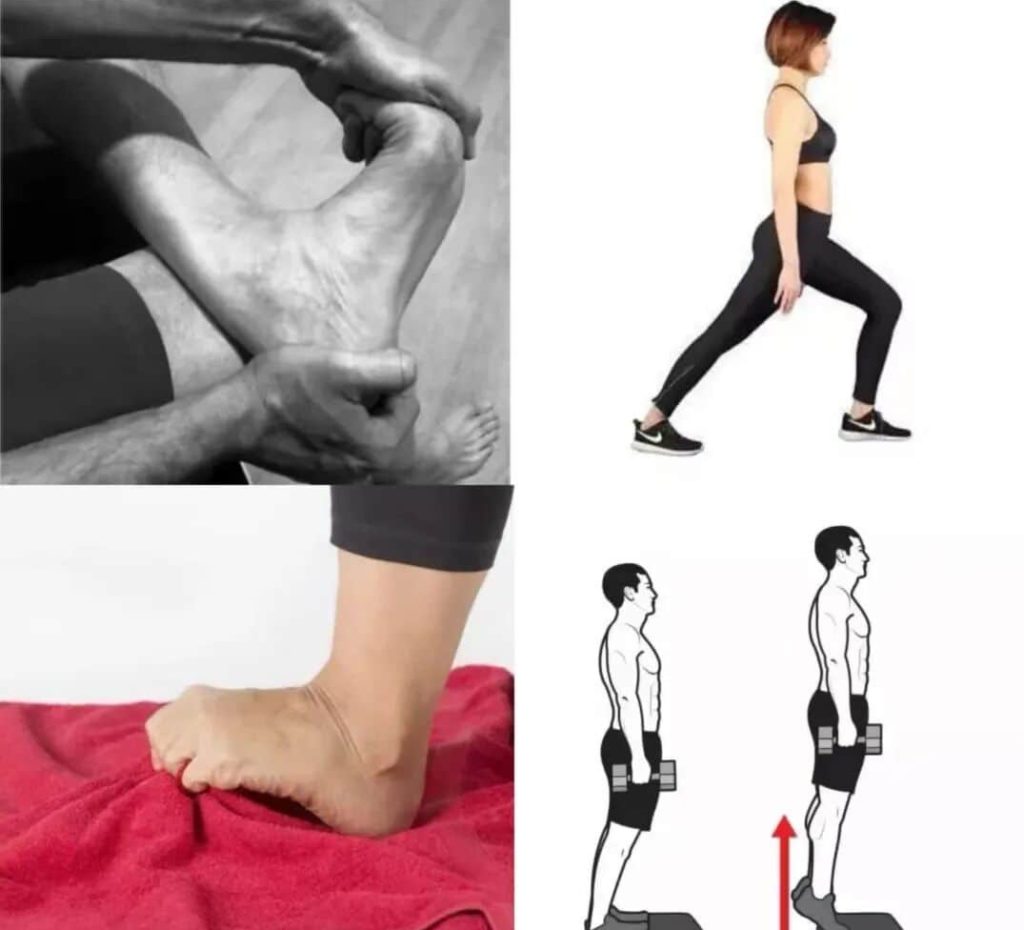
Before getting out of bed, gently move the ankle and stretch the toes and sole of the foot.
The same approach can be useful if getting up during the night.
Simple movements may include gently pulling the toes back towards the body, moving the ankle through a comfortable range and gently stretching the calf.
The aim is to gradually prepare the foot for weight-bearing.
3. Keep moving, but increase activity gradually
Complete rest is usually not necessary.
Once symptoms begin to settle, gradually increasing walking and exercise can help the foot regain its capacity.
Exercises such as duck walking or other controlled foot and lower-leg exercises may be recommended as part of a rehabilitation program.
These exercises should be introduced gradually and should not cause a significant increase in heel pain.
If a particular exercise consistently aggravates symptoms, it should be stopped and discussed with a healthcare professional.
4. Strengthen the muscles of the feet
Stretching is only one part of rehabilitation. Strengthening the muscles of the foot is also important.
The smaller muscles within the foot help support the arch and control the foot during walking and standing. Improving their strength and coordination can help the foot tolerate loading more effectively.
One exercise that may be recommended is toe-crawling.
This can be performed using a towel or on a suitable surface. The toes are gently drawn towards the heel while keeping the heel relatively stable.
The aim is not to scrunch the toes as hard as possible. The movement should be slow and controlled, focusing on coordination and strengthening of the smaller muscles of the foot.
More challenging strengthening exercises can be introduced progressively depending on symptoms, activity level and response to treatment.
5. Consider your footwear
The shoes worn during everyday activities can influence how comfortable the foot feels.
Some people with plantar heel pain find rocker-bottom or curved-sole shoes more comfortable because they reduce the amount of bending required through the foot during walking.
However, footwear needs to be individualised. There is no single type of shoe that is suitable for everyone.
For ongoing problems with footwear, arch support or orthotics, assessment by a podiatrist may be appropriate.
6. Try rigid sports tape
Rigid sports tape can provide temporary support to the foot and may make walking or activity more comfortable.
Where appropriate, 38 mm rigid sports tape may be recommended.
Practitioners at Almond Wellness Centre can demonstrate how to apply the tape correctly.
The tape should not be applied so tightly that it causes numbness, tingling, colour changes, swelling or increased pain.
How often should acupuncture treatment be provided?
There is no single treatment schedule that is suitable for everyone.
For many patients, an initial course of one treatment per week for around 3–5 treatments may be recommended, followed by a review of symptoms and function.
Depending on the presentation, treatment may include acupuncture or electro-acupuncture, with massage or radial pressure wave therapy added where appropriate.
Progress should be assessed not only by changes in pain, but also by improvements in walking, standing, exercise tolerance and overall foot function.
The goal is not simply to make the heel feel better temporarily. The aim is to help the foot gradually regain its ability to tolerate normal daily activities and exercise.
When should heel pain be assessed?
Not every case of heel pain is plantar fasciitis.
Pain around the heel can also be caused by problems involving the Achilles tendon, nerves, joints, bones or other structures of the foot and ankle.
Appropriate medical or allied-health assessment is recommended if:
- The pain started after a significant injury or trauma
- You cannot comfortably bear weight on the foot
- There is significant swelling, redness or warmth
- You experience numbness or weakness
- The pain is severe or progressively worsening
- Symptoms are not improving despite appropriate conservative management
A podiatrist or medical practitioner can help determine whether another condition may be responsible for persistent heel pain.
Acupuncture for plantar fasciitis in Melbourne
At Almond Wellness Centre, acupuncture is provided for plantar fasciitis and other musculoskeletal conditions at our Melbourne clinics in Coburg and Ringwood.
Treatment may combine acupuncture with practical rehabilitation strategies such as stretching, strengthening, massage, taping, footwear advice and radial pressure wave therapy where appropriate.
If persistent heel pain is affecting walking, work, exercise or everyday activities, our practitioners can assess the symptoms and discuss suitable treatment options.

Coburg (Melbourne North)
21 Bell Street, Coburg VIC 3058
📞 03 9378 9479
Serving Brunswick, Preston, Northcote, Essendon, Reservoir, Bundoora, Pascoe Vale, Epping, Glenroy, Fawkner, and Thornbury.
Parking: Free onsite and street parking available
Public transport: Accessible via tram and bus routes
→ View Coburg Clinic Details
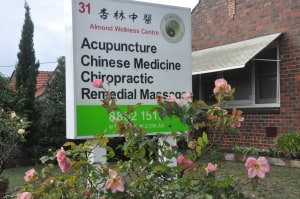
Ringwood (Melbourne East)
31 Wantirna Road, Ringwood VIC 3134
📞 03 8802 1519
Serving Mitcham, Croydon, Vermont, Donvale, Doncaster, Wantirna, Heathmont, and Box Hill.
Parking: On-site parking available
Public transport: Near Ringwood train station
→ View Ringwood Clinic Details
Ready to Feel Pain Free?
or
Book Your Pregnancy Acupuncture Appointment Online
AHPRA-registered. Pregnancy-safe protocols. Evidence-informed care since 2003.
References
- Wang W, Kang J, Wang X, et al. Efficacy of acupuncture for chronic recalcitrant plantar fasciitis: a randomized trial. Complement Ther Med. 2026;97:103329. doi:10.1016/j.ctim.2026.103329.
- Moss D, Rasmussen B, Williams W, Crawford P. Electroacupuncture for plantar fasciopathy: a multisite randomized clinical trial. Med Acupunct. 2026;38(1):43-53. doi:10.1089/acu.2024.0107.
- Zhang SP, Yip TP, Li QS. Acupuncture treatment for plantar fasciitis: a randomized controlled trial with six months follow-up. Evid Based Complement Alternat Med. 2011;2011:154108. doi:10.1093/ecam/nep186.
- Schiller J, et al. How effective is acupuncture for reducing pain due to plantar fasciitis? A systematic review. Singapore Med J. 2017;58(2):92-97. doi:10.11622/smedj.2016143.
- Degroote MG, et al. The efficacy of acupuncture on foot and ankle for pain intensity, functional status, and general quality of life in adults: a systematic review. Med Acupunct. 2022;34(1).