Acupuncture and Chinese Medicine for Egg Quality

Can Acupuncture and Chinese Medicine Improve Egg Quality?
Egg quality is one of the most common concerns among women trying to conceive naturally or through IVF. While no treatment can reverse ovarian ageing, research suggests acupuncture and Chinese medicine may help support the environment in which eggs mature – by improving circulation, regulating the stress response, and supporting overall reproductive health.
It’s a topic I’m asked about often, usually after someone has heard the phrase “your egg quality isn’t very good” from a specialist and isn’t quite sure what it means or what, if anything, can be done about it.
Book Online or Request a Call
Egg Quantity vs. Egg Quality
These two terms get used almost interchangeably, but they describe different things.
| Egg Quantity | Egg Quality | |
|---|---|---|
| What it means | Number of eggs remaining | Genetic and structural health of eggs |
| How it’s measured | Estimated via AMH or antral follicle count | Cannot be directly measured before fertilisation |
| How it changes | Declines gradually and predictably with age | More closely tied to age, but also influenced by health and lifestyle |
| What it affects | How your ovaries respond to IVF stimulation | Fertilisation rates, embryo development, and implantation |
You can have a strong ovarian reserve and still face egg quality challenges, or a lower reserve with eggs that are otherwise healthy. The two are related, but they’re not the same conversation.
What Does Poor Egg Quality Mean?
In practice, “poor egg quality” usually shows up as one or more of the following during fertility treatment:
- eggs that fail to fertilise normally
- embryos that develop slowly or stop growing around day 3
- embryos that fail to reach the blastocyst stage
- repeated unsuccessful IVF cycles despite good ovarian response
- early miscarriage, often linked to chromosomal abnormalities
It’s worth noting that embryo quality isn’t determined by egg quality alone – sperm quality and laboratory conditions also play a significant role. If you’ve been told you have poor embryo quality, it’s a good idea to ask your fertility specialist which factors are believed to be contributing in your specific case.
Understanding How an Egg Matures
Every month, a group of ovarian follicles begins developing, though usually only one becomes the dominant follicle that goes on to release an egg. That process doesn’t happen overnight – from early follicle development through to ovulation, the full journey takes roughly three to four months.
Throughout that window, the developing egg depends on:
- adequate blood supply,
- balanced hormones,
- healthy mitochondria (the egg’s energy factories),
- sufficient nutrients, protection from oxidative stress, and
- a healthy inflammatory environment
This is part of why fertility specialists often recommend lifestyle changes several months ahead of trying to conceive or starting IVF – and why, in Chinese medicine, treatment is usually planned across several menstrual cycles rather than concentrated around ovulation alone.
Oxidative Stress and Egg Quality
Oxidative stress is one of the most talked-about factors in fertility research at the moment, and for good reason.
Eggs are unusually energy-hungry cells, which makes them heavily reliant on healthy mitochondria. When mitochondrial function declines, cells produce excess reactive oxygen species (ROS) – unstable molecules that damage cellular structures, including the DNA inside developing eggs. Over time, this oxidative “wear and tear” is thought to contribute to reduced egg quality and higher rates of chromosomal error, particularly from the mid-to-late 30s onward.
This is also why lifestyle factors matter so much here. Diets rich in antioxidants, adequate sleep, stress management, and reducing inflammation may all help support a healthier mitochondrial environment – though it’s worth being clear that lifestyle changes support the process rather than reverse it outright.
What Affects Egg Quality?
Age
Age remains the strongest predictor of egg quality. As women get older, chromosomal errors become more common, mitochondrial function declines, DNA repair becomes less efficient, and oxidative stress increases — which is why fertility gradually declines from the mid-30s and more noticeably after 40.
Reduced ovarian reserve
Women with low AMH or elevated FSH often have fewer eggs available. Reserve and quality aren’t the same thing, but they frequently overlap.
Endometriosis
The inflammation associated with endometriosis may affect both ovarian function and the environment surrounding developing follicles.
PCOS
Women with PCOS often have plenty of follicles, but hormonal imbalance can interfere with how they mature. Improving ovulation quality in these cases may also help support egg quality.
Lifestyle factors
Smoking, obesity, insulin resistance, chronic inflammation, poor sleep, excessive alcohol, significant psychological stress, and nutritional deficiencies have all been linked to reduced egg health in research.
Advanced Maternal Age and Egg Quality
Many women searching for information here aren’t typing “egg quality” – they’re searching things like “fertility over 40” or “IVF at 42.” It’s worth addressing directly.
Fertility declines with age largely because of changes in egg quality rather than a sudden drop in egg numbers. After the mid-30s, and more sharply after 40, the rate of chromosomally abnormal eggs rises – which is the main driver behind lower natural conception rates, higher miscarriage risk, and reduced IVF success in this age group. This doesn’t mean pregnancy isn’t possible with advanced maternal age – many women do conceive naturally and through IVF in their 40s – but it does mean the odds shift, and it’s part of why we often recommend starting preparation earlier rather than later for women in this age bracket.
Can Acupuncture Improve Egg Quality?
This is one of the most common questions I’m asked, and I try to answer it honestly: no treatment can turn back the clock on an older egg.
What acupuncture may do is support the environment those eggs develop in – through:
- supporting blood flow to the ovaries
- hormonal balancing
- stress reduction
- sleep quality
- autonomic nervous system balance, and
- inflammation regulation.
Together, these may help create better conditions for follicle development.
Systematic reviews suggest acupuncture may improve clinical pregnancy rates in some groups of women undergoing IVF, although evidence specifically relating to egg quality itself remains more limited. Where benefits are seen, researchers generally believe they’re more likely due to improved ovarian blood flow, stress regulation, and hormonal balance – rather than any direct change to the genetic material of the egg.
I want to be upfront about the evidence here: it’s encouraging, but not definitive. Study quality varies and results are mixed. I think of acupuncture as a complementary therapy that sits alongside evidence-based fertility care – not a guaranteed fix, and not a substitute for it.
The Chinese Medicine Perspective
In Traditional Chinese Medicine, fertility reflects the health of the whole body, not just the ovaries. Two women with the same Western diagnosis can present with completely different patterns, which is why treatment is never one-size-fits-all. Some of the patterns I commonly see include:
Kidney Essence Deficiency (肾精不足, Shèn Jīng Bù Zú)
often associated with reduced ovarian reserve, advanced maternal age, recurrent IVF failure, low energy, and chronic infertility. Treatment focuses on nourishing Kidney Essence and supporting reproductive vitality.
Liver Qi Stagnation (肝气郁结, Gān Qì Yù Jié)
often linked to chronic stress, irregular cycles, PMS, and emotional tension. Treatment aims to improve the smooth flow of Qi and support hormonal regulation.
Blood Deficiency (血虚, Xuè Xū)
may present as light periods, fatigue, dizziness, or poor endometrial nourishment. Treatment focuses on enriching Blood and improving circulation.
Blood Stasis (血瘀, Xuè Yū)
sometimes seen alongside endometriosis, painful periods, or pelvic congestion. Treatment aims to improve pelvic circulation.
Because every patient’s pattern is different, Chinese herbal medicine is prescribed individually — never as a single formula applied across the board.
Chinese Herbal Medicine and Egg Quality
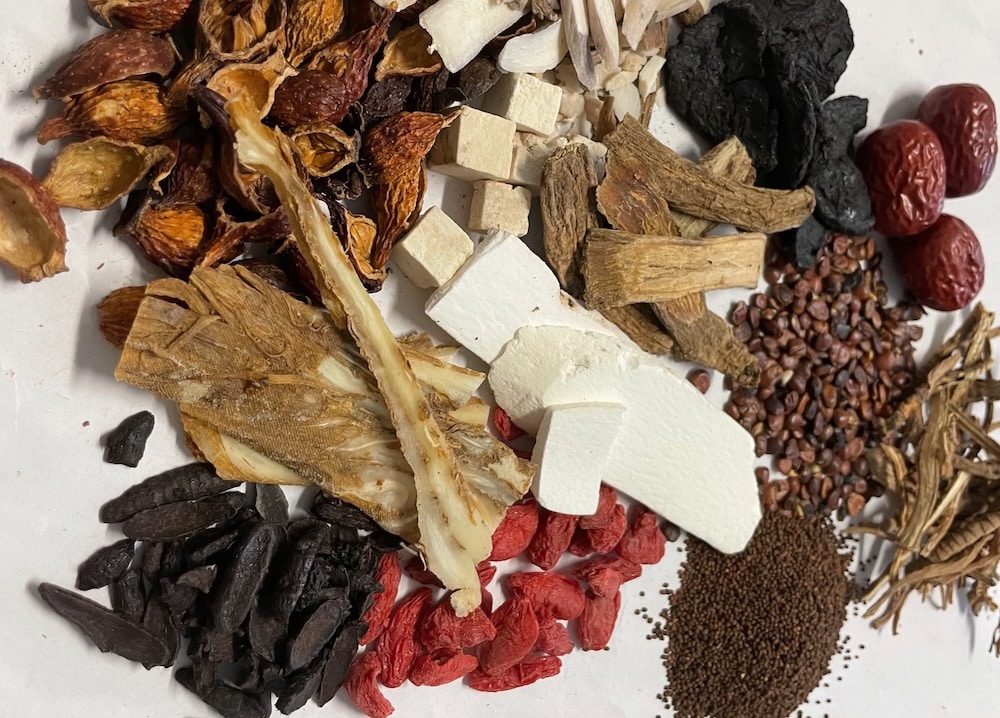
Depending on your diagnosis, herbal medicine may aim to support healthy follicle development, improve pelvic circulation, regulate menstrual cycles, improve sleep, reduce stress, support digestive function, and reduce inflammation.
A formula I sometimes draw on in this context is Gui Shao Di Huang Tang (归芍地黄汤), a classical formula traditionally associated with reproductive support – though as with any herbal prescription, it’s tailored to the individual rather than used as a default.
If you’re undergoing IVF, herbal medicine is usually paused once ovarian stimulation medications begin – most fertility specialists prefer to minimise additional variables during this stage. Acupuncture, by contrast, can generally continue throughout the IVF cycle.
What I’ve Observed in Clinical Practice
Over three decades of practice treating fertility patients, I’ve noticed that women often focus almost entirely on laboratory results like AMH or FSH. Those numbers matter, but I’ve generally found that the broader pattern – menstrual history, sleep, digestion, stress levels, and cycle regularity – tends to give a more complete picture of someone’s reproductive health.
I also see a lot of women arrive believing their egg quality simply can’t be influenced at all. That’s not quite right, and it’s not quite wrong either. No treatment can reverse ageing. But supporting overall health over several months before conception may help optimise the environment in which the eggs you do have are developing — which is a meaningful thing to work with, even if it isn’t a cure.
When Should Treatment Begin?
Since eggs mature over roughly three to four months, I generally recommend starting preparation that far ahead of trying to conceive or beginning IVF where possible – it gives us time to support the full follicle development process.
A typical plan might include weekly acupuncture, a lifestyle and nutrition review, and individualised Chinese herbal medicine (paused once IVF stimulation begins, if relevant). Consistency across that window tends to matter more than concentrating many treatments right before ovulation.
Who May Benefit
This kind of support may be worth considering if you have low AMH, high FSH, are of advanced maternal age, have experienced recurrent IVF failure, poor embryo quality, or recurrent miscarriage, or have diminished ovarian reserve, endometriosis, PCOS, or unexplained infertility. Treatment is always individualised following a full consultation — this list is a starting point, not a diagnosis.
Lifestyle Still Matters
Acupuncture and herbal medicine tend to work best as part of a broader plan. In consultations, we often discuss anti-inflammatory nutrition, adequate protein intake, sleep optimisation, stress management, moderate exercise, maintaining a healthy weight, and reducing smoking and excessive alcohol where relevant. Small improvements across several areas tend to add up to more than focusing on any single factor alone.
Frequently Asked Questions
Can acupuncture reverse ovarian ageing?
No. Acupuncture can’t reverse the natural ageing process. It may help optimise the environment eggs develop in and support overall reproductive health, but it doesn’t change your underlying ovarian age.
How many acupuncture treatments are recommended?
For egg quality concerns, weekly treatment for around three to four months before trying to conceive or starting IVF is a common starting point, though this varies by individual.
Can I have acupuncture during IVF?
Yes. Many women receive acupuncture before, during, and after IVF. Chinese herbal medicine is usually paused once ovarian stimulation begins.
Does acupuncture increase AMH?
There isn’t currently sufficient evidence that acupuncture reliably raises AMH levels. The goal is broader — supporting overall reproductive function rather than shifting one specific lab value.
Is acupuncture safe while trying to conceive?
When provided by an appropriately qualified, registered Chinese medicine practitioner, acupuncture is generally considered safe for women trying to conceive. Treatment should always be tailored to your cycle stage and individual health.
What’s the difference between egg quality and egg quantity?
Egg quantity refers to how many eggs remain in your ovarian reserve, commonly estimated via AMH. Egg quality refers to how genetically and structurally healthy those eggs are. The two are related but distinct – a lower reserve doesn’t necessarily mean poorer quality, and vice versa.
Our Approach at Almond Wellness Centre
At Almond Wellness Centre, we commonly work with women who have low AMH, diminished ovarian reserve, recurrent IVF failure, advanced maternal age, and unexplained infertility. Treatment is individualised, and may include acupuncture, Chinese herbal medicine where appropriate, lifestyle guidance, and coordination with your fertility specialist.
If you’re planning IVF or trying to conceive naturally, beginning treatment three to four months beforehand gives you the greatest opportunity to support follicle development throughout that window.
This page is for general information purposes only and does not constitute medical advice. Please consult a qualified healthcare professional for personalised assessment and care.