
Quick Navigation
Author: Dr. Richard Zeng (Acupuncturist Melbourne, TCM Doctor)
If you’ve been feeling tired all the time, the first question isn’t “How do I boost my energy?” It’s “Why is my energy low in the first place?”
In our clinic, we find that almost all persistent fatigue falls into one of three broad categories:
- Physical fatigue – the body genuinely lacks resources or is fighting illness
- Mental fatigue – energy is there, but not flowing efficiently (usually caused by chronic stress)
- A combination of both
Understanding which one applies to you is the key to choosing the right treatment — because chasing more energy without knowing why it’s low rarely works for long.
At Almond Wellness Centre, we assess fatigue, low energy, and exhaustion from both a modern medical and Traditional Chinese Medicine (TCM) perspective. Before recommending acupuncture or Chinese herbal medicine, we first try to understand what’s actually driving your tiredness — because treatment aimed at the wrong cause tends to help very little.
At a Glance: The 3 Types of Fatigue
| Type | What’s happening? | Typical clues | Treatment direction |
|---|---|---|---|
| Physical depletion | The body can’t produce enough energy | Fatigue is often worse with exertion; may include other physical symptoms | Identify deficiencies or illness first, then support recovery |
| Stress-related blockage | Energy is available but not flowing or being used efficiently | Often eases — even briefly — after exercise, a walk, or relaxation | Stress management, acupuncture, counselling, lifestyle change |
| Combination | Both factors are contributing at once | A mixed picture that doesn’t fit neatly into either box | Treat both threads together |
1. Physical Fatigue: When the Body Doesn’t Have Enough
This is low energy where the body itself lacks the raw material, or the underlying function, to produce and sustain energy. It generally splits into two groups.
Nutritional Causes
A shortage of any of the following can leave a person feeling flat, heavy, or slow to recover from ordinary daily activity:
- Iron – one of the most common, and most under-recognised, causes of chronic tiredness, particularly in women
- Vitamin D – very common in Melbourne, especially over winter or in people who work indoors
- Vitamin B12 – important for energy metabolism and nerve function; can be low even in people who eat well, particularly if digestion or absorption isn’t efficient
- Magnesium – involved in hundreds of processes in the body, and often depleted by ongoing stress, caffeine, or alcohol
A Melbourne clinic I read regularly, MINT Clinic, has written a useful GP-perspective piece covering this exact territory — magnesium, vitamin D, B12, protein intake, and blood sugar regulation as drivers of low energy in men. It’s worth a read for the conventional-medicine side of this picture. A proper blood test is the only reliable way to confirm a nutritional deficiency, so if persistent fatigue or lack of energy has been building for more than a few weeks, it’s worth asking your GP to check iron studies, vitamin D, B12, and thyroid function before assuming the cause is “just stress.”
Illness-Related Causes
Fatigue is also one of the body’s most basic signals that it’s fighting off, or recovering from, something. This can be:
Acute illness, such as:
- Cold or flu
- Other viral infections
- Bacterial infections
Fatigue here reflects the body diverting resources toward immune defence, and it should ease as the illness resolves.
Chronic illness, such as:
- Anaemia
- Thyroid disorders
- Liver or kidney disease
- Heart or circulatory disease
- Diabetes and other metabolic conditions
- Sleep apnoea
- Autoimmune disease
- Cancer
- Long COVID
This includes conditions that have already been medically diagnosed, and – just as importantly – ones that haven’t been picked up yet. Persistent, unexplained daytime fatigue that doesn’t respond to rest deserves a proper medical work-up. TCM can support recovery and quality of life alongside a diagnosis, but it isn’t a substitute for identifying an underlying medical condition.
2. Mental Fatigue: When Energy Is There but Blocked
Why am I tired even though my blood tests are normal?
We hear this constantly:
“My Doctor says everything looks normal, but I’m still exhausted.”
Normal results are genuinely reassuring – they rule out many important conditions – but they don’t explain everything. Normal blood tests don’t mean your symptoms are “all in your head.” Often, they mean the cause is sitting on the stress-related, functional side of fatigue covered below, which standard blood panels aren’t designed to pick up.
This is a different kind of tired, and it often confuses people because it doesn’t respond to “more rest” the way physical fatigue does.
In Traditional Chinese Medicine, long-term stress is often viewed as disrupting the smooth flow of qi (气, qì) — the body’s vital energy. Rather than lacking energy outright, the body struggles to distribute and use the energy it already has efficiently.
Patients with this pattern often describe:
- Feeling exhausted but unable to switch off or relax
- A heavy, foggy tiredness that lifts – even briefly – after a walk, a workout, or time outdoors
- Waking up already feeling flat, despite having “slept enough”
- Improvement after doing something that shifts mental state: exercise, talking to a friend, a hobby, or a change of scenery
This is also, in our experience, the group of patients who tend to feel noticeably better after non-medication approaches – regular physical exercise, structured stress management, psychological counselling, or simply more social connection. If that sounds like you, it’s a reasonable clue that the blockage is more stress-related than physical in origin. We’ve written a separate article going into more depth on how your response to exercise can help tell this pattern apart from physical depletion, if you’d like to explore that further.
3. A Combination of Both
In practice, a good number of patients don’t fit neatly into one box. Someone under prolonged work stress may also be skipping meals, sleeping badly, and running low on iron or vitamin D by the time they come to see us. The mental strain and the physical depletion feed each other – stress disrupts sleep and appetite, which worsens nutritional status, which then makes it harder to cope with stress.
This combined picture is common, and it’s exactly why a one-size-fits-all approach – “just take a supplement” or “just relax more” – often falls short. Both threads usually need addressing before a person feels genuinely better.
How Treatment Is Actually Approached
Treatment for fatigue is always individualised. Someone recovering from influenza may receive a completely different treatment plan from someone whose exhaustion developed after years of workplace stress. Likewise, two people who are both low in iron may still receive different acupuncture treatments, because their sleep, digestion, stress levels, and overall health differ.
Broadly:
For physically-rooted fatigue (nutritional or illness-related)
we may use Chinese herbal formulas selected to support recovery and overall vitality, alongside acupuncture to support digestion, absorption, and general function. Where appropriate, we’ll also recommend relevant blood tests through your GP, since herbal support works best alongside – not instead of – addressing a confirmed deficiency or medical condition.

Chinese herbal tonic – Bu Zhong Yi Qi Tang
For stress-related fatigue
treatment tends to focus on easing tension and calming the nervous system through acupuncture, sometimes combined with herbal formulas suited to the individual. Lifestyle guidance matters just as much here as needles or herbs – regular movement, better boundaries around work and rest, and, where relevant, a referral toward psychological counselling or other stress-management support.
For combined presentations
treatment addresses both threads together and is reviewed and adjusted as your picture shifts over the course of care.
Persistent or worsening fatigue should always be assessed by a medical doctor to rule out or manage underlying conditions. Chinese medicine can be a valuable part of a fatigue care plan, but it works best alongside, not instead of, appropriate medical investigation.
Can Acupuncture Help Fatigue?
This is a fair question, and the honest answer is: it depends on the type of fatigue, and the evidence varies in strength.
Cancer-related fatigue is the area with the most research behind it. Several systematic reviews and meta-analyses have found that acupuncture can produce a modest improvement in fatigue levels for people with cancer-related fatigue, including during and after treatment – though authors are consistent in noting that study quality varies and further well-designed trials are still needed.
Read more: Acupuncture Chinese medicine Cancer Support
Chronic fatigue syndrome (ME/CFS) and post-viral fatigue have a smaller and more mixed evidence base. Several reviews suggest acupuncture-based approaches may offer some benefit for overall, physical, and mental fatigue in this group, but describe the evidence as exploratory rather than conclusive, due to a limited number of studies and variable methodological quality.
Stress-related and general fatigue has less formal trial evidence specifically isolating fatigue as an outcome, though acupuncture is well studied for related areas such as sleep and stress, which often improve alongside energy levels in clinical practice.
In short: acupuncture is not a guaranteed fix for fatigue, and we won’t tell you otherwise. But for many patients — particularly where fatigue is tied to cancer treatment, post-viral recovery, or chronic stress — it can be a reasonable, low-risk part of a broader care plan, used alongside appropriate medical care rather than in place of it.
A Quick Way to Start Thinking About Your Own Fatigue
- Has it come on gradually with poor diet, heavy periods, illness, or a diagnosed condition? → Likely leaning physical.
- Do you feel a bit better after a walk, a chat with a friend, or a change of pace — even if you’re exhausted? → Likely leaning stress-related.
- Some of both? → You’re not alone. This is one of the most common presentations we see.
The Bottom Line
Think back to a garden hose. Sometimes there simply isn’t enough water coming through – that’s physical depletion. Sometimes the water pressure is fine, but the hose is kinked and tangled somewhere along its length – that’s stress-related blockage. And sometimes, both are happening at once.
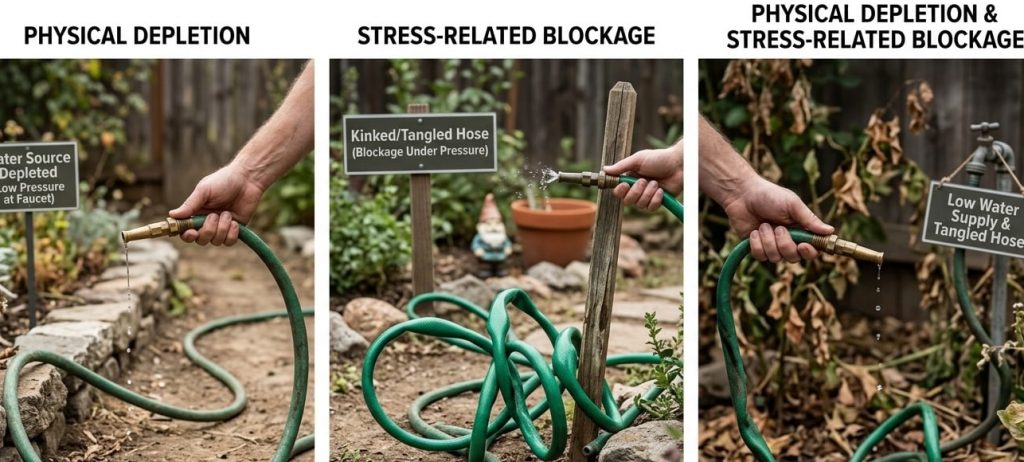
Until you know which situation applies, it’s difficult to choose the right treatment. At Almond Wellness Centre, our goal is to identify what’s really driving your fatigue, so treatment is directed at the cause — rather than simply trying to boost your energy temporarily.
We’d Love to Help
Book online at our Coburg or Ringwood clinic, and we’ll help you work out which type of fatigue you’re dealing with.
You may also find these pages helpful:
Does Exercise Help or Hurt Your Energy? What Chinese Medicine Looks At First
Chinese Herbal Medicine Melbourne
FAQ
Q: Why am I tired all the time even though I sleep enough?
A: This is common with stress-related fatigue, where energy is available but not being distributed or used efficiently, and with some nutritional deficiencies or underlying conditions that aren’t affected by sleep quantity alone. A proper assessment can help identify which applies to you.
Q: What’s the difference between physical and mental fatigue?
A: Physical fatigue generally reflects a genuine shortage of resources – from nutritional deficiency or illness – while mental fatigue often reflects energy that is present but blocked, commonly linked to chronic stress. The two call for different treatment approaches, though many people have elements of both.
Q: Can low iron, vitamin D, or B12 really cause fatigue?
A: Yes — these are among the most common nutritional contributors to persistent tiredness, and can usually be confirmed with a simple blood test through your GP. Correcting a genuine deficiency is often an important first step in recovery.
Q: I’ve had blood tests and everything came back normal, but I’m still exhausted. What now?
A: This is a common and valid situation. It’s worth considering whether chronic stress, sleep quality, burnout, digestion, or an as-yet-undiagnosed condition could be contributing. A TCM consultation, alongside ongoing medical follow-up if fatigue persists, can help build a fuller picture.
Q: Can acupuncture help fatigue?
A: The evidence varies by type. It’s strongest for cancer-related fatigue, where reviews report modest improvements; more limited and exploratory for chronic fatigue syndrome and post-viral fatigue; and less formally studied for general stress-related tiredness, though related benefits to sleep and stress are well documented. It’s best considered a supportive part of a broader care plan rather than a stand-alone cure.
Q: Where is Almond Wellness Centre located?
A: We have two Melbourne clinics – 21 Bell Street, Coburg, and 31 Wantirna Road, Ringwood. Both see new and returning patients for fatigue assessment and treatment.