
Acupuncture for TMJ & Jaw Pain Melbourne
Relieve jaw tension, clicking, and facial pain - naturally, and properlyThat Jaw… Always Tight, Always There
Let me guess.
You wake up, and before your feet even touch the floor – your jaw is already working overtime.
A bit tight. A bit sore. Maybe that small click when you yawn – not loud, but enough that you notice it. Every time.
You start adjusting without thinking:
- Chewing on one side
- Avoiding hard foods
- Cutting apples instead of biting them
- Stopping mid-conversation because your jaw aches
And somewhere along the way, it becomes… normal.
But it’s not. And you know it’s not – which is probably why you’re here.
At Almond Wellness Centre, we provide acupuncture for TMJ jaw pain in Melbourne as a complementary, whole-body approach.
or
“I’ve Tried the Night Guard… Now What?”
Most people we see have already done the right things.
They’ve seen a dentist. They’ve tried a bite guard. Some have taken anti-inflammatories or muscle relaxants for weeks, sometimes months.
And yes – those things can help. Genuinely. But often it’s partial relief. Temporary. Or something you don’t want to rely on long-term.
So the question quietly sits there: “Is there another way to actually fix this?”
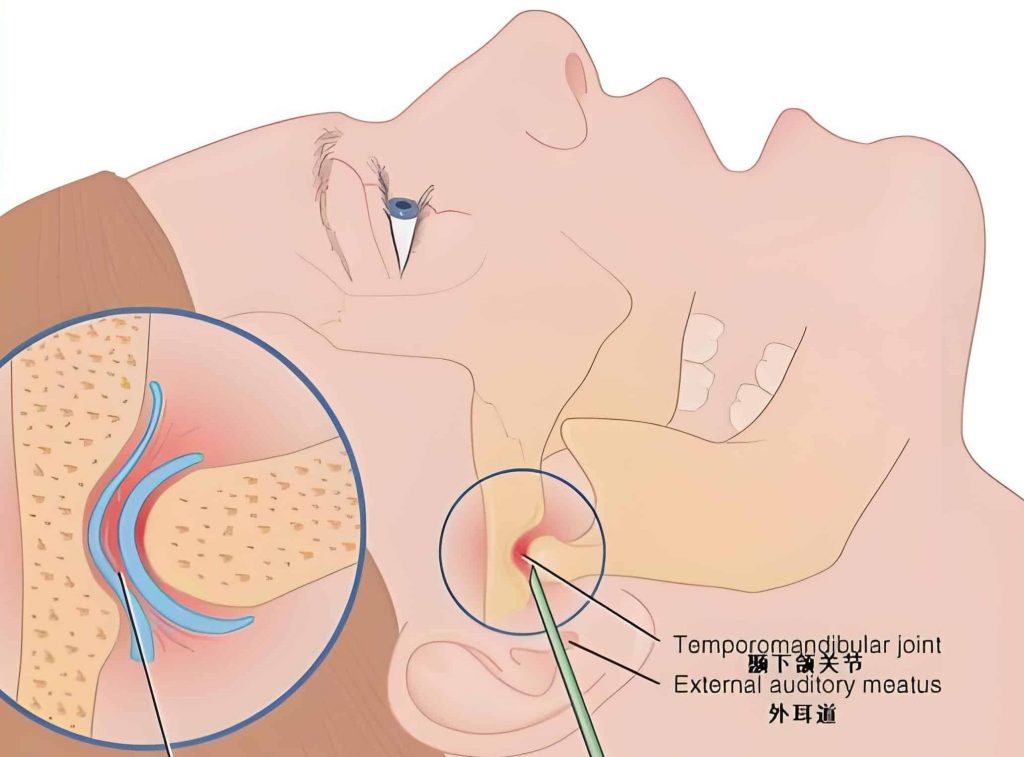
What’s Actually Happening With Your Jaw
The temporomandibular joint is small – but extraordinarily demanding. It works every time you talk, eat, yawn, or swallow. So when it’s not happy, you feel it all day long.
Common symptoms we see:
- Jaw pain or tightness, often worse in the morning
- Clicking, popping, or locking
- Headaches concentrated around the temples
- Ear discomfort or a feeling of fullness
- Neck and shoulder tension
- Teeth grinding at night
- Difficulty opening the mouth fully
And here’s the tricky part – it’s rarely just one cause. Stress, posture, bite pattern, sleep quality, muscle tension: they all layer together. Which is why simple solutions so often fall short.
How TCM and Acupuncture See Jaw Pain Differently
In Western medicine, TMJ is typically approached as a mechanical and inflammatory problem – which it partly is.
In Traditional Chinese Medicine, we look at the same jaw and ask a different set of questions:
Why is the tension there in the first place? Why does it flare up at night? Why is it consistently worse when you’re stressed or not sleeping?
In TCM terms, several patterns frequently underlie TMJ:
- Qi stagnation – tight muscles, restricted movement, that stuck feeling that doesn’t fully release
- Liver imbalance – stress-driven clenching and grinding; the Liver channel governs smooth qi flow and is deeply affected by emotional strain
- Channel blockage – the Stomach and Gallbladder meridians both traverse the jaw and face; when these are obstructed, local pain and tension follow
So, instead of just treating the jaw, we treat the pattern behind.
What Acupuncture Actually Does
1. Local release
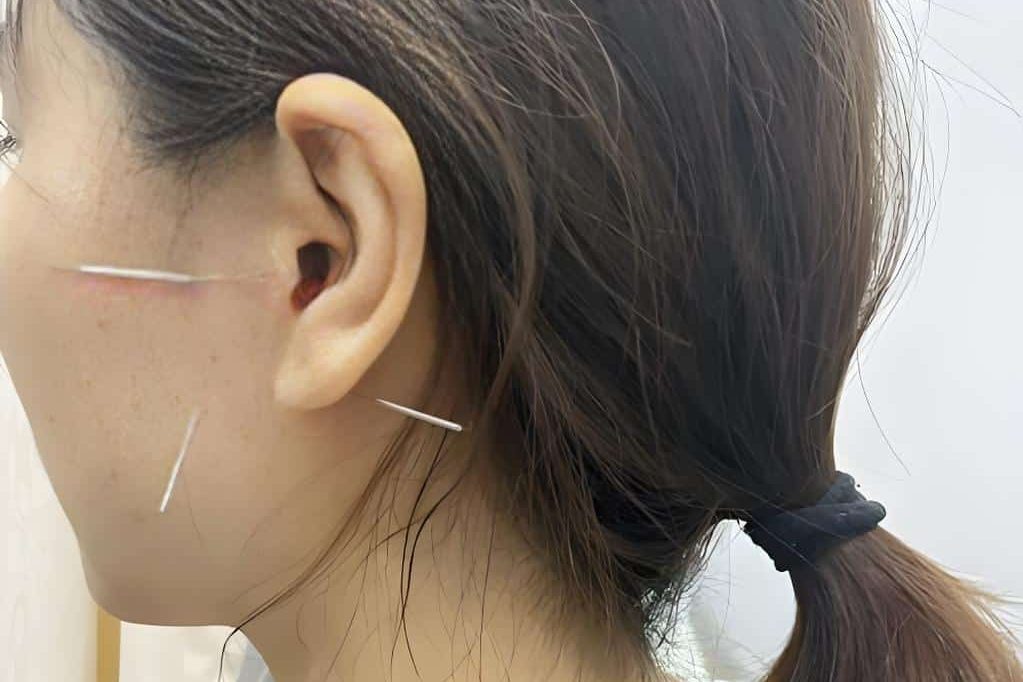
Fine needles placed around the jaw joint, masseter muscle, and facial meridian points help relax tight muscles, improve local blood flow, and reduce inflammation. Most patients feel a meaningful release in the first few sessions here.
2. Nervous system reset – the missing piece
This is the part that surprises people most.
Acupuncture helps shift your body out of “clench, hold, grind” mode – and into “relax, release, recover.” It works on the autonomic nervous system, reducing the pain signalling associated with chronic musculoskeletal tension and helping the body genuinely let go of the hypervigilance that perpetuates grinding. Which is why many patients say: “I didn’t realise how tense I was… until it stopped.”
3. Whole-body regulation
Jaw tension rarely lives alone. Effective treatment often means addressing:
- Stress response and emotional regulation
- Sleep quality
- Neck and shoulder tension patterns
What the Evidence Suggests
We’ll be straight with you: research on acupuncture for TMJ is still developing – but what exists is genuinely promising.
Studies suggest pain reduction of approximately 40–60% over a course of treatment, alongside improved jaw opening range and reduced muscle tenderness. A systematic review in the Journal of Oral Rehabilitation found acupuncture comparable to conventional TMJ care in terms of pain outcomes – with notably fewer side effects.
In clinical practice, most patients begin to notice a shift within 3 to 5 sessions, with more stable and lasting improvement emerging by 6 to 8 sessions. Not overnight. But steady meaningful progress.
Real Patients, Real Experiences
“I’d had jaw clicking for about three years. The night guard helped a bit, but I still woke up with headaches most mornings. After about five acupuncture sessions, the headaches were basically gone – and the clicking reduced a lot. I still wear the guard, but the difference in how I feel day-to-day is real.” – Sarah, 38, Ringwood clinic
A case I think about often: a patient in her mid-forties came in primarily for stress and insomnia. She mentioned her jaw pain almost as an afterthought – she’d had it so long she’d filed it under “just how I am.”
We worked on her sleep, her nervous system, her Liver qi. Six weeks later, she said: “My husband told me I’ve stopped grinding my teeth at night.” She hadn’t even brought up the jaw again.
Sometimes the jaw isn’t the main problem. It’s just where the body is speaking.
“The thing that surprised me most was how the practitioner connected my jaw to other things I hadn’t linked together – the tension headaches, the digestion, how I hold stress in my shoulders. I’d always thought of them as separate problems. Apparently not.” – James, 44, Coburg clinic
What Your First Visit Looks Like
The consultation – this matters more than people expect
We’ll ask about your jaw, of course. But also your sleep, your stress levels, your digestion, your work habits, and what you’ve already tried. Because TMJ in someone grinding their teeth from work anxiety looks different to TMJ following a dental procedure – and both look different again to TMJ in someone with a long-standing Liver qi stagnation pattern. Getting the picture right is where treatment starts.
The needling itself
The needles we use are extremely fine – around 0.2mm. Around the jaw and face specifically, most patients feel very little. A mild heaviness or tingling, occasionally warmth. The 20 to 30 minutes lying with the needles in tends to be deeply relaxing. Some people fall asleep.
We may also include:
- Chinese herbal medicine – particularly effective for stress-driven clenching, sleep disruption, or chronic Liver qi stagnation; not a painkiller approach, more like resetting the system that keeps tightening the jaw
- Cupping or gua sha on the neck and shoulders to release associated tension
- Jaw exercises and self-care strategies to maintain progress between sessions
Who Is This Suitable For?
Acupuncture for TMJ may be worth exploring if:
- You’ve had TMJ for months or years and haven’t found lasting relief
- Your bite guard helps – but not enough
- You don’t want long-term reliance on anti-inflammatories or muscle relaxants
- Stress clearly makes your jaw worse
- You also experience headaches, neck tension, or ear discomfort alongside the jaw
- You’ve had dental work or injury and haven’t fully recovered
If you have a significant structural issue that may require surgical assessment, we’d work alongside your dental team rather than as a replacement for that pathway. We’ll always tell you honestly where we think we can and can’t help.
How Many Sessions Will I Need?
Realistically: an initial course of 6 to 8 sessions, typically weekly or fortnightly. After that, maintenance every 3 to 6 weeks can help sustain results – particularly where stress or structural habit is an ongoing factor.
We’ll give you a clearer, more specific picture after your first consultation.
A Note on Medication
If your doctor has prescribed anti-inflammatories, muscle relaxants, or other medication for your TMJ – please continue taking them as directed. Acupuncture works alongside your current care, not instead of it. If, over time, you and your doctor decide to reassess your medication, that’s a conversation to have with your prescribing doctor. We support the process from our end.
A Collaborative Approach
For some patients, jaw pain has a structural component, a chiropractor may take a complementary approach to musculoskeletal health that pairs well with what we do here.
Meet Our Team
Our clinical team is led by Dr. Richard Zeng (CM), a 4th-generation TCM practitioner and Clinical Director with over 30 years of experience.
He is joined by other AHPRA registered acupuncturists, each bringing their own clinical strengths and a shared commitment to genuinely patient-centred care.
Our Melbourne Clinics
Coburg: 21 Bell Street, Coburg VIC 3058
Ringwood: 31 Wantirna Road, Ringwood VIC 3134
Hours: Monday – Friday: 10am – 6pm | Saturday – Sunday: 9am – 3pm
Phone: 03 8802 1519
Frequently Asked Questions
Is acupuncture painful on the face and jaw?
Not really. Most people feel very little – a mild tingling or heaviness at most. First-timers are usually surprised.
Can it help with teeth grinding?
It may, especially when stress or sleep disruption is a driver. We typically work on the nervous system and underlying pattern alongside local jaw treatment.
How quickly will I feel a difference?
Some patients notice a shift after 1 to 2 sessions. For most, clearer improvement emerges around sessions 3 to 5. Longer-standing cases generally take more time.
Do I need a referral?
No. You can book directly at either clinic.
Can I keep using my night guard?
Yes – we encourage it alongside acupuncture, not instead of it.
Is herbal medicine always part of treatment?
Not necessarily. It’s recommended only where appropriate and always explained before prescribing.
How is TCM different from physiotherapy for jaw pain?
Both can be helpful. TCM addresses not just the local joint but the systemic pattern driving tension – stress response, sleep quality, channel blockage — which can make it particularly effective for cases where local treatment alone hasn’t been enough.
Call 03 8802 1519 or Book Online. Alternatively Message Us Here
Ready to Take the Next Step?
If you’ve been dealing with TMJ Jaw Pain for a long time, you don’t have to just “put up with it.”
There may be ways to support your body – gently, consistently, and alongside your current care.
Book your acupuncture consultation in Melbourne today
or
We welcome referrals from dentists, GPs, chiro, osteopath and physiotherapists. Patients are also welcome to self-refer.