As acupuncturists at Almond Wellness Centre in Melbourne, we’ve seen how amazing pregnancy can be. It’s a journey full of joy and sometimes a few challenges. One such challenge is a breech presentation, where the baby is in a bottom-down position. This happens often during the second trimester. While most babies naturally turn head-down before labor, some don’t. This can make birth harder and increase the chance of a caesarean section.
Discovering the Power of Moxibustion
A recent study published in the Cochrane Library explored moxibustion. This traditional Chinese medicine technique might help turn breech babies. Moxibustion involves burning a herb called Artemesia spp. near an acupuncture point on the little toe. This creates a warming sensation that stimulates the uterus. The mother or a trained family member can administer this technique. The goal is to encourage the baby to move into a head-down position before birth.
What the Research Says:
The study looked at 13 different studies involving 2,181 women and their babies. Moderate-quality evidence shows that
Moxibustion probably increases the chance of the baby turning head-down before birth.
It may reduce the need for oxytocin during labour.
Moxibustion does not appear to change caesarean section rates significantly.
Evidence is limited or uncertain for outcomes like the need for external cephalic version (ECV), premature rupture of membranes, cord blood health, or adverse effects.
Mild side effects, such as warmth, slight abdominal discomfort, or an herbal smell, have been reported but are generally considered safe.
Key Takeaways:
Moxibustion is a safe, non-invasive option for mothers with breech babies.
It is most effective when used in the weeks leading up to term, often combined with usual prenatal care.
Always discuss with your obstetrician or midwife before starting, especially if you have high-risk pregnancy factors.
Almond Wellness Centre Melbourne
At Almond Wellness Centre, we’ve been integrating acupuncture and Chinese medicine with infertility treatments for over two decades. We are proud of our ongoing commitment to helping pregnancy-related symptoms through these ancient practices.
As an acupuncturist who regularly reads research, I’m often asked why so many acupuncture studies are considered “low quality.” It’s a fair question. Acupuncture has been used for thousands of years, yet in modern scientific research, it sometimes struggles to meet the same standards as pharmaceutical trials. The truth is, it’s not because acupuncture itself is ineffective — it’s because studying it scientifically presents unique challenges.
In this post, I want to share the key reasons why acupuncture research can be difficult to design, what’s currently being done to improve study quality, and why this matters for patients, practitioners, and the wider medical community.
1. Methodological Challenges
One of the biggest hurdles is methodology. Randomised controlled trials (RCTs) are considered the gold standard in research. However, applying that model to acupuncture is not straightforward.
Placebo Controls: Creating a convincing placebo is surprisingly difficult. Devices like the Streitberger placebo needle look like real acupuncture but don’t penetrate the skin. Even so, many patients can still tell the difference, which can influence outcomes.
Blinding: It’s nearly impossible to blind both patients and practitioners completely. Practitioners obviously know whether they’re inserting needles or not, and this knowledge can introduce bias (even unconsciously).
Double-Blind Studies: In drug trials, both patients and doctors can be blinded by using identical pills. In acupuncture, there’s no practical way to make both parties unaware.
Because of these limitations, acupuncture studies often fall short of the strict criteria set by conventional research designs, which affects how their quality is rated in systematic reviews.
2. Blinding Difficulties
Blinding is crucial in high-quality trials, but in acupuncture research:
Sham acupuncture doesn’t always mimic the real treatment accurately, making it easier for participants to guess their group.
Practitioner bias can unintentionally influence results when acupuncturists know who is receiving real versus sham treatment.
This lack of perfect blinding can compromise internal validity, even if the study is otherwise well conducted.
3. Heterogeneity of Treatments
Unlike a pill with a fixed dose, acupuncture is highly individualised. Two practitioners might treat the same condition using different points, techniques, or treatment schedules. This diversity reflects clinical reality but makes standardisation difficult.
As a result:
Outcomes vary between studies.
Protocols differ significantly.
Meta-analyses often pool studies that aren’t truly comparable.
This variability doesn’t mean acupuncture is inconsistent — it reflects its personalised nature — but it does make research more complex.
4. Limited Funding and Resources
Another practical issue is funding. Acupuncture research often receives less support than conventional medical research. This means:
Smaller sample sizes, which reduce statistical power.
Shorter study durations, making it hard to assess long-term effects.
Limited access to advanced methodologies, such as neuroimaging or biomarker analysis, which could reveal mechanisms more clearly.
Without adequate funding, even well-designed studies may be labelled “low quality” simply because of size or scope.
5. Publication Bias
Positive studies are more likely to be published, while negative or inconclusive findings often remain unpublished. This skews the overall body of evidence. It can make acupuncture seem more or less effective than it really is, depending on which studies make it to publication.
6. Language Barriers
A large portion of acupuncture research is published in Chinese, Japanese, or Korean. Unfortunately, these studies are often excluded from major systematic reviews due to language restrictions, which narrows the available evidence. Valuable data may never reach the broader scientific community.
Efforts to Improve Acupuncture Research
Despite these challenges, things are improving. Researchers are:
Developing standardised treatment protocols for common conditions.
Conducting multi-centre trials with larger sample sizes.
Using improved sham controls and more transparent reporting guidelines (e.g., STRICTA).
Applying objective outcome measures, like fMRI, heart rate variability, and hormonal markers, alongside subjective reports.
These efforts aim to strengthen the evidence base and bridge the gap between traditional practice and modern science.
Frequently Asked Questions
Q: Does “low quality” mean the treatment doesn’t work?
Not necessarily. “Low quality” often refers to study design limitations, not treatment effectiveness. Many studies still show positive outcomes but may not meet all research standards used in pharmaceutical trials.
Q: Can acupuncture be studied scientifically?
Yes. While it’s challenging, researchers are developing innovative methods to make acupuncture studies more rigorous. For example, newer sham devices and advanced imaging tools are helping to objectively measure effects.
Q: Why does individualisation make research harder?
Because acupuncture is tailored to each patient, standardising protocols for trials can reduce its effectiveness. Researchers are working on hybrid approaches that balance individualisation with research needs.
Lundeberg T, Lund I, Naslund J, Thomas M. “The Emperors sham—wrong assumption that sham needling is sham.” Acupuncture in Medicine, 2008; 26(4):239–242.
MacPherson H, Altman DG, Hammerschlag R, et al. “Revised STandards for Reporting Interventions in Clinical Trials of Acupuncture (STRICTA): extending the CONSORT statement.” PLoS Med 2010;7(6):e1000261.
Streitberger K, Kleinhenz J. “Introducing a placebo needle into acupuncture research.” Lancet 1998; 352: 364–365.
Vickers AJ, Linde K. “Acupuncture for chronic pain.” Archives of Internal Medicine, 2012; 172(19):1444–1453.
Smith CA et al. “Challenges in acupuncture research: a critical review.” Complement Ther Med. 2018; 39: 46–52.
Based on the available evidence, acupuncture can be a valuable option for individuals with migraines.
Review
A review of 22 trials involving 4,985 people found that acupuncture reduced the frequency of migraine episodes. In trials where acupuncture was added to usual care, it resulted in a significant reduction in headache frequency compared to usual care alone. When acupuncture was compared to “fake” acupuncture, the true acupuncture group had a higher rate of halving headache frequency. Acupuncture was also found to be similarly effective as prophylactic drugs in reducing migraine frequency. Side effects were minimal, and dropout rates were lower compared to drug treatments.
The findings suggest that acupuncture can reduce the number of migraine days per month, with an average reduction from six days to three and a half days for those receiving true acupuncture. The quality of the evidence was considered moderate.
Conclusion
In conclusion, acupuncture can be considered as a treatment option for individuals with migraines who are willing to undergo this therapy. However, more long-term studies are needed to further evaluate its effectiveness compared to other migraine treatments.
Reference
Klaus Linde, etc, Acupuncture for the prevention of episodic migraine, Cochrane Database of Systematic Reviews Review, June 2016
Double-blind, placebo-controlled trials are the golden standard for high quality of research. However, it can be very challenging to design and implement to acupuncture trials. Here are several factors affect the design of trials :
Needle insertion and sensation
Acupuncture involves the insertion of needles into specific points on the body, which creates a unique sensory experience. It can be challenging to create a placebo treatment that mimics the sensation of needle insertion convincingly. Sham acupuncture controls attempt to simulate the sensation, but it is difficult to completely mask the difference between real acupuncture and a placebo treatment.
Acupuncturist involvement
In traditional acupuncture practice, the acupuncturist plays an active role in the treatment. They may have specific training, techniques, and interactions with the patient that contribute to the therapeutic process. It can be difficult to blind the acupuncturist to the treatment being administered, which can introduce bias and affect the blinding of the study.
Expectations and beliefs
Acupuncture has a strong placebo component, and patient expectations and beliefs can significantly influence their perception of the treatment’s effectiveness. It is challenging to completely blind participants to their treatment group, as they may have prior knowledge or beliefs about acupuncture that can affect their responses.
Variability in treatment protocols
Acupuncture encompasses various techniques, styles, and individualised treatment approaches. There is significant variation in the choice of acupuncture points, needling techniques, and treatment durations among practitioners. Standardising treatment protocols for a placebo-controlled trial can be difficult due to these variations, which may limit the ability to compare results across studies.
Despite these challenges, researchers have made efforts to develop sham acupuncture controls to create placebo-like experiences. These sham controls may involve superficial needle insertion, non-penetrating needles, or non-specific needling locations. However, sham acupuncture is not real placebo. These methods may still provide some therapeutic effects or fail to fully replicate the specific physiological effects of true acupuncture.
While may be not impossible achieving complete blinding in acupuncture trials remains a complex task, and studies may still face limitations in achieving a fully placebo-controlled design.
A sham acupuncture needle is a type of placebo device used in research studies to create a control group for acupuncture trials. A sham needle is designed to mimic the sensation of needle insertion without penetrating the skin or stimulating specific acupuncture points.
There are different types of sham needles. They have their own method of simulating acupuncture without delivering the therapeutic effects with real needling. Here are a few examples:
Streitberger placebo needles
Streitberger placebo needle: This type of sham needle consists of a blunt tip that retracts into the handle upon contact with the skin. It gives the sensation of needle penetration without actually piercing the skin.
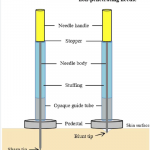
Park sham device: The Park sham device resembles a real acupuncture needle, but it has a blunt tip and a sheath that covers the needle, preventing skin penetration during insertion.
Non-penetrating needle: This type of sham needle has a blunt tip and does not penetrate the skin. It may have a collapsible handle or other mechanisms to create the sensation of needle insertion.
non-penetrating needles
Toothpick or placebo needle: In some cases, a toothpick or a specifically designed placebo needle that does not penetrate the skin is used as a sham control. This provides a tactile sensation similar to acupuncture but without actual needling.
What are shame needles used for?
The purpose of using sham acupuncture needles is to create a control group that experiences a placebo treatment closely resembling real acupuncture. By comparing the outcomes of the real acupuncture group with the sham acupuncture group, researchers can assess the specific effects of acupuncture beyond placebo or non-specific effects. The use of sham needles helps control for placebo responses and improves the validity of the study results.
Sham needles creates some stimulation as real needles too
Sham acupuncture needles are designed to create a sensory experience similar to real needles. They provide a placebo-like stimulation. While they do not penetrate the skin or stimulate specific acupuncture points, they are intended to mimic the sensation of needle insertion and create a tactile experience for the recipient.
As sham acupuncture needles contact the skin, the sensation they created can be part of acupuncture sensation
The sensory experience created by sham needles, including the tactile sensation when they come into contact with the skin, can be considered part of the overall acupuncture sensation. Sham acupuncture is designed to mimic the physical aspects of real acupuncture, including the feeling of needle insertion and the associated sensations that patients may expect during an acupuncture treatment.
Sham acupuncture is not real placebo
While sham acupuncture is designed to serve as a placebo control in research studies, it is not a true placebo in the strict sense.
A true placebo would be an inert substance or intervention that has no specific physiological effects.
While sham acupuncture is intended to mimic certain aspects of real acupuncture, it does have some similar sensory experience and the ritualistic aspects of real treatment.
Sham acupuncture may still elicit non-specific effects, such as the placebo response, which can influence participants’ perception of the treatment’s effectiveness. Additionally, the sensory experience of sham needles, even though it does not involve needle penetration or stimulation of specific acupuncture points, can have its own distinct effects on the body and may activate certain physiological responses.
While sham acupuncture attempts to control for placebo effects and other non-specific factors, it is important to recognise that it is not a true placebo. It serves as a method to isolate and evaluate the specific effects of acupuncture beyond these non-specific influences, but it does not completely eliminate all potential confounding factors.

 As acupuncturists at Almond Wellness Centre in Melbourne, we’ve seen how amazing pregnancy can be. It’s a journey full of joy and sometimes a few challenges. One such challenge is a breech presentation, where the baby is in a bottom-down position. This happens often during the second trimester. While most babies naturally turn head-down before labor, some don’t. This can make birth harder and increase the chance of a caesarean section.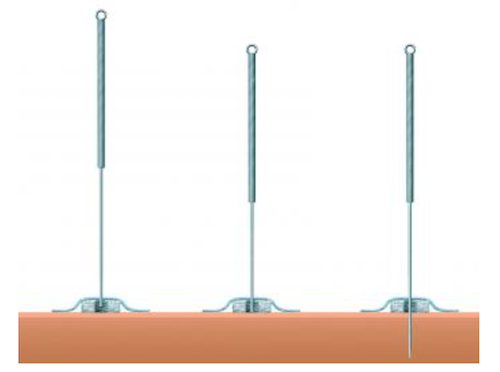
 Based on the available evidence, acupuncture can be a valuable option for individuals with migraines.
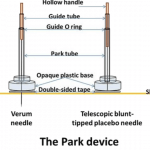 Park sham device: The Park sham device resembles a real acupuncture needle, but it has a blunt tip and a sheath that covers the needle, preventing skin penetration during insertion.